For $400 and an old Android phone, a humanoid robot walks on its own
PhoneBot stuffs an old Android phone into a humanoid robot as its sensing and compute unit: 13 servos, 48.3 cm, about $400 in hardware cost, with CAD and the bill of materials fully open source.
A 48.3-centimeter-tall humanoid robot stands next to a sofa, with a glowing Android phone for a head. This is PhoneBot, an open-source project that uses a smartphone directly as the robot's perception and computing unit.
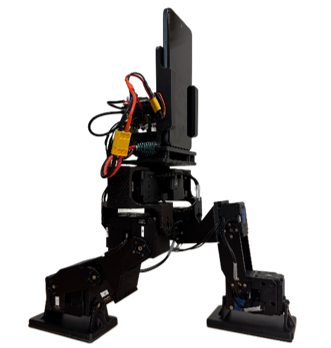
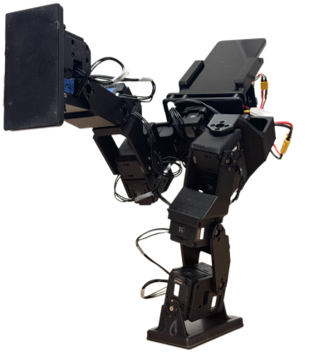
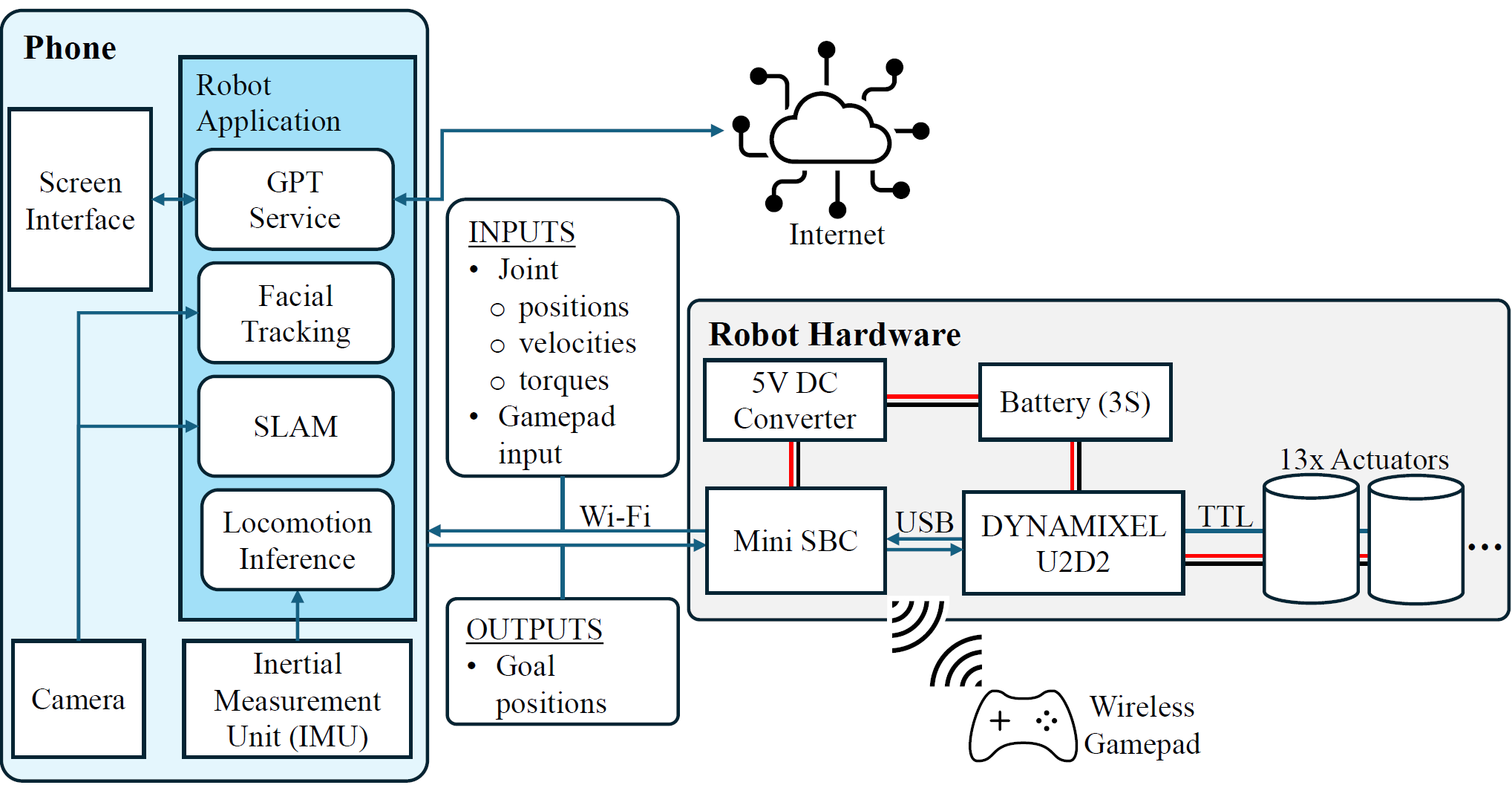
Hardware costs about $400 excluding the phone. The whole robot weighs 1.8 kg and has 13 joints—six per leg and one yaw joint in the torso—all using Dynamixel XL430-W250-T servos. The phone handles the camera, IMU, wireless connectivity, and onboard computing, while the onboard single-board computer only executes joint position commands. The two communicate over Wi-Fi, with no electrical connection. Changing phone models requires no changes to the robot.
This design flips the cost structure. Humanoid robots are expensive because of sensors and compute, and those are exactly the areas where consumer electronics are most competitive. The camera, IMU, and processor of a retired Android phone are good enough for a robot. The servos actually become the most substantial part of the bill.
The paper's authors are Ruochen Hou, Quanyou Wang, Daniel Koh, and Dennis W. Hong. The capabilities listed include visual following, conversational interaction, filming, and mobile telepresence. In the test video, you can see it recover from a lying position to standing on different surfaces, and you can remotely control it to move forward, backward, and turn.
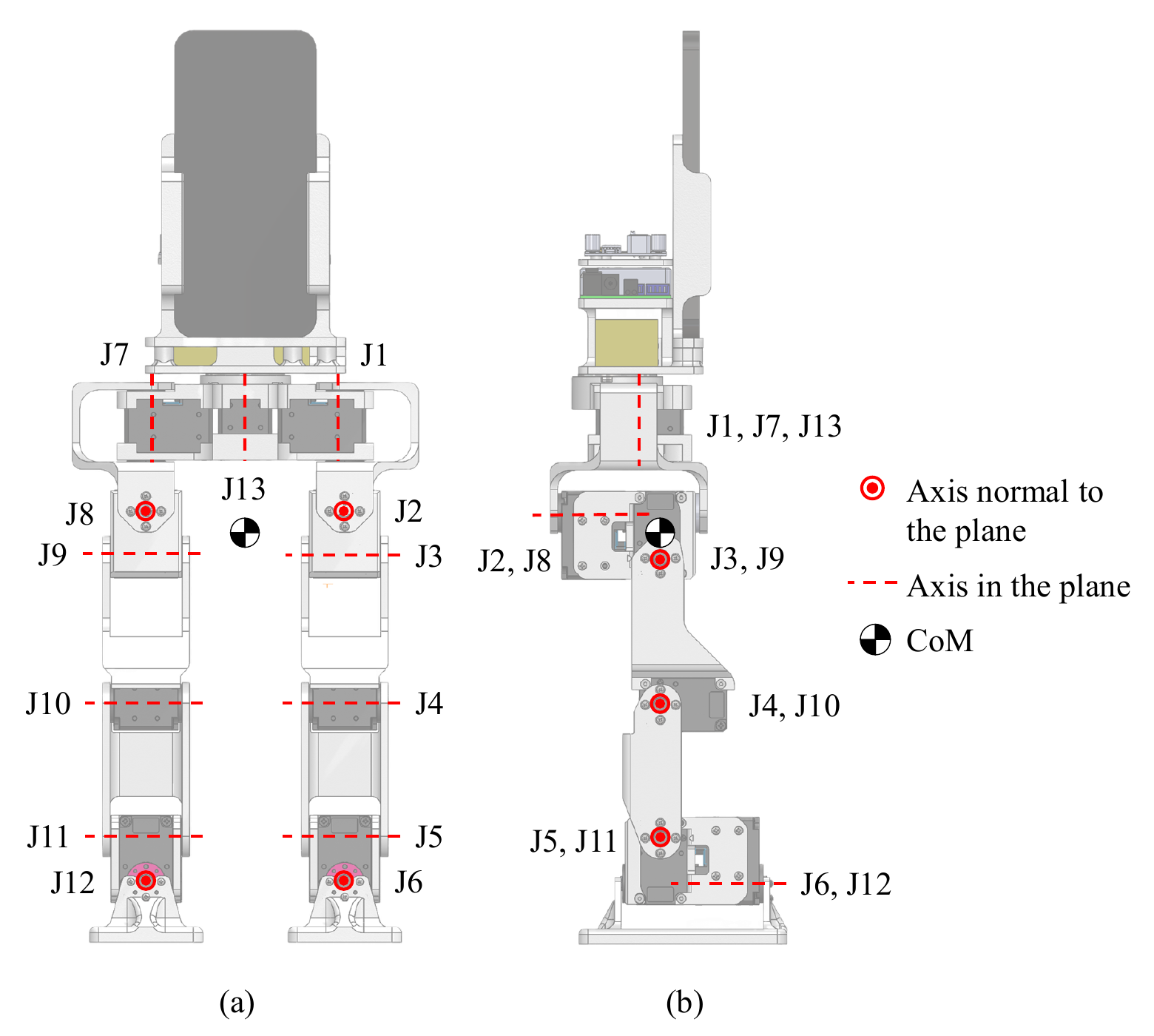
The website provides the bill of materials, Onshape CAD, STEP assembly files, and assembly documentation under CC BY-NC 4.0: non-commercial use may copy, modify, and distribute. Commercial use requires a separate license.
Some online commenters noted that Wi-Fi latency is the most obvious weak point of this approach and suggested replacing it with a USB serial port plus developer mode. Another added hands-on details: don't power the 13 servos through the phone's USB; instantaneous current will trigger protection, and supplying a separate 12V rail is more stable. During debugging, first use a wired serial port to stabilize the gait, then switch to Wi-Fi; this avoids the latency pitfall.
Others said this looks like an upgraded version of LOOI, and using a phone saves a lot of hassle. Old Android phones gathering dust in drawers now have a real job.
Project website: https://phonebot.dev
发布时间: 2026-10-24 16:36