Prices Rose 69%, but Output Is Falling: AI Infrastructure Is Stuck on Switchgear
U.S. electrical equipment capacity is 9% lower than in 2019, yet prices are up 69%. The scarcest thing in AI infrastructure may be hiding in the gray boxes on the wall.
U.S. electrical equipment capacity is 9% lower than it was in 2019. Prices are up 69%. The bottleneck in AI infrastructure is moving from GPUs to the gray boxes on the wall.
a16z's Alex Danco and Moses Sternstein break down a set of data in the video. Moses decomposes the supply response into two levers: one is utilization, squeezing existing capacity harder; the other is building new capacity, opening more factories. By basic supply-and-demand logic, with prices rising like this, output should increase. In reality, some categories increased a little, while electrical equipment actually fell.
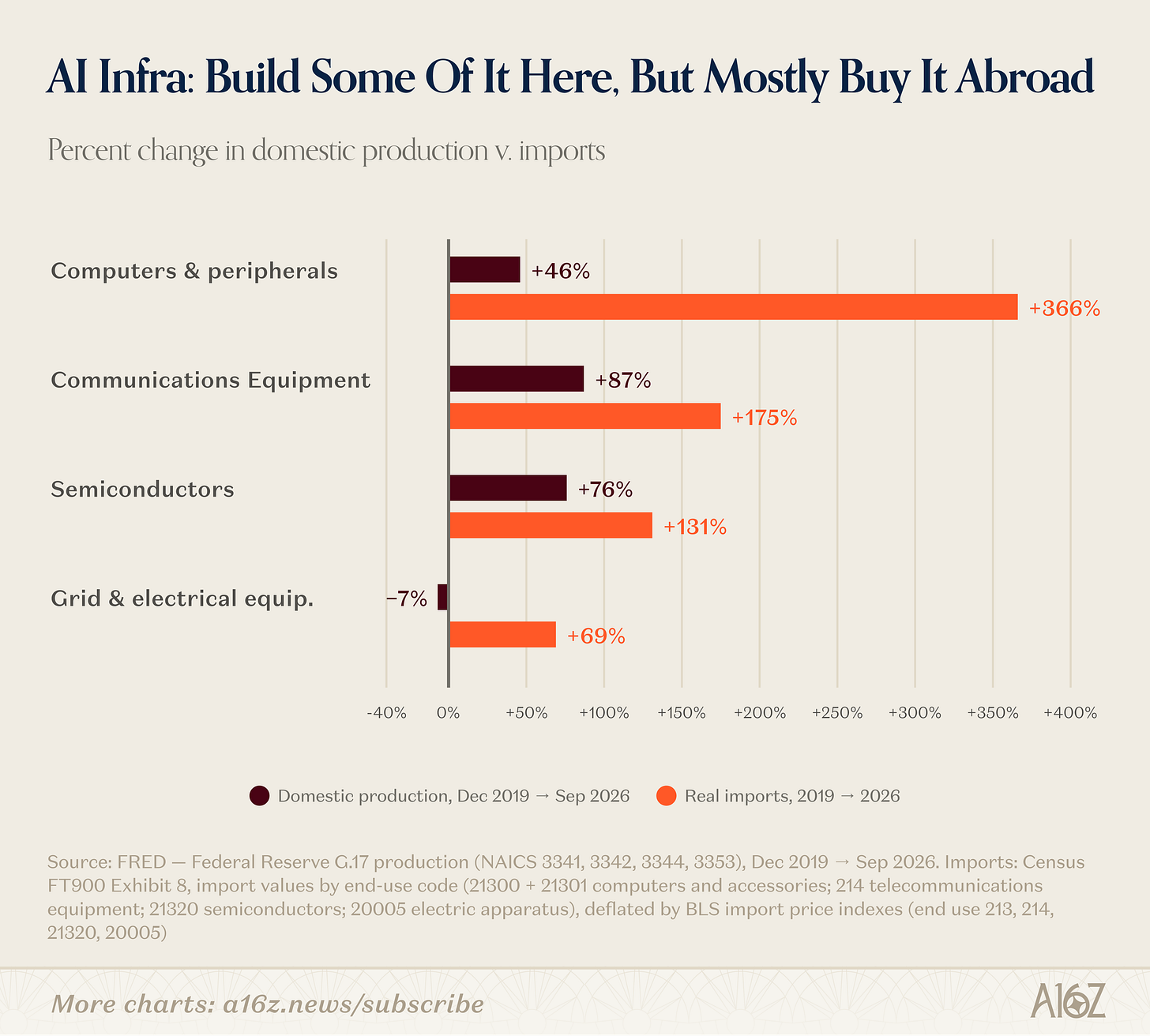
Changes in U.S. factory capacity since 2019: communications equipment +110%, semiconductors +77%, computers +16%, electrical equipment -9%. Electrical equipment prices are up 69%, the largest increase among the four categories. Switchgear and transmission equipment—the things that power GPUs and data centers—have not kept up in capacity, and production has actually fallen.

The most anomalous of the four categories is electrical equipment. It has the largest price increase, yet capacity has shrunk, production has fallen, and utilization has risen. Instead of building new plants, factories are first running older equipment harder. The title of a16z's chart says it plainly: Higher Prices Have Not Led To (Much) More Capacity. Higher prices have not brought much more capacity; AI industrial expansion is more about doing more with the same set of resources.
Some commenters dug up order data: ETN's electrical business backlog rose 43% year over year in Q2, and Electrical Americas orders rose 41% on a rolling 12-month basis. Lead times have been pushed out to four years. Prices are doing the rationing. Chip fabs can announce capacity expansions, but transformers and switchgear cannot be teleported instantly. One commenter said the AI race is really a transformer race, referring to the big gray box on the utility pole.
The supply gap is being filled by imports. a16z's chart shows that, in dollar terms, import growth for all four key categories far outpaces domestic production growth.
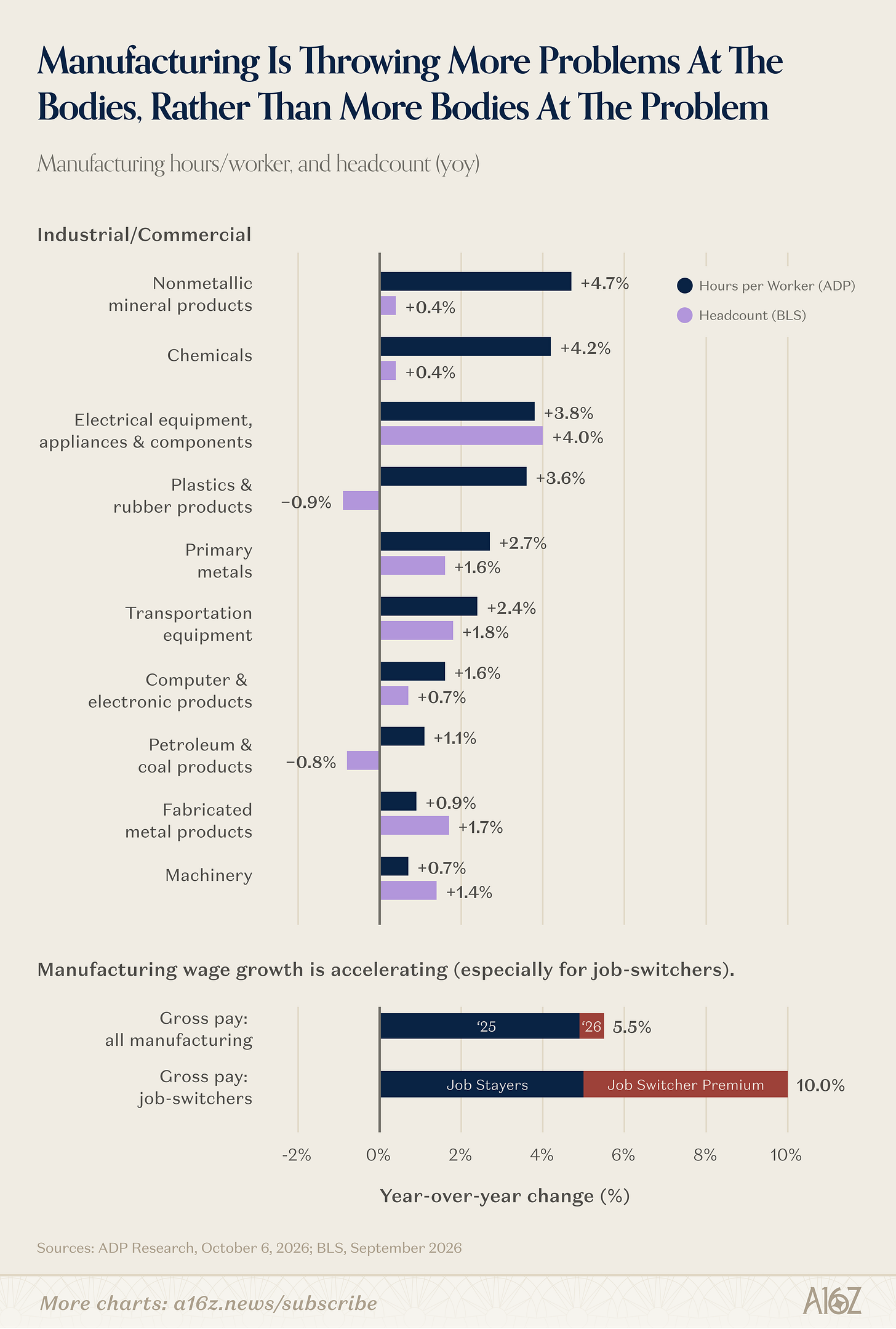
This is not just a factory problem. ADP data shows that weekly hours per person in AI-infrastructure-related industries have risen more than in other industries, and generally faster than headcount growth. Factories are working existing employees harder rather than hiring more. Wage growth for job switchers is 5 percentage points higher than for those who stay, and skilled workers are being bid for.
Electricity prices are also waiting in the wings. A commenter posted a chart of power prices, reminding people not to focus only on components: what actually makes them run is electricity.

Facing historic orders and soaring prices, electrical equipment manufacturers are choosing to squeeze a bit more out of existing capacity—or even do a bit less. The reasons may not be mysterious: capacity expansion cycles are long, capital risk is high, and the pressure from import substitution is real. The price signal has not failed here; it is just being used first for rationing and only later to stimulate capacity. By the time new capacity comes online, the grid-connection clock for AI data centers will not stop.
The next thing worth watching is something beyond GPU rental prices: delivery times for switchgear, transformers, and grid interconnection. GPUs can be rented; electricity and gray boxes have to be made by someone.
发布时间: 2026-10-25 09:30