In 16 Days, He Turned The Little Prince Into a 3D Game You Can Walk Into
The planets from The Little Prince can now be explored on foot. In 16 days, with five AI tools, the production workflow has been made public, and the code will be open-sourced later.
The planets from The Little Prince can now be explored on foot.
Someone has made a 3D game called The Little Prince: Across the Stars, in which every planet from the book becomes an explorable scene. The creator, Sac, wrote on X that from scene construction and character creation to code development and debugging, the main work was handed over to AI, over a period of 16 days.
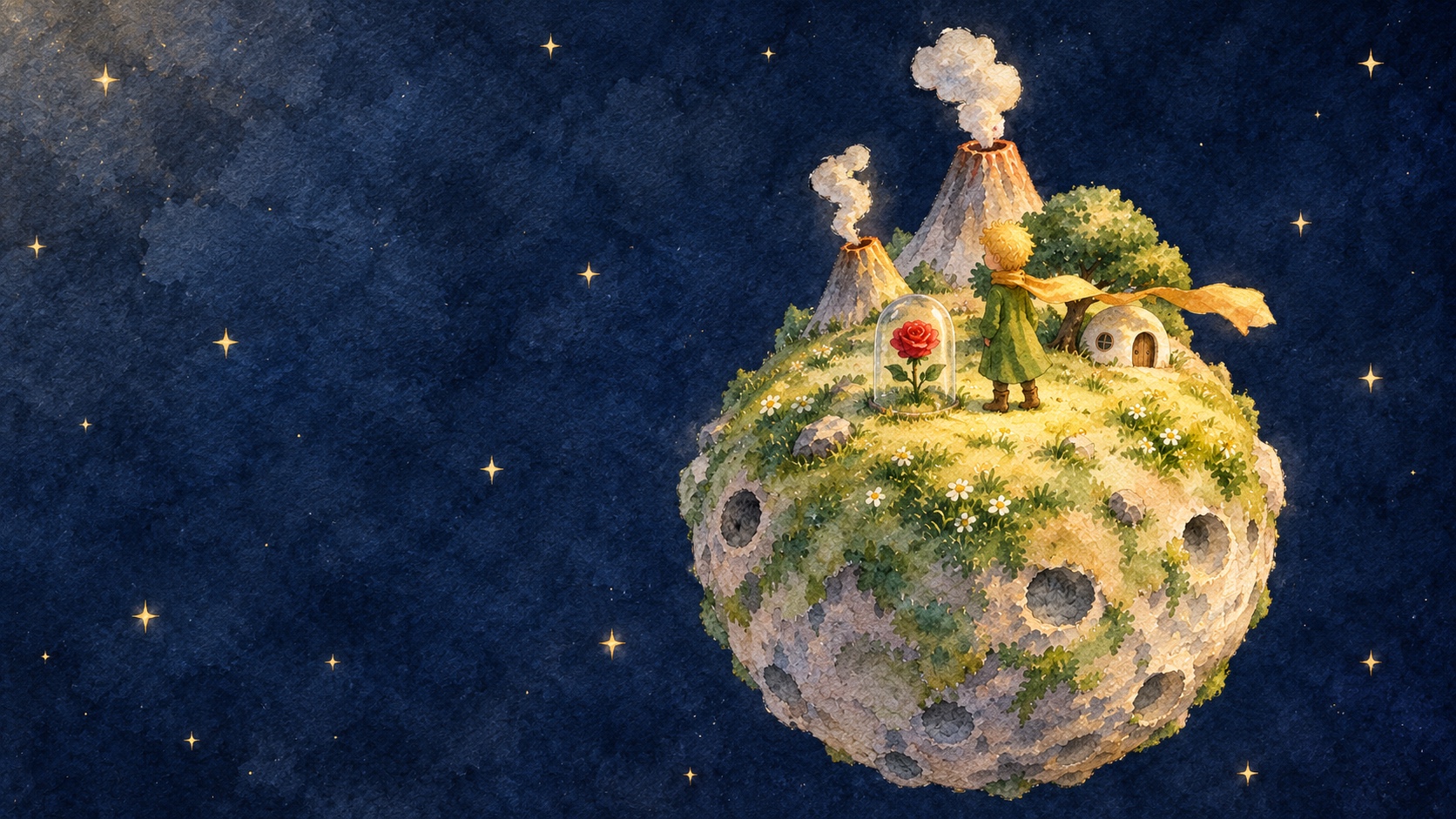
Someone in the comments said the sea-of-clouds shot looks like a 2015 AAA game, and it turned out to be generated from prompts. When Meng To reposted it, he said he had tried making complex games and rigging characters, and this project impressed him.
The project is at littleprince.dev and can be played by opening it in a browser. It requires WebGPU; Chrome or Edge is the most stable, and phones and tablets are not supported for now.

16 Days, Five Tools
In the workflow Sac shared, the toolchain is divided as follows:
- Fable 5.1 writes the PRD and organizes the core scenes, characters, and storylines
- GPT Image 2.5 generates reference images for scenes and characters
- Tripo generates 3D assets
- Opus 5.5 operates Blender and Unity, writes code, places scenes, and adjusts animations
- Astra handles iterative optimization and bug fixing
Tripo is a 3D model generation tool, Blender handles modeling and rigging, Unity is the game engine, and Mixamo provides a ready-made library of character animations.
In one sentence: people assign tasks and approve results; the models execute. During the 16 days, most of the real time was probably spent on review and rework.
How the Scenes Were Built
First, have Image 2.5 produce a satisfactory concept image of the scene, locking down the art style, color palette, and object placement. Then add other angles: a top-down view for layout, and oblique side views for height and layers.
Once the reference images are complete, let AI decide which assets are suitable to be generated separately with Tripo and which should be built directly in Blender. This step is easy to skip, but it determines how many times you will need to redo things later.
For Tripo, it is recommended to use the H3.1 model, which has high detail precision. After exporting props as FBX, hand them to Opus 5.5 along with the reference images, and have it place them and adjust proportions in Blender and Unity according to the images. When done, take screenshots from the front and side; if they do not match, keep revising.
How the Character Moves
The Little Prince first needs a four-view T-pose from Image 2.5, with consistent details from every angle. Then it goes into Tripo, using Smart Mesh P2.0 to generate a white model, with quad topology and maximum precision.
If the white-model mesh is clean, apply textures; if not, use edit mesh to regenerate parts locally.
Rigging and skinning are done in Blender with the Auto-Rig Pro plugin, and the prompt must clearly state that bones should align with joints. After that, test raising the arms, bending the legs, and turning around, and fix clipping and stretching.
Download animation files from Mixamo, pick close matches, and have Opus 5.5 check bone matching before integrating them. For contact-heavy actions like lifting a kettle, Mixamo has nothing ready-made, so you first need to find a base animation, then use Auto-Rig Pro's arm IK controller to adjust the finger grip and kettle position, so the palm sticks to the handle and the kettle does not float.
Open Source, and That Reply
Sac said that later he will open-source the entire game and the detailed production workflow on GitHub. A netizen asked whether this would cost a lot of money, and he replied: But I gained influence, and influence is the most valuable thing in this era.
This sentence can be broken down. Influence is indeed valuable, but the workflow being able to run through depended on repeatedly revising prompts, fixing models, and checking reference images over 16 days. Tools lower the execution barrier; the judgment barrier remains where it was.
A netizen said they had the same realization when making InspoAI: lock down the style first before generating, otherwise every planet looks like it comes from a different game.
The story of The Little Prince has already done half the work for the game. As for the other half, once the code is released, we will see how many people can pick it up.
发布时间: 2026-10-25 23:41