Databricks CEO: However Smart a Model Gets, It’s Useless If It Doesn’t Know Your Company’s Business
In an a16z interview, Ali Ghodsi said enterprise AI is stuck on context. A long-form a16z article ties Databricks’ Lakehouse, Lakebase, and agent system of record—and the management revolution—into a single thread.
Databricks CEO Ali Ghodsi poured cold water on enterprise AI in an a16z interview: if frontier models stopped advancing for a year, most companies would not be held back. Where they get stuck is context. Models are already smart enough. What the model doesn’t know is who knows what inside the company, which definition counts, who has the authority to decide, and how the last decision turned out.
In the interview, Ali said no agentic work has automated an entire enterprise. The reason is not model IQ. The problem is that the model has never sat in the company’s meetings, doesn’t know what is in each person’s head, and doesn’t understand the processes. Every organization has a few people who carry everything on their shoulders. When you tap them on the shoulder, everyone wonders what would happen if they left. One commenter added under the tweet that even geniuses need a company wiki. Another said that in organizations with more than 150 people, roughly 13 people are what actually make the company run.
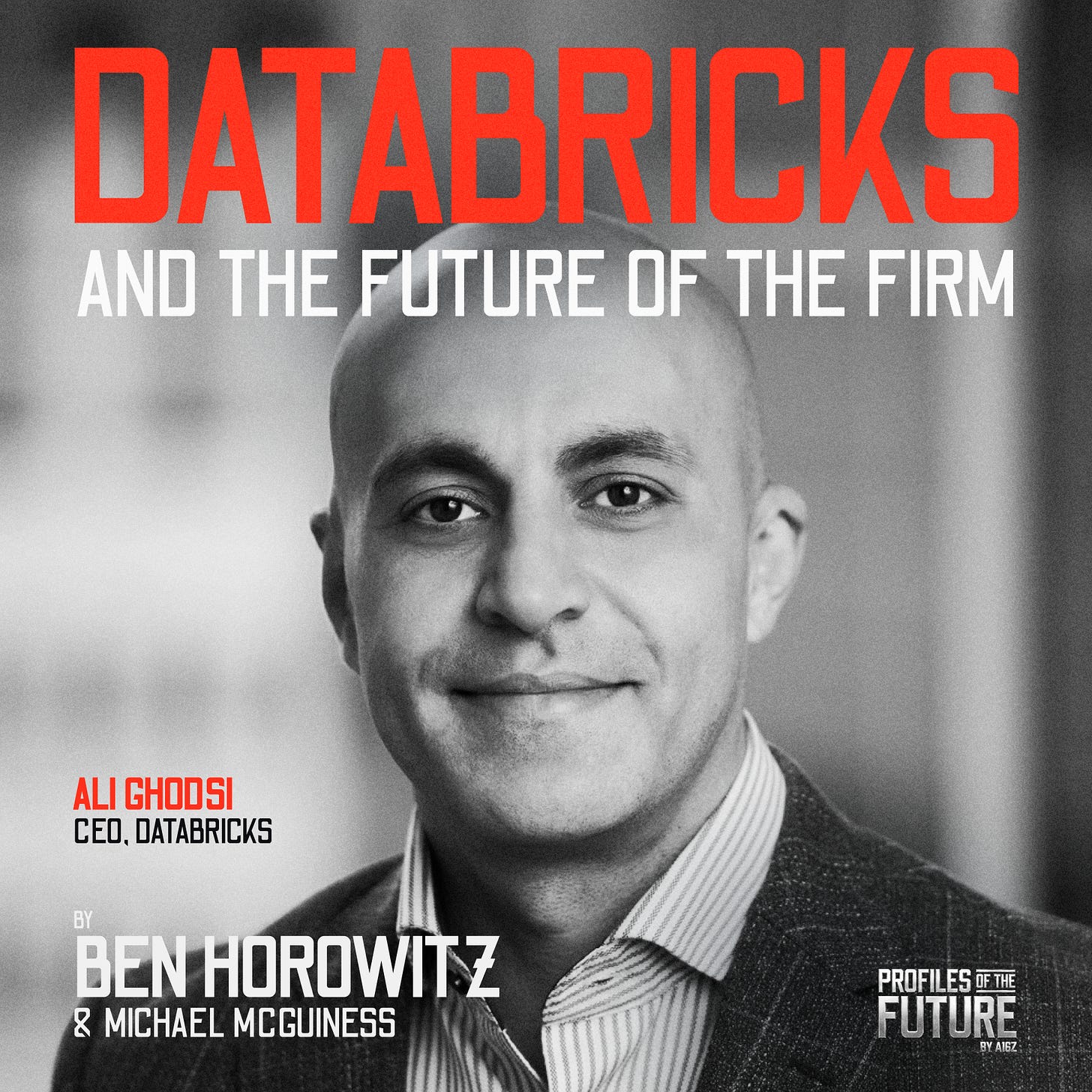
In the a16z article “Databricks & the Future of the Firm,” Ben Horowitz and Michael McGuiness stretch this thread further. They go from Spark, Lakehouse, and Lakebase to agents, and then to the company itself. Their core judgment: for agents to do work in the enterprise, there needs to be a new system of record.
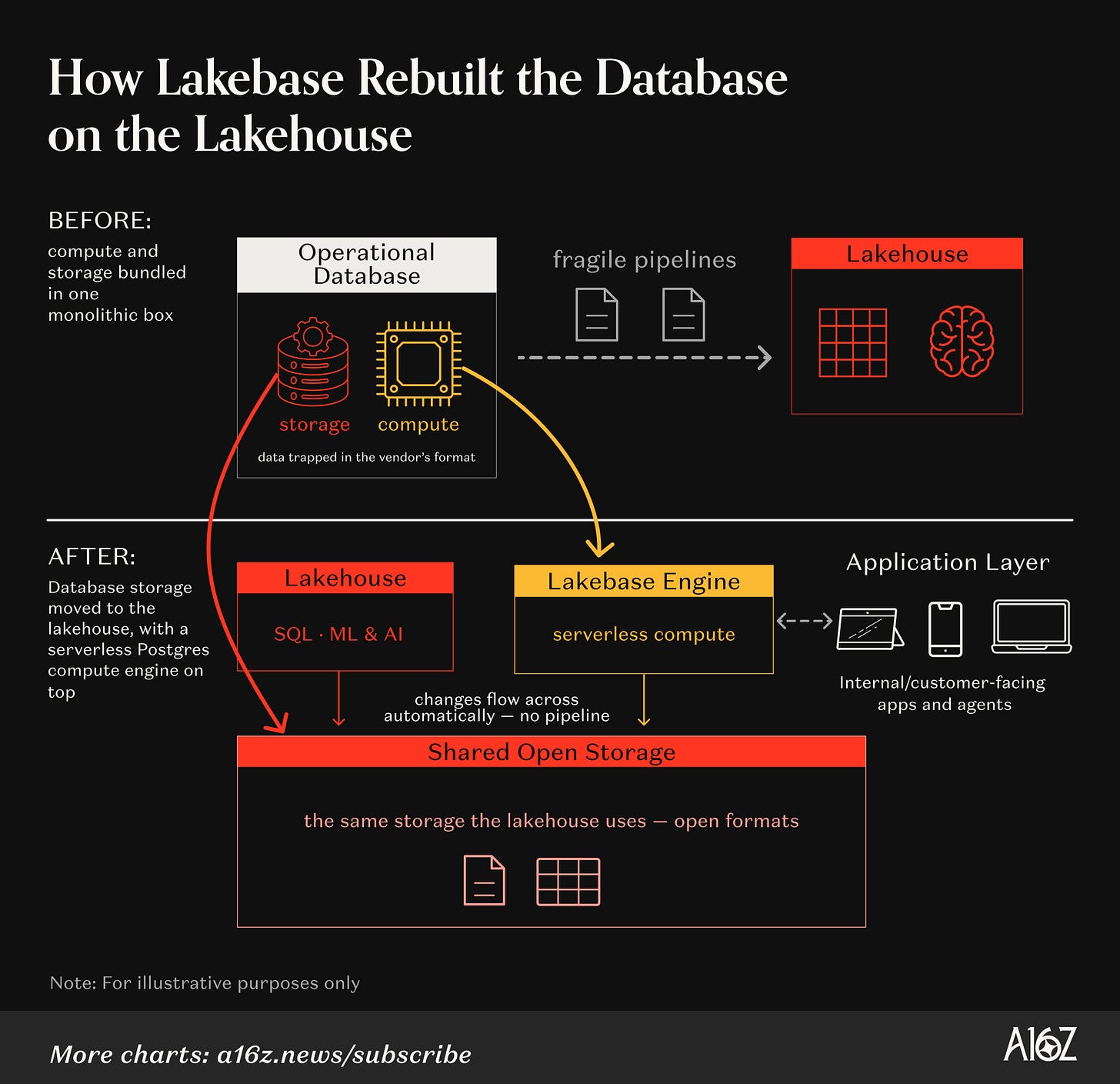
Databricks’ story was not a case of stumbling onto AI overnight. Spark solved the problem of repeatedly reading from disk in iterative computation. Lakehouse combined the cheap storage of a data lake with the reliability and SQL performance of a data warehouse. Lakebase brought the same idea to the operational database: storage and compute are separated, and the database can be branched like code. An agent can open an isolated branch to run an experiment and throw it away when done. The a16z article says that today, queries initiated by agents on Databricks already outnumber those by humans, and more than 17 million databases are started by agents every day. That number is very concrete, and it explains why the system of record has to change.
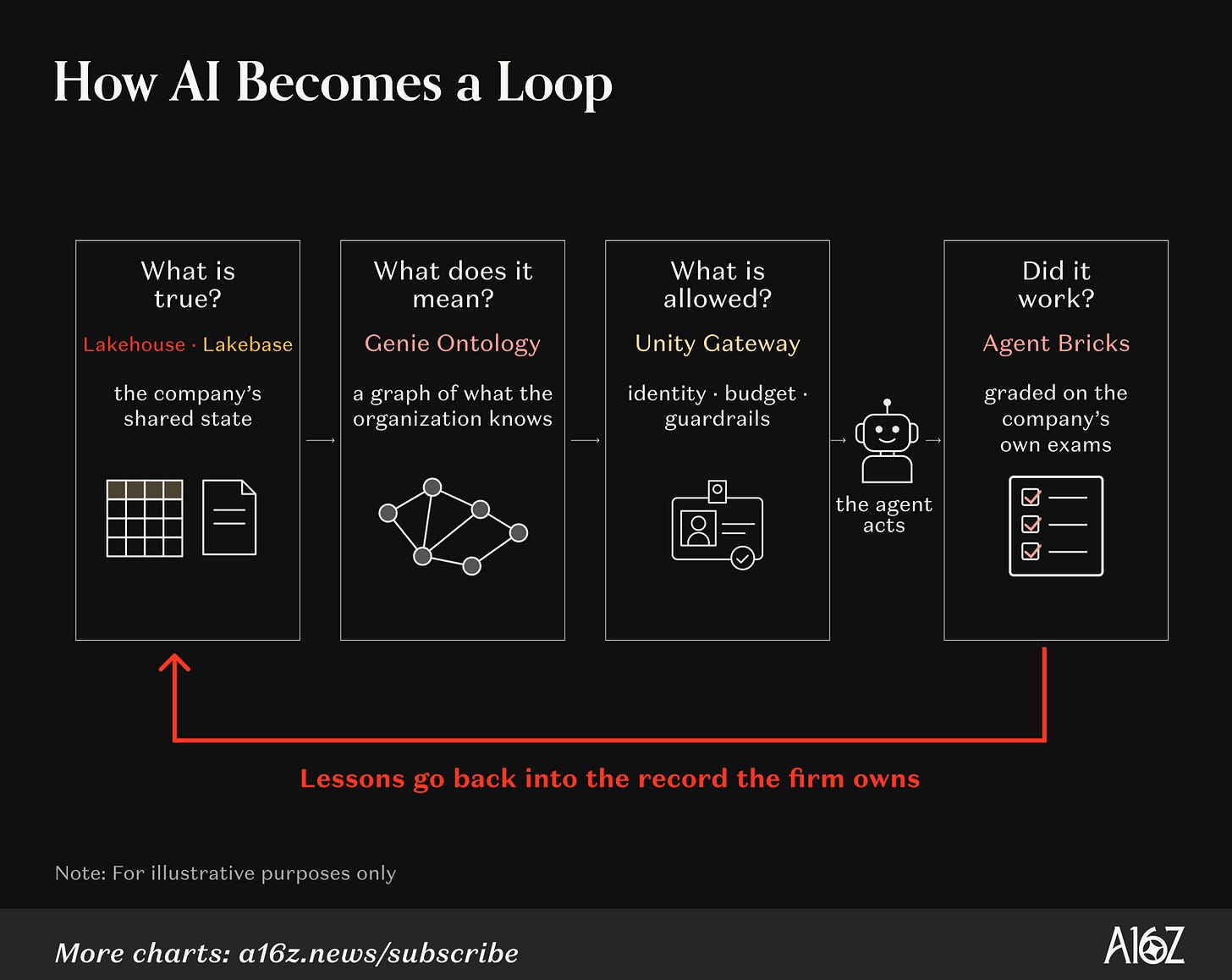
Ali calls this setup SORA, System of Record for Agents. It has to answer four questions: what is true, what it means, who is allowed, and whether it is effective. Genie Ontology tries to turn company knowledge into a graph, using OntoRank to rank definitions by authority; in tests, it raised agent answer accuracy from about 50% to 84.5%. Unity Gateway gives every model, agent, and AI tool an identity, budget, guardrails, and logs. Agent Bricks lets engineering teams write their own exams for agents.
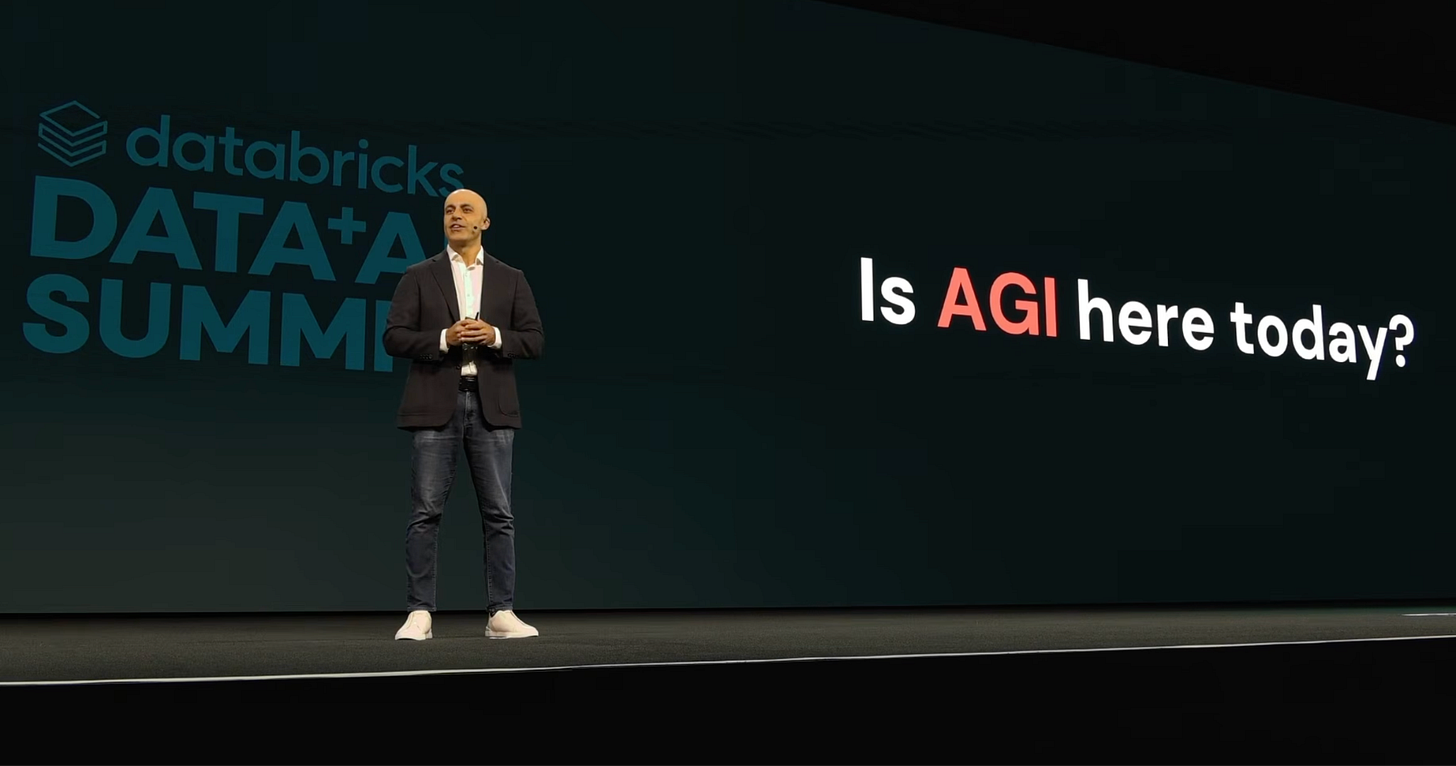
The a16z article also mentions Jack Dorsey’s “From Hierarchy to Intelligence” and James Burnham’s “The Managerial Revolution.” There is a counterintuitive point here: with more agents, management will not disappear. The long article’s claim is closer to: everyone becomes a manager. Engineers increasingly look like managers day to day: break down the problem, distribute it to agents working in parallel, review the returned PRs, send some back, approve some. As execution costs fall, judgment and execution become more complementary, not less.
More critical is sovereignty. The article gives the example of two banks renting the same frontier model. The first records only final decisions. The second records which facts produced the answer, human overrides, which decisions were effective, and which failed, and it continuously adjusts its strategy. A year later, when they switch to a better model, only the second bank carries its experience over. Satya Nadella calls this the loop between human capital and token capital. Jensen Huang says every company’s business data is a gold mine. These statements all point to the same thing: a company must own its own context, evaluations, and feedback loop, and not lose them when it changes models.
When the a16z article was published, Databricks had crossed a $7 billion run rate, up 80% year over year, at a $190 billion valuation. Model progress certainly matters. For most organizations, however, today’s productivity is hidden in more mundane places: moving tacit context into a system of record that is queryable, auditable, and portable. Whoever gets this done first is the one who can credibly talk about agent automation.
发布时间: 2026-10-28 22:47