Models are starting to understand “fun,” but the real test is whether you’d still want to play it a second time
Simon Willison says October 2026 was the inflection point for vibe coding games. Claude Opus 5.5 proved with four browser games that models can do more than build game-like shells—they can make gameplay that makes you want to play again. The community's reaction is more interesting than the models themselves.
In October 2026, Simon Willison wrote a judgment in his blog: vibe coding games have reached an inflection point.
Vibe coding means not looking at the code and relying only on prompts to get a model to build something. Over the past year or so, models have been able to generate visuals that look like games, but being fun is another matter. Game design is a craft: you have to get players to learn, fail, and try again at the right level of difficulty. Simon Willison said he originally didn't think models could do it.
Then he told Claude Opus 5.5 to “Make it a LOT more fun.” The model complied.
That sentence sounds like a joke, but it led to four browser games. They are all written in HTML and JavaScript, run in the browser, and rely mainly on three.js for 3D. Simon Willison said each of these projects took no more than 4 hours of human input, and the rest of the time Claude Code was running on its own.
Tree Appreciator: A small game made in one shot
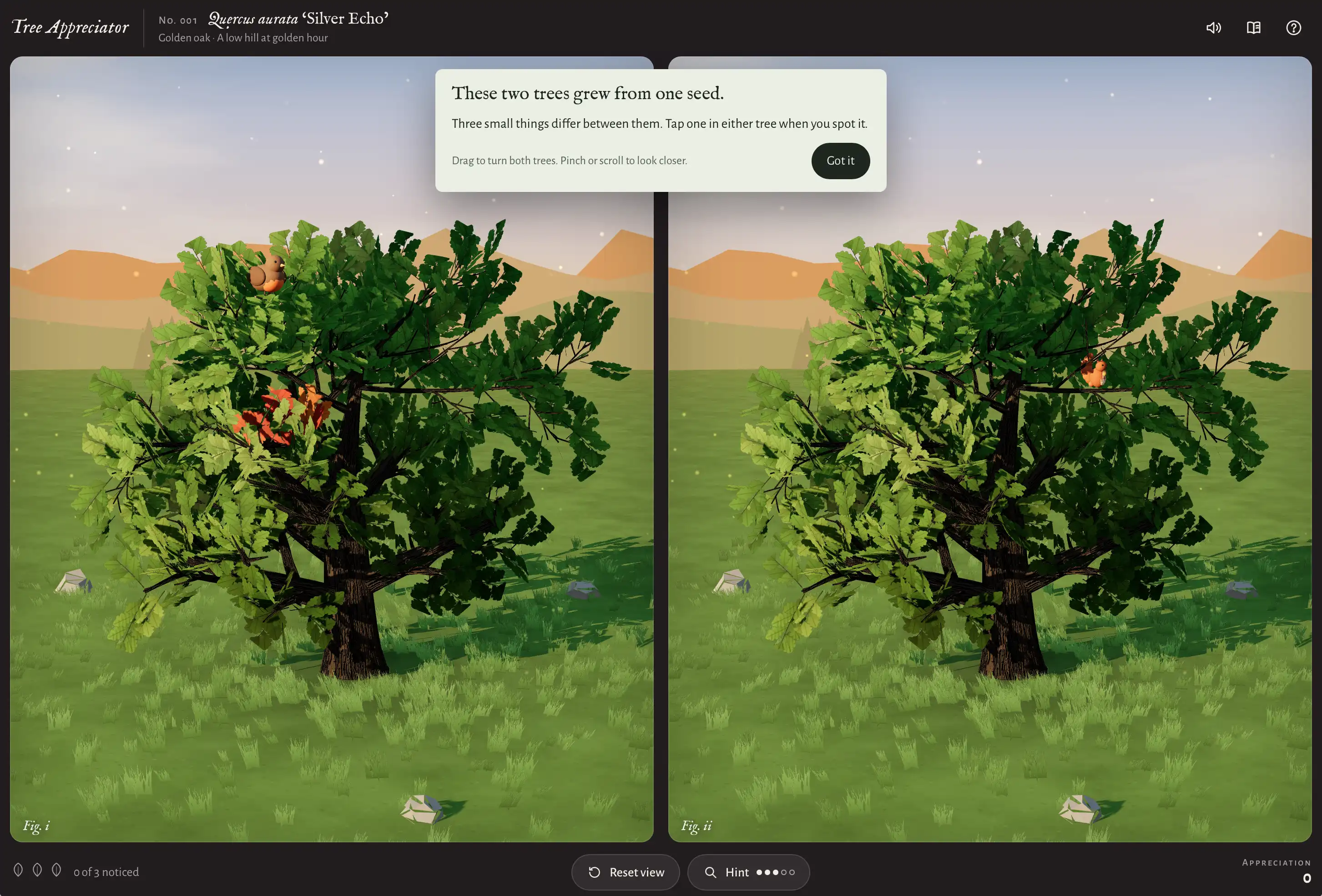
The smallest one is Tree Appreciator. Simon Willison got the idea while driving along Skyline Boulevard looking at trees, using the regular Claude chat interface, not Claude Code. The prompt was: make a three.js game that shows two algorithmically generated trees, where the gameplay is appreciating their differences, and think carefully about how to make it both fun and beautiful.
It came out in one shot. A mobile-friendly spot-the-difference game with two 3D trees side by side; birds, squirrels, and autumn leaves are hidden in the canopy, and when you complete one tree it goes into a specimen book.
Emberwick: From an engine demo to a 15-minute story
Emberwick is more ambitious. Simon Willison first had Claude make a top-down fantasy RPG engine demo: a village, NPCs, furniture, and walls becoming transparent when you enter a building. The first version was already good.
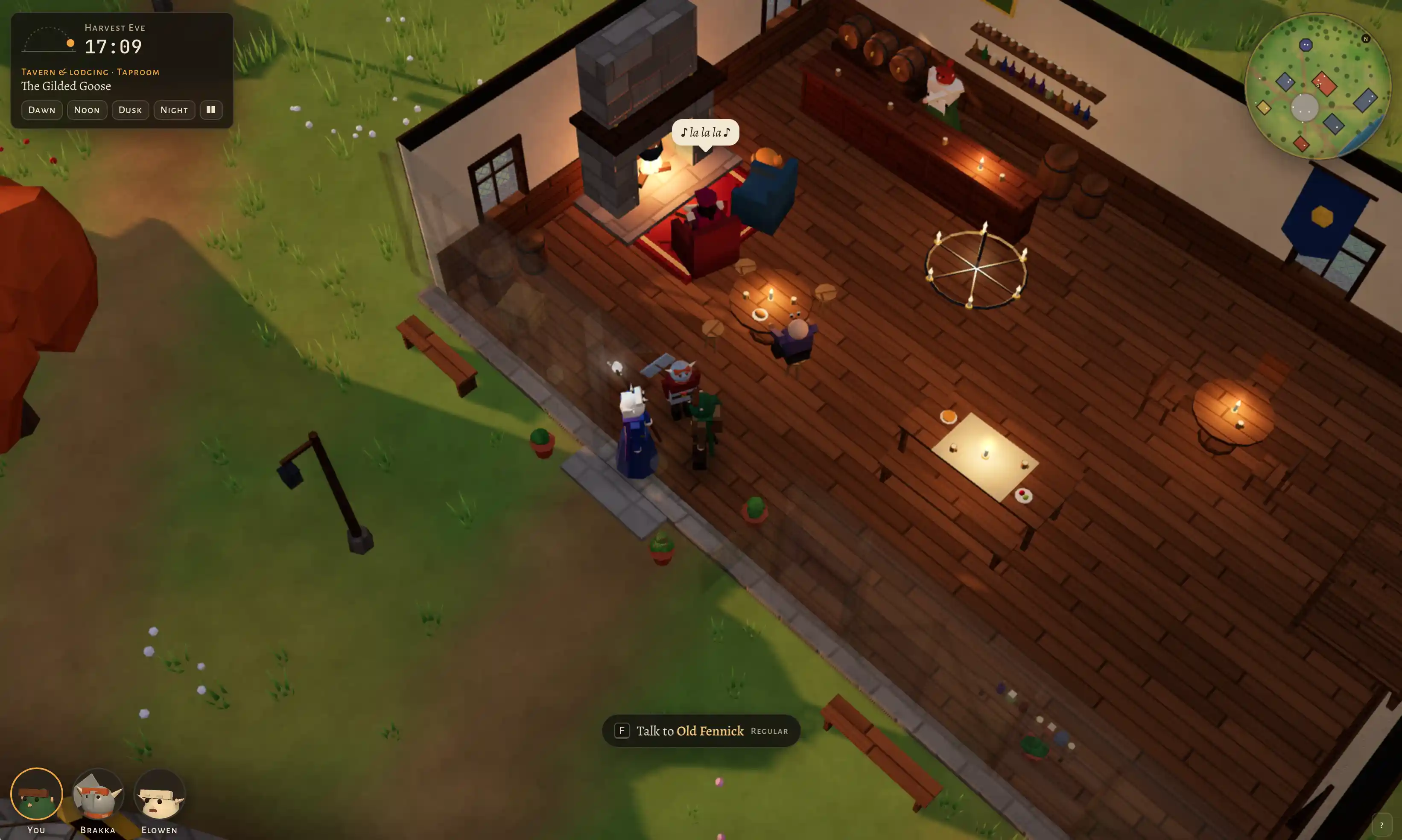
Then he added requirements: make the terrain less flat, add basements and tunnels to two buildings, and add a mountain and a sleeping troll on one side of the village.
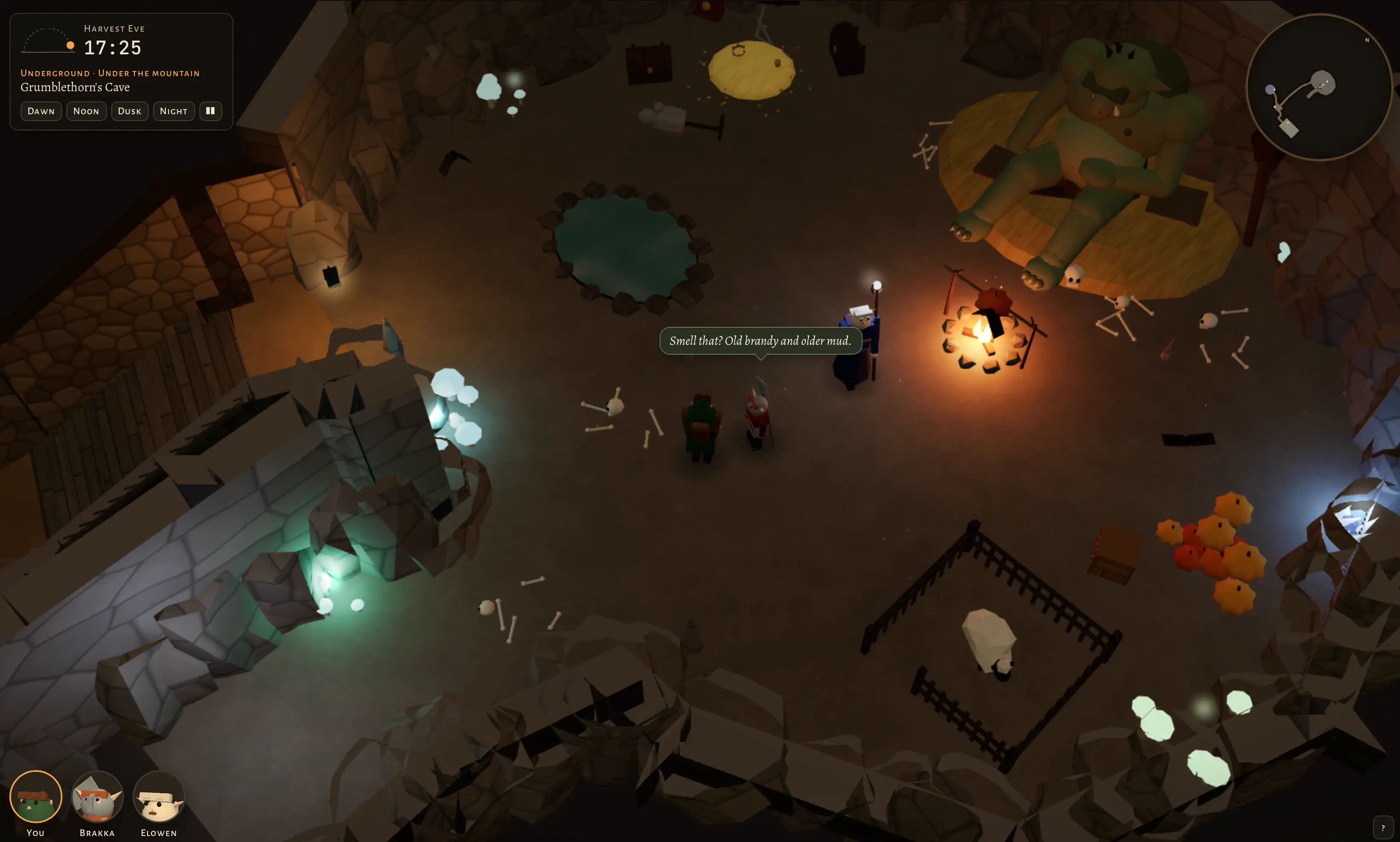
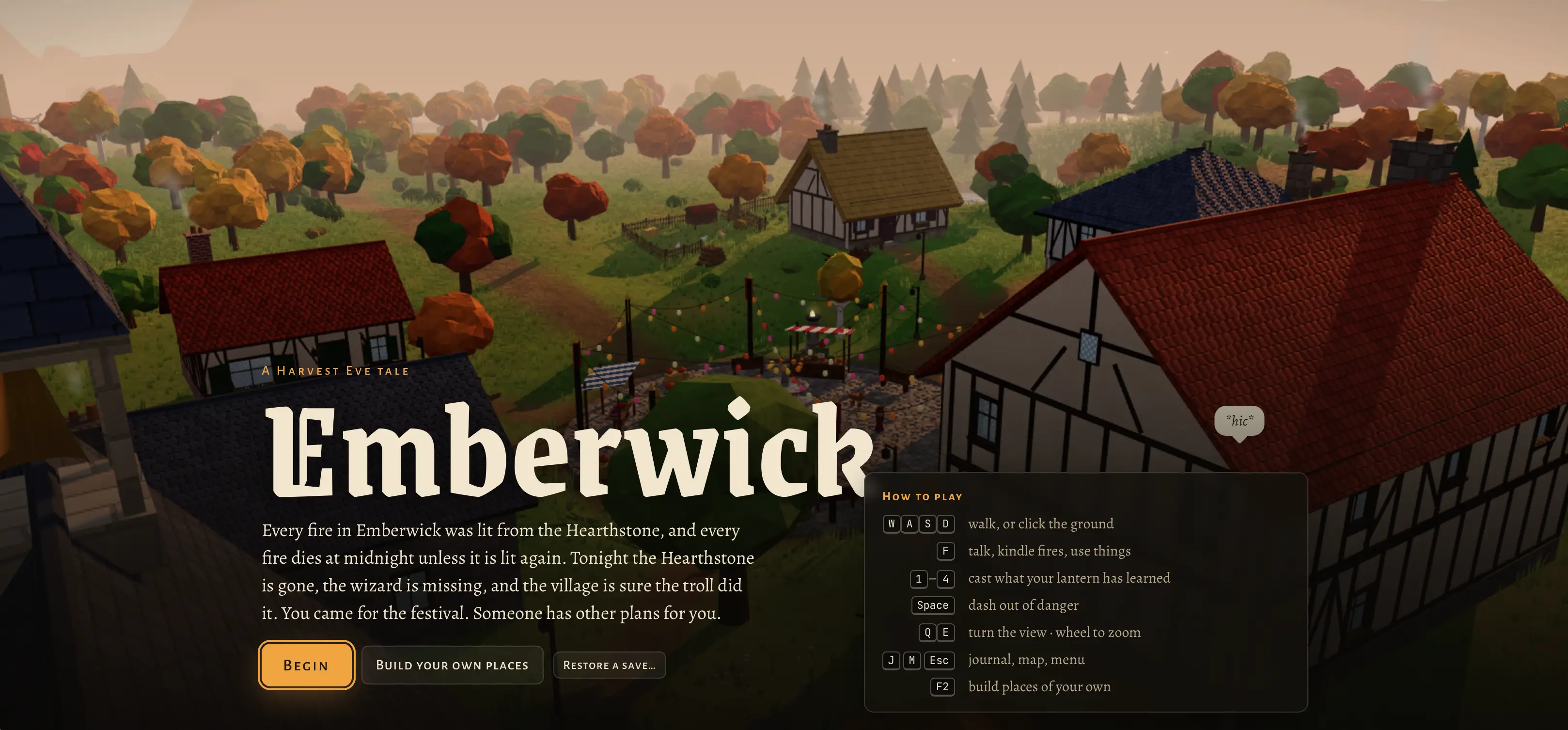
Finally, he had the model turn it into a complete game: expand the map, add mechanics, story, and a magic system, and also asked that the story not be too clichéd. The finished product is about 15 minutes long and has a title screen, saves, and an experimental level editor. Simon Willison said he was moved when he reached the end. Although the visuals, story, characters, music, and dialogue all came from the model, his creative input was basically just “a fantasy village and a sleeping troll in a cave.”
Battle Drones: The model knows what fun means
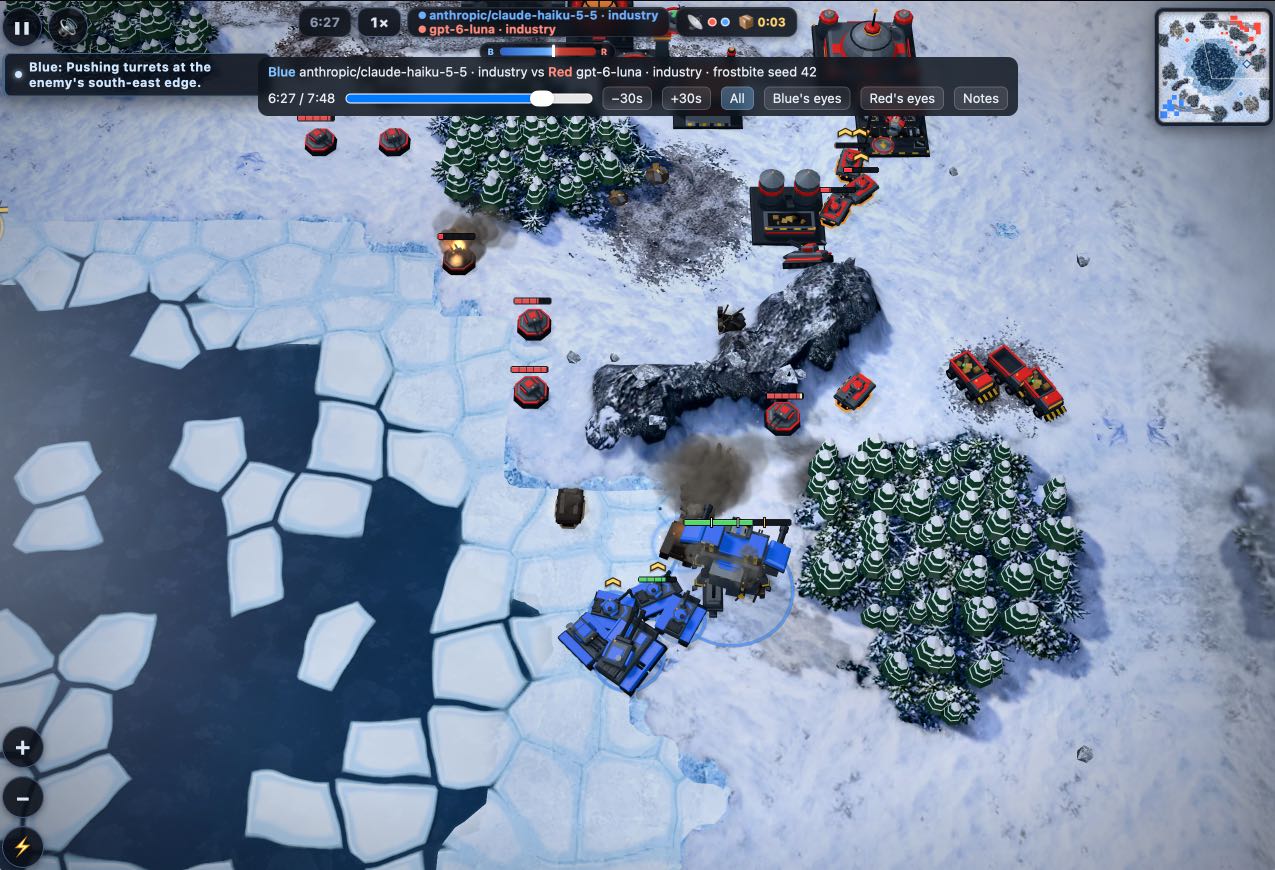
Battle Drones is a real-time strategy game in which two robot armies build units, collect scrap, and compete for territory. An early version was made with Claude Fable 5 and was playable but not good enough. Simon Willison told Opus 5.5 to “Make it a LOT more fun,” and then had it port the game to three.js; the game changed completely.
Now it has 2-to-4-player multiplayer, medals, replays, 7 maps, a random map generator, and a set of mutators that change the rules. It can even let different LLMs play against each other: the game advances for 5 seconds, pauses, and lets the models read the state and issue commands. Here is a replay of Claude Haiku 5.5 versus GPT-6 Luna.
Pumpkin Farmer: A pelican mayor and giant pumpkins
Pumpkin Farmer, also called Quarter Sun Cove, is a project Simon Willison made after moving to Half Moon Bay. Every year there is a pumpkin festival and a giant pumpkin weighing contest. The game is a cozy farming simulator: grow regular pumpkins to sell, and grow giant pumpkins to compete. All the characters are vegetarian animals, the mayor is a pelican, and the player can choose a pelican, skunk, raccoon, opossum, beaver, coyote, fox, owl, sea otter, or seal.
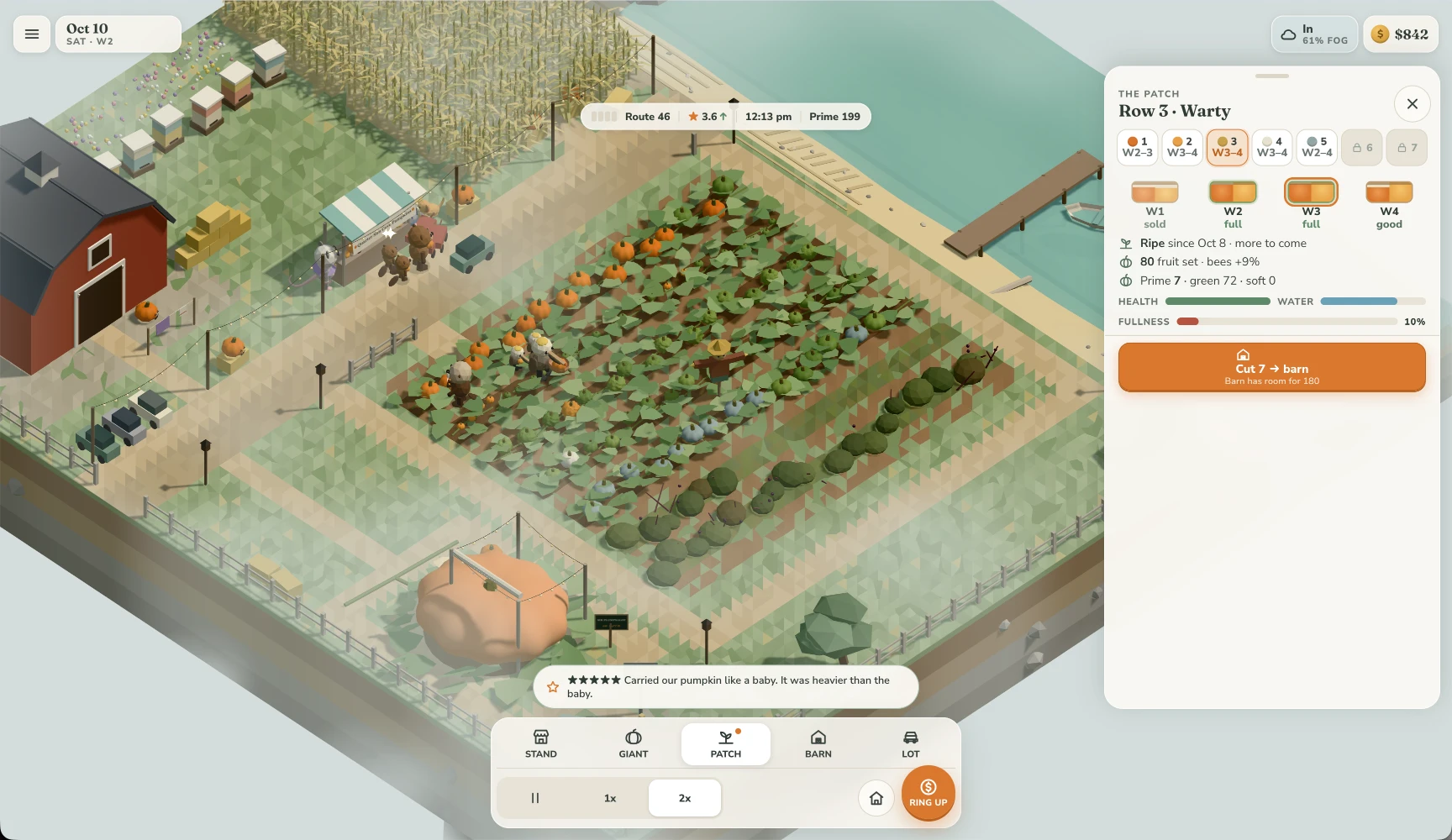
He told Claude to “frequently surprise and delight the user,” and the result was packed with details: mischievous raccoons, an elephant seal hosting the weigh-in, seals rolling pumpkins back into the sea, wandering goats, and some superstitions about giant pumpkins that occasionally come true. Simon Willison said this is not his best game, but it represents the direction he wants: weird, fun, personal, and unlike anything someone would have made in the pre-AI era.
What the community is asking
People asked how many prompts fun requires. Others asked whether anyone who hadn't seen the prompts had playtested the games. The latter is the tougher evaluation.
One commenter said that at a recent LAN party, instead of choosing games in advance, they built the game on the spot at the start. Someone gave Opus 5.5 22 minutes of WoW footage and had it use ffmpeg to cut a 33-second trailer with music and Ragnaros lines. Someone else put an LLM inside a game and made a pixel-office prototype that runs a real LLM in the browser.
Simon Willison also mentioned the other side: the game community already resents AI-generated assets. Vibe-coded games combine AI-generated visuals, music, writing, and code, which for opponents is four times as offensive. But he thinks the results are not bad, and that this will create a split: some people will reject it, while others will treat it as a tool that lowers the barrier to entry.
The real benchmark
Games have become a new exam for models. They require 3D, music, gameplay, story, and interaction to all work at the same time, and any weak link will show. Simon Willison said GPT-6 Astra is not quite there yet: it can build games, but its sense of fun is not as good as Opus 5.5's, and he expects OpenAI to catch up by the end of the year.
For ordinary users, the barrier is absurdly low: open chatgpt.com or claude.ai, type “Build a mobile-friendly three.js game where...”, and you can start. Once a project gets past proof of concept, switch to Codex or Claude Code. If the game isn't fun enough, add one line: “Make it a LOT more fun.”
But whether you'd still want to play it a second time is the real test of whether a model truly understands “fun.”
发布时间: 2026-10-29 11:50