The Guy Who Switches Input Methods 300 Times a Day Built His Own Keyboard
Vikey is free and open source, automatically switching between English and Vietnamese, and claims 99.73% accuracy. It targets bilingual users' daily routine of repeatedly switching input methods, but the remaining 0.27% of ambiguous words are the real trust threshold for this kind of tool.
When Tony Dinh posted Vikey on X, he put the pain point directly: switching input modes 300 times a day on a laptop and phone. For people who use only one language, that number doesn't mean much; for those who write in mixed Chinese-English, English-Vietnamese, or English-Italian, one wrong input-method switch means going back to fix the sentence.
What Vikey does is simple: automatically switch between English and Vietnamese while typing, so you no longer need to press a shortcut. The official website says it is free and open source, uses Telex input, and the current version is v1.0.26. The page lists downloads for macOS, Windows, and Linux, with iOS marked as coming soon; the author says iOS is awaiting Apple review and claims coverage across 5 platforms. The source code is on GitHub.
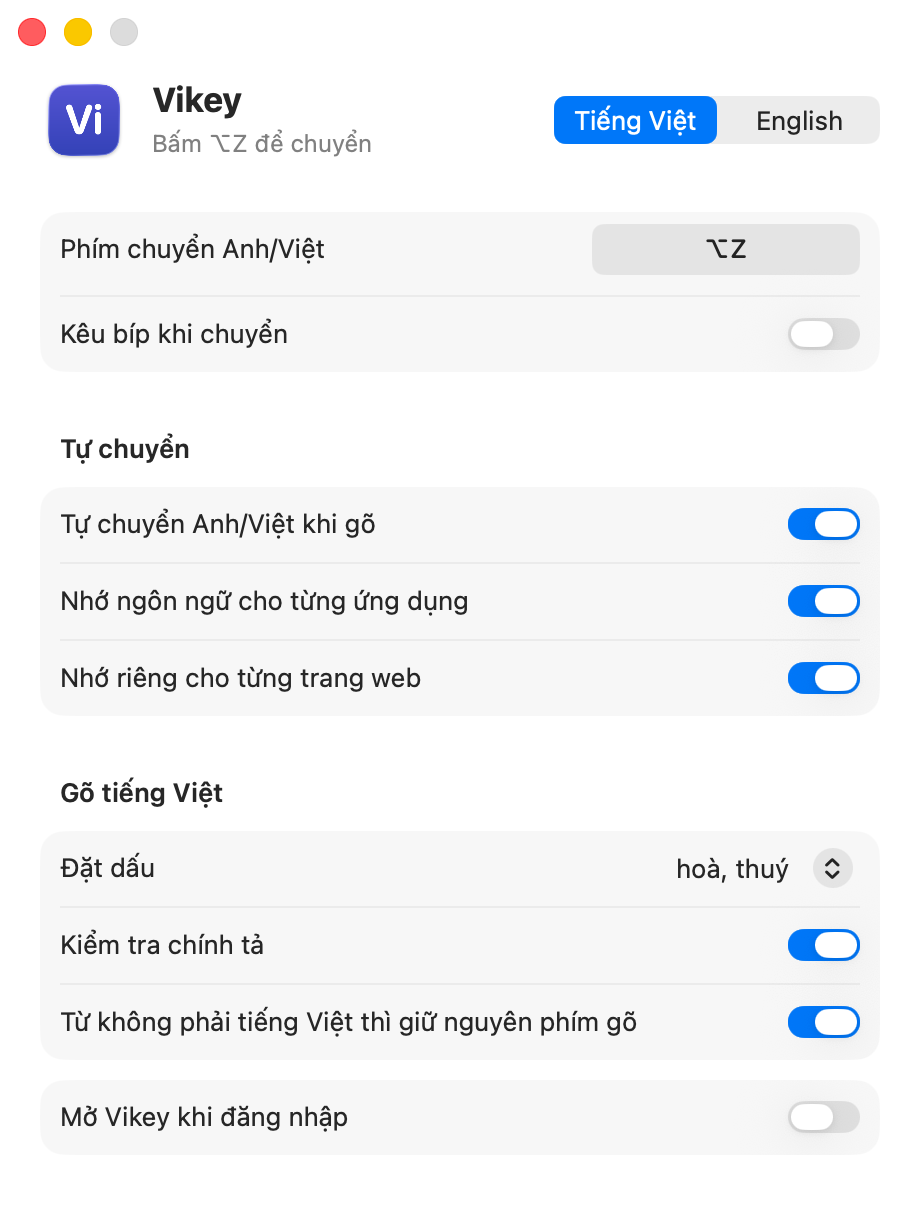
The value of this kind of tool is very concrete: it reduces high-frequency small actions; having one more keyboard is not the point. Bilingual users switch input methods every day far more often than many people imagine. In the comments, some people write mixed Chinese-English, some use Italian, English, and Indonesian, and they all describe the same problem: manual switching interrupts the rhythm of a sentence.
The difficulty of automatic switching is also clear. The author claims 99.73% accuracy and admits there are 'impossible cases.' Some users asked what to do with short words that are valid in both languages, such as an, to, ban, and can. The author replied that it looks at nearby words to decide. As for what exactly the 0.27% is, he has not published a complete list. This is where the product really needs to be tested: if a wrong switch happens in an unimportant place, users may tolerate it; if it happens in a client message, a code comment, or a formal email, one time is enough to make people turn off automatic switching.

Some users directly questioned that one unnoticed wrong switch costs more than pressing a shortcut. Others said small glitches can break muscle memory, so they have trust issues with a new Vietnamese keyboard and keep using their old tools. Tony Dinh's reply is that muscle memory is overrated and you have to escape the local minimum. That is an interesting line, but a keyboard is a high-frequency tool; whether users are willing to migrate depends not only on features but also on whether errors can be quickly corrected when they appear.
Vikey's entry point is very specific: bilingual input switching. It does not cater to monolingual users, nor does it try to make grand arguments. Being free and open source lowers the cost of trying it; the official website offers direct downloads, and the code is visible on GitHub. For people who switch input methods dozens or even hundreds of times a day, it is worth a try; for people who use only one language, they may not feel it. What remains to be seen is how annoying that 0.27% is in real typing.
Official website: https://vikey.app/
Source code: https://github.com/tonyminibot/Vikey
发布时间: 2026-10-30 09:26