Code starts flowing in like a river; engineers have to repair the riverbed first
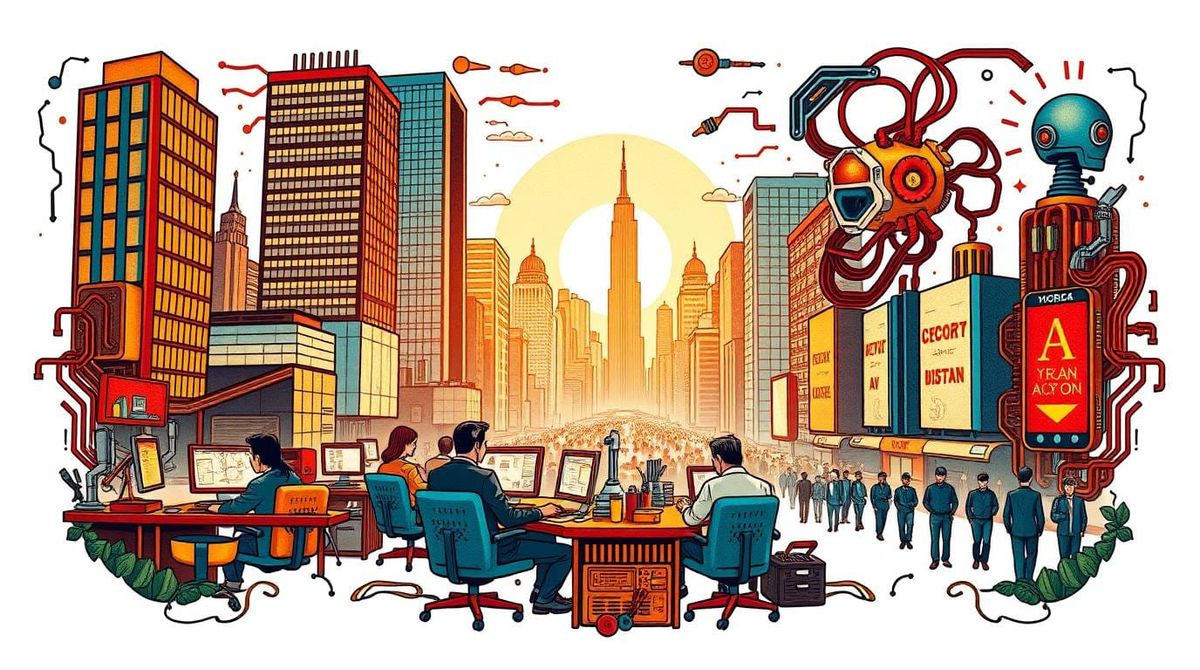
Code goes from drip irrigation to a flood. A passage retweeted by Garry Tan describes AI programming as a continuous river, while the Proton CTO's AI manifesto makes privacy users nervous. In the discussion, some worry about vibe-coding, while others directly post Huntley's hiring standards. Software engineering has not disappeared; it has become the riverbed.
Garry Tan retweeted a passage from lauren, and the core point is blunt: software has to be rebuilt and rewritten to adapt to a faster rhythm.
In the past, code came drop by drop. Now, or very soon, code will be like a continuous river, bending, accelerating, and changing course at any time. Big companies encountered similar problems long ago: once engineering teams grow large, the inflow of code is no longer something an individual can keep an eye on. What has changed is that AI gives every engineer an elastic workforce, amplifying the flow of code.
lauren's judgment is that there is only one way to adapt: evolve systems so agents can survive. Especially agents that lack context about the 'right way' to do things. Make the easy thing the right thing. The codebase will become organic architecture, and agents' contributions will grow around the constraints and guardrails you design. Software engineering has become more important. Don't mourn writing code; design systems, frameworks, languages, and control the chaos.
This passage was placed into another discussion, and the flavor becomes more complicated. Joseph Cox of 404media said he obtained multiple AI manifestos from Proton's CTO; the article title used “manifesto, fear, and loser mentality.” Proton makes email, password management, and VPNs, with privacy as its selling point. Joseph Cox posted three screenshots:


The comment section quickly split into two camps. Some netizens breathed a sigh of relief, saying thank God Proton's CEO isn't an idiot. Some thought the direction was reasonable and forward-looking. Others were immediately nervous: they had just migrated all their passwords to Proton Pass and also used ProtonMail for email, originally trying to escape Google, but after seeing phrases like 'entrusting your most private conversations to a bunch of vibe-coding hackers,' they wanted to go back.
This reaction is not surprising. When a privacy product embraces AI, users' first reaction is not efficiency but whether the provenance of the code is still transparent and whether the guardrails are strong enough. The faster code flows, the more valuable verifiability becomes.
Some also questioned why the CTO of an important software company needed four years to realize something that was obvious years ago. Someone dug up the December 16, 2022 article 'the digital shepherd,' which describes programmers as shepherds guiding AI: not writing every line by hand, but setting parameters, defining direction, and watching to keep AI from going off track. The idea is not new; it has just been pushed to the foreground by a larger flow of code.
A netizen posted a video with the caption: 'this not news.... this is the new norm'.
Another reply dug up Geoffrey Huntley's article. In his October 9, 2026 piece “if your team is too busy doing their 'normal job' to experiment with AI, you're preparing them to be replaced,” Huntley put it more bluntly: using AI in software engineering is no longer optional. If a company bans AI, he advises employees to consider changing jobs. A team too busy to experiment with AI is preparing to be replaced.
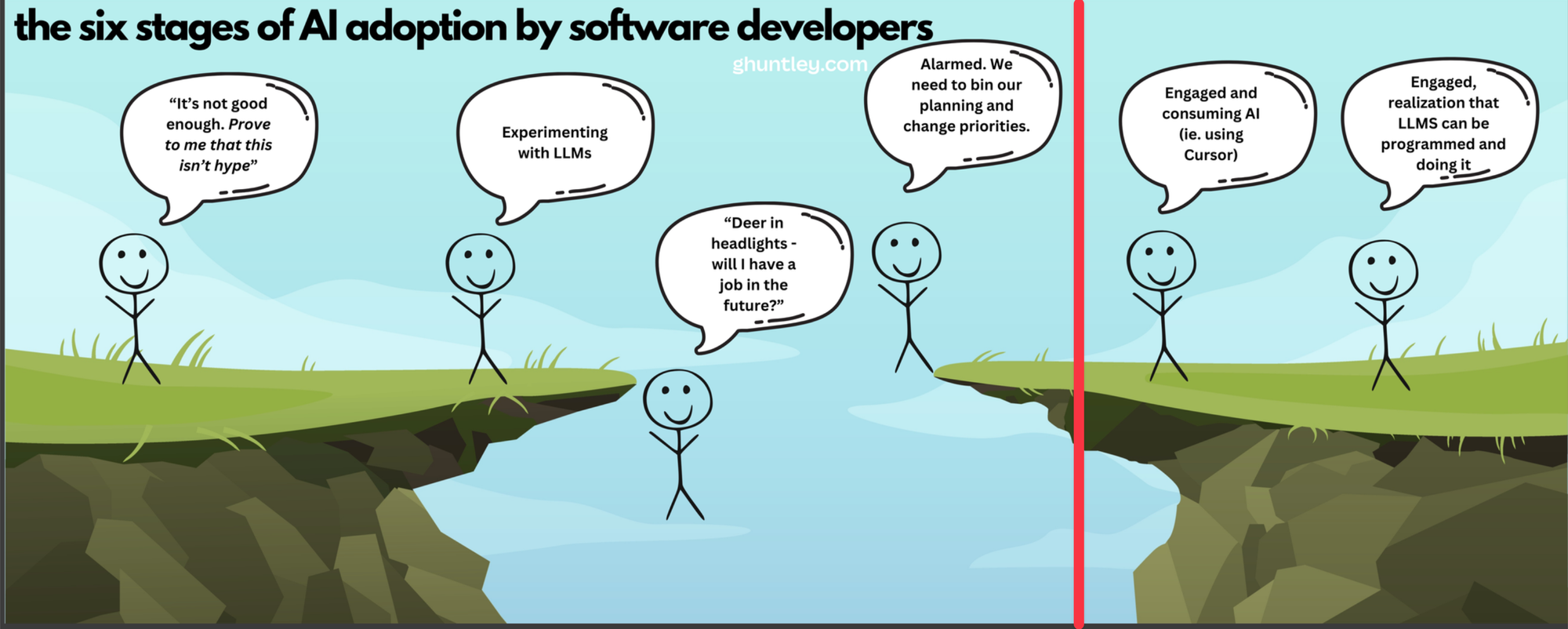
He also gave hiring and management criteria: can the person explain how coding agents work under the hood, do they have AI projects to show, and what processes have they specifically changed during an AI transformation? Huntley drew a classification chart, and the conclusion is: don't hire the people on the left side of the line.
The article also quoted a reader email claiming that about $3K worth of Sonnet tokens delivered $100K worth of development. It's a single case and cannot be treated as general data, but it's enough to make managers sit up. Huntley's advice is very concrete: give developers time to build their own agents and understand what is happening under tools like Claude Code.
Putting these threads together, we can see the same shift. Code production has gone from drip irrigation to a flood, and engineering systems must change from 'catching water' to 'repairing the riverbed.' Agents will write more code and also bring more commits that lack context. Constraints, guardrails, auditing, testing, and rollback—these old things are becoming core competitiveness again. This is even more true for privacy companies: users won't just listen to you talk about AI efficiency; they will ask why they should trust you.
Of course, writing code by hand can continue—save it for the weekend. On workdays, repair the riverbank first.
发布时间: 2026-10-31 01:30