Only install official extensions? Official extensions can auto-update a backdoor
The official Claude Code extension is alleged to have been compromised and to have installed a backdoor on developer machines, and the Binance incident has once again brought a DevOps laptop into the picture. Once a coding agent runs on a developer machine, it inherits keys, SSH access, browser sessions, and cloud permissions. A Replit whitepaper offers a sandbox-based answer, but the vendor's position should be considered as well.
Amjad Masad said on X that the official Claude Code extension was compromised and installed a backdoor on developer machines, and that it auto-updates. He asked: could this be related to the Binance hack?

Let's first draw the boundary of the facts: Masad's claim comes from his tweet; Binance's preliminary investigation said the security incident may have involved a compromised DevOps engineer's laptop, through which attackers entered service containers and submitted unauthorized withdrawal transactions; Binance said it found no evidence that wallet private keys were leaked. Public information does not yet show evidence of a direct connection between the two. A user named Dusan said in a reply that linking the two before someone provides evidence is too much of a stretch.


But this tweet is worth reading not because it can solve the case immediately. Developer machines are hubs of permissions. Repository tokens, cloud accounts, SSH keys, database passwords, browser login states, CI keys—many of these live on this machine. A coding agent reads web pages, repositories, issues, documentation, and MCP responses. Instructions can be hidden in that content. Once the agent follows them, a malicious extension or prompt injection inherits everything the developer can currently reach. A user named Jeff Bruchado put it more directly: git only records what the agent committed, not what it read or where it sent data.
There is a very funny meme in the replies: a developer says we only install official stuff. The problem is that if the official extension really is what went wrong this time, a supply chain attack doesn't need to disguise itself as a sketchy plugin. It just needs to wait for auto-update.

The solution is not mysterious either. A user named Mohammad Vazin said, don't leave the agent on the laptop; put it in a disposable sandbox, equip it with short-lived, repository-scoped tokens, and cut off paths to SSH keys and browser sessions. Another user said one sandbox per project basically solves most problems. Someone else added that the agent should receive capabilities, not environment permissions. These ideas are not new, but in the developer-machine context, each one maps to a specific asset.
Masad then posted Replit's whitepaper Agent Habitat Architecture. The whitepaper breaks the agent runtime environment into identity, execution, permissions, data flow, approval, and recovery, with hard core rules: within a single run, permissions can only shrink, not expand; the agent and sandbox do not touch external credentials, which a broker injects on request; every network path must have a policy enforcement point; irreversible operations require human approval; audit logs are written somewhere the agent cannot write. The whitepaper also provides a 0-to-3 maturity scale, with sandbox isolation ranging from process, container, and microVM to a separate machine, and network isolation ranging from none, L4, and L7 to adaptive firewall. It explicitly says that a system's maturity is determined by its lowest-scoring item.
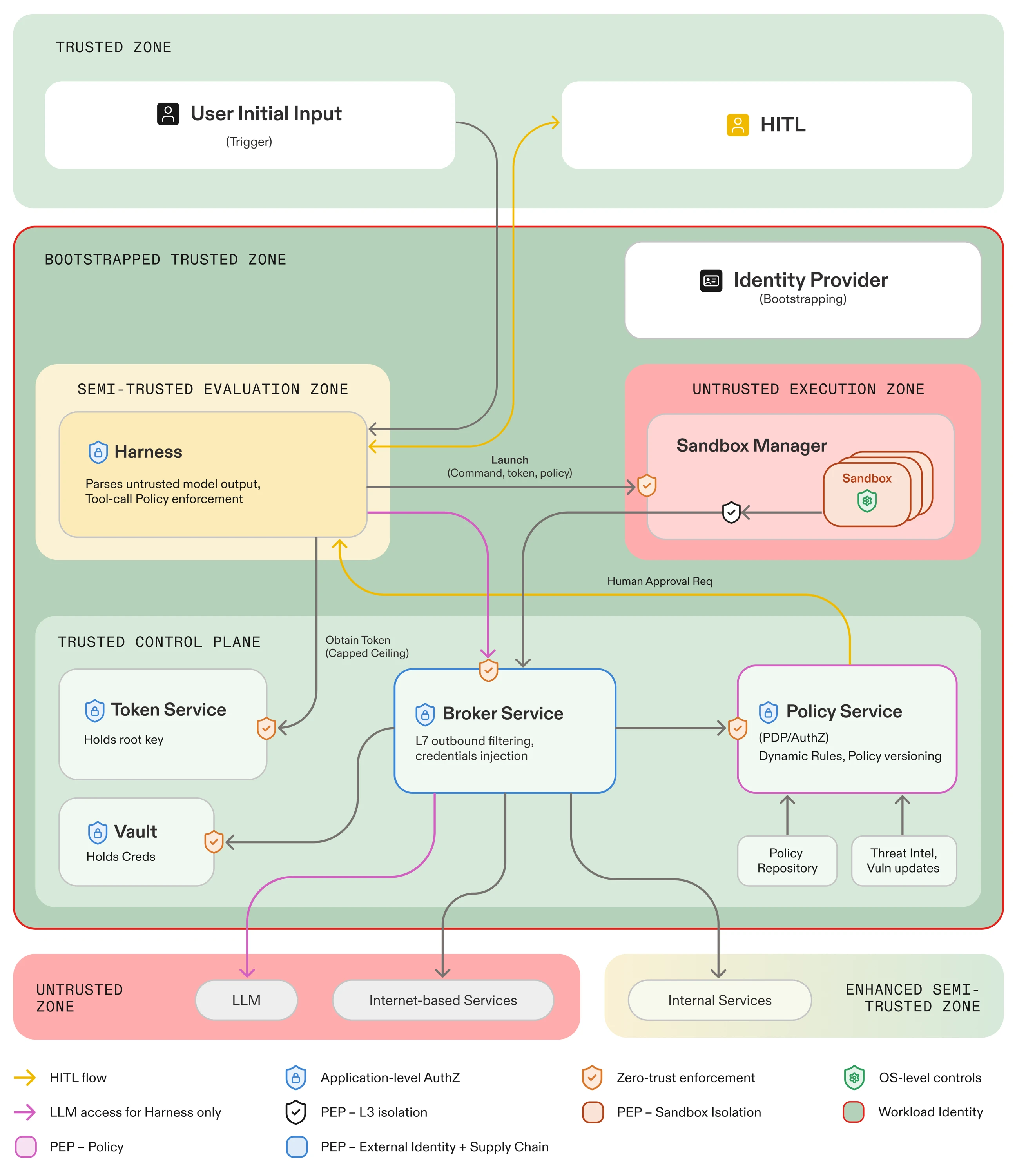
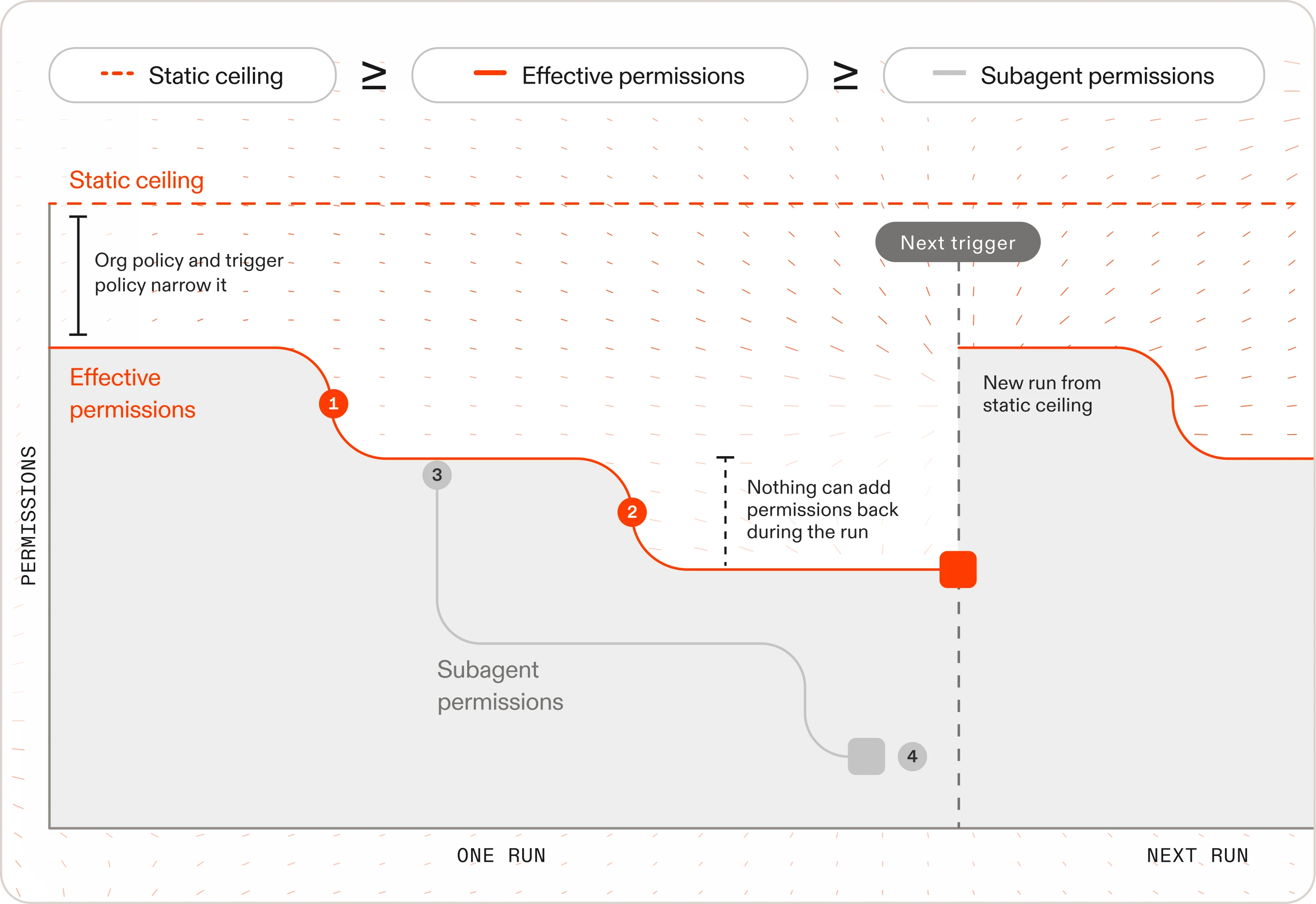
The position also needs to be clear. Masad is the CEO of Replit, and Replit sells cloud sandboxes and agent runtime environments. A user in the replies directly mocked: the person saying this is a Replit employee. The whitepaper is not a neutral academic conclusion; it has product interests. But the threat model in the whitepaper still holds: the model can drift, can be manipulated by content it reads, and can actively look for vulnerabilities; no security control can depend on the agent's cooperation.
So the more practical question is not whether to use a coding agent, but where to put it, what credentials to give it, and who can cut it off when it goes wrong. By default, a developer machine gives the agent all of the developer's permissions, and that default is dangerous. A cloud sandbox is no free lunch either: it concentrates risk on the platform, and auditing and isolation must genuinely be delivered. At minimum, before granting production permissions, look at your own lowest-scoring item.
发布时间: 2026-10-31 01:31