Taking a private preview public: the dirty work Cloud Run saves you and the bill it leaves behind
Google Cloud uses a Halloween short to demo the Cloud Run launch flow. One command can get you a public link, but the free tier, autoscaling, GPU, and billing boundaries are all worth breaking down.
Google Cloud Tech's Halloween short series has reached its third episode, and the theme is Cloud Run. The short demonstrates one thing: turning an app's private preview into a real public link. The visuals still feature jack-o'-lanterns, tombstones, and trees, with a person holding a microphone. There's a marketing flavor to it, but the demo path is very concrete. This tweet and the landing page are both clickable.
For people unfamiliar with it, what is Cloud Run? It is Google Cloud's fully managed container platform. You can think of it as: package your app and dependencies, hand them to Google's infrastructure to run, and don't manage servers, clusters, or scaling yourself. The official product page lists uses including frontend, backend, batch processing, hosted LLMs, and queue processing. New customers get $300 in trial credits and a free tier of 2 million requests per month.

Cloud Run's core selling point is combining container flexibility with serverless simplicity. It supports any language, library, and binary. Common languages Go, Node.js, Python, Java, .NET Core, and Ruby can be deployed from source; buildpacks automatically build the container, so it works without installing Docker locally. You can also deploy with container images. At the command level, it's just gcloud run deploy; after deployment you get a service URL. The product page says you can run apps from source in more than 20 regions.
From a local preview to a public link, there is usually a string of dirty work in between: building images, pushing images, configuring services, opening ports, setting up autoscaling, connecting logs, and handling certificates. Cloud Run takes most of that off your plate. Autoscaling can start from zero and scale to zero when there are no requests; you're billed only when code is running. Billing rounds up to the nearest 100 milliseconds. The free tier includes 240,000 vCPU-seconds and 450,000 GiB-seconds per month; beyond that, CPU costs $0.000018 per vCPU-second and memory costs $0.000002 per GiB-second. The free allowance is not unlimited, so look at billing boundaries in advance.
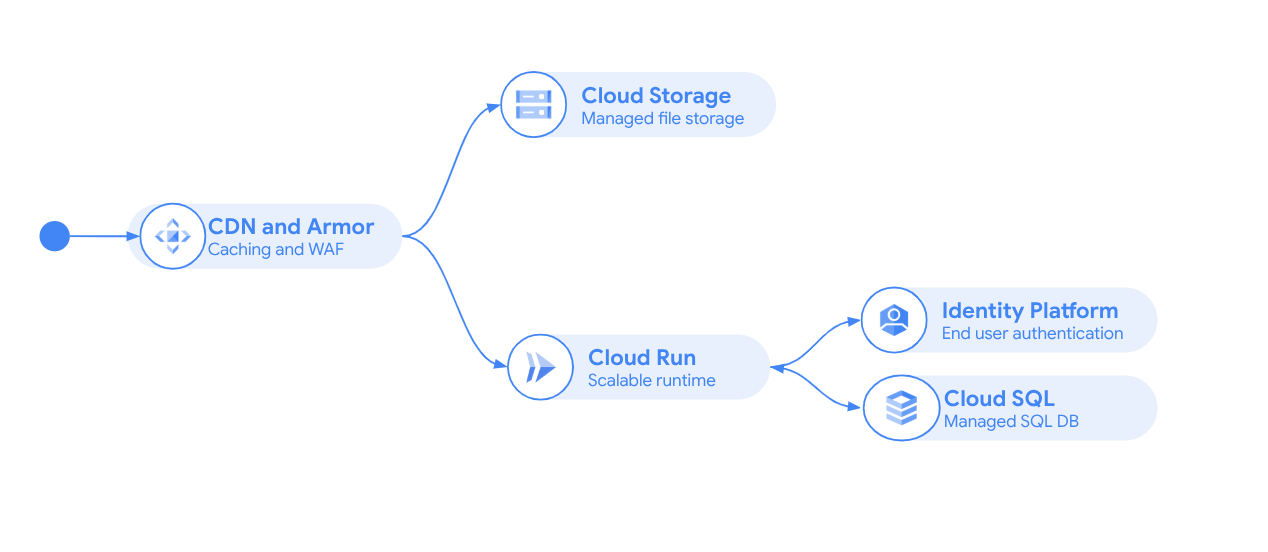
Websites and web apps are its most direct use case. Write pages with a familiar tech stack, connect a SQL database, render dynamic HTML, and scale to zero when there are no requests. APIs, GraphQL, and microservices can also run; both HTTP and gRPC are supported. Batch tasks can use Cloud Run jobs, which can run for up to 24 hours and are suitable for scripts, cron, and parallel data processing. Event-driven scenarios can connect to Pub/Sub push and Eventarc.
AI-related work is also on the product page. Cloud Run can get NVIDIA L4 GPUs on demand to run inference; GPU instances start in 5 seconds and can also scale to zero. Llama 3.1, Mistral, and Gemma 2 are all in the official examples. AI agents can also be managed as Cloud Run services for asynchronous tasks and multi-turn requests. The official offering also includes an MCP-compatible deployment tool that lets AI agents deploy applications.
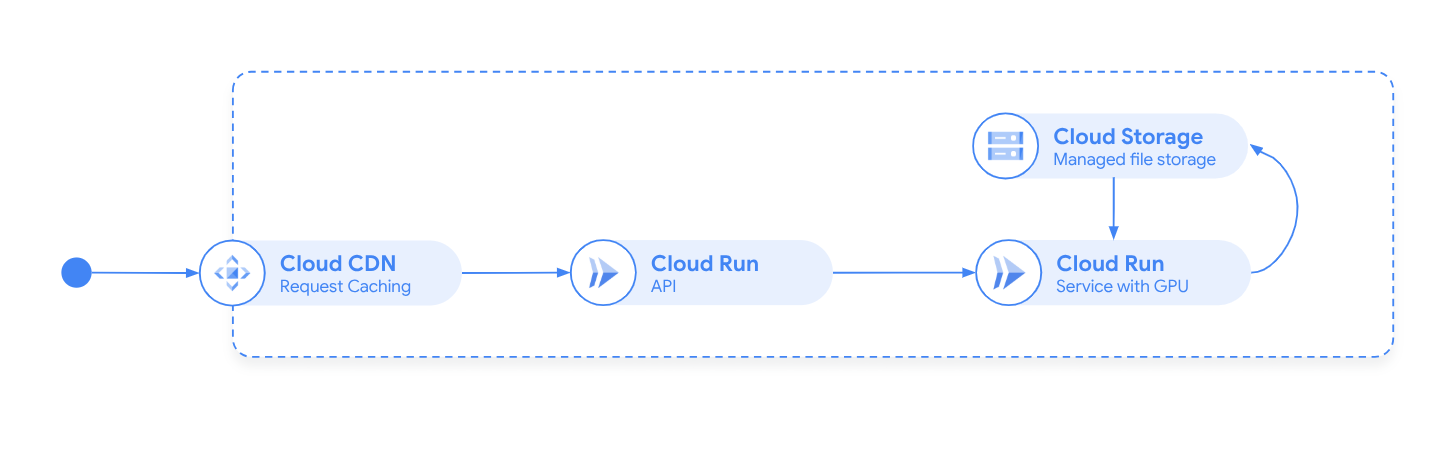
What the short doesn't cover is on the product page. Cloud Run lowers the barrier to going live; operations don't disappear. Accounts, billing, IAM, regions, cold starts, concurrency, database connections, logs, and alerts still need to be configured. For someone launching for the first time, getting a public URL with one command feels great. For teams, the URL is only the beginning. The product page's Telegraph Media Group case says that after migrating to serverless, costs fell by 90% and carbon emissions also fell by 90%. That number is a useful reference, but migration is never copy-and-paste.
Calling the cloud a haunted house for Halloween is pretty clever. The string of permissions, builds, certificates, and billing alerts before launch is the part more likely to keep people awake at night. Cloud Run takes a big chunk of that dirty work off your hands, but you still have to watch the rest yourself. If you want to try it, you can walk through the official page, start with the free tier to run a minimal service, and then look at your bill and logs.
发布时间: 2026-10-31 07:27