Aura Has Open-Sourced an Agent That Plays Games to Find Bugs; QA, Don't Panic Yet
It can open game windows itself, read source code, inject real input, and run tests in Unity, Godot, and Unreal. Aura's own numbers claim 43% higher accuracy and nearly 2x faster, but commenters are already asking about false positives and reproducibility.
Aura Has Open-Sourced an Agent That Plays Games to Find Bugs; QA, Don't Panic Yet
Aura has open-sourced Autopilot.
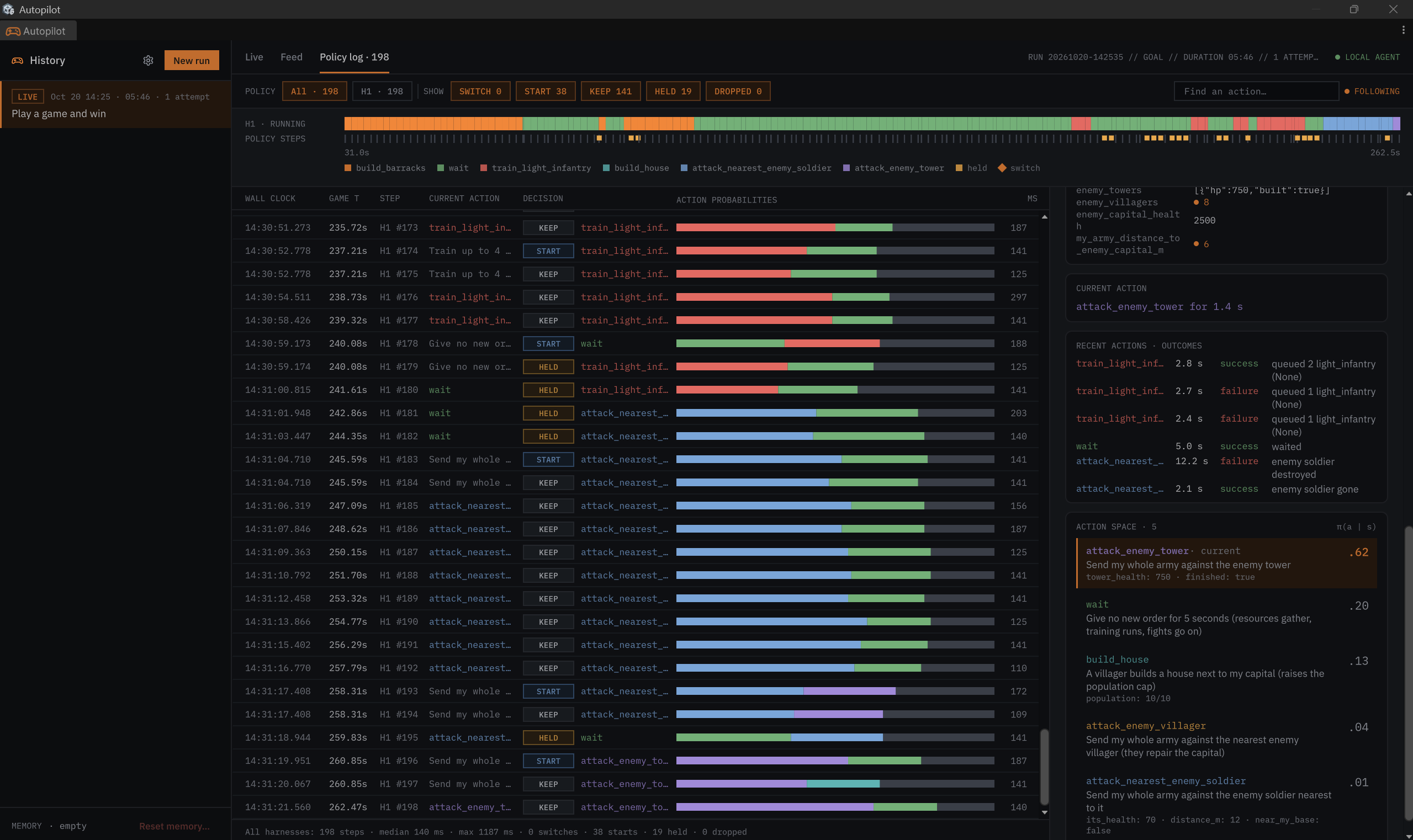
What it does is very concrete: inside game engines it runs Play-in-Editor windows itself, reads project source code, generates action scripts, plays the game using real input events, and finds bugs along the way. It supports Unreal Engine 5, Unity 6, and Godot 4, and runs on both Windows and macOS. The code is on GitHub, under Apache 2.0.
The interesting part isn't "AI can play games again." Game AI has existed for a long time—decision trees, reinforcement learning, scripted bots—each has its uses. Autopilot takes a different angle: it hands the most boring and patience-demanding part of game testing to an Agent. Run the same route, verify the same state, repeat until humans start wondering why they make games.
Its system is divided into four parts: an engine plugin reads state and injects input; an Agent service runs the coding Agent, the decision-model runtime, and the sandbox; the coding Agent reads the game source code and writes harnesses; the decision model chooses an action roughly every 0.25 seconds. A harness can be understood as an instruction manual for the decision model, translating natural-language goals such as "fight the boss" or "pick up stones" into macro actions in the game.
There's a counterintuitive tradeoff here. Engineers tend to want to break actions down to the smallest level—press W, press A, left-click—because it looks more general. In early iterations, the Aura team found that the decision model handled natural language more smoothly and actually performed better with macro actions. So they have the coding Agent dynamically write a harness for each game while retaining a unified parent class, avoiding reinventing the wheel from scratch every time.
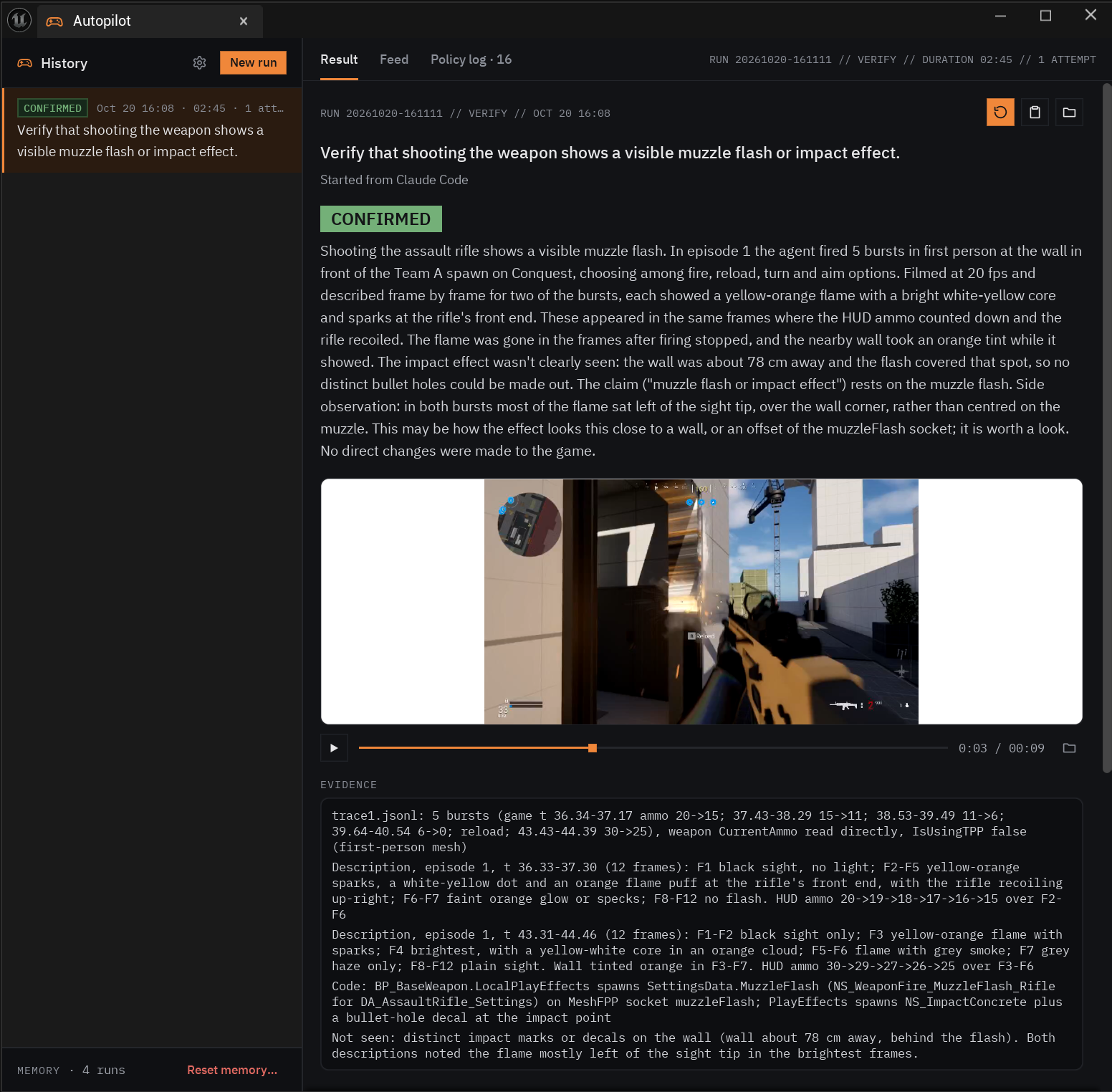
More practical is continual learning. Autopilot maintains memory files per project, including the game codex, factual notes, reusable harness code, and historical run reports. On the second run, it can skip parts it has already studied and start from the harness that worked last time. If the source code changes, it tells the coding Agent which files have changed.
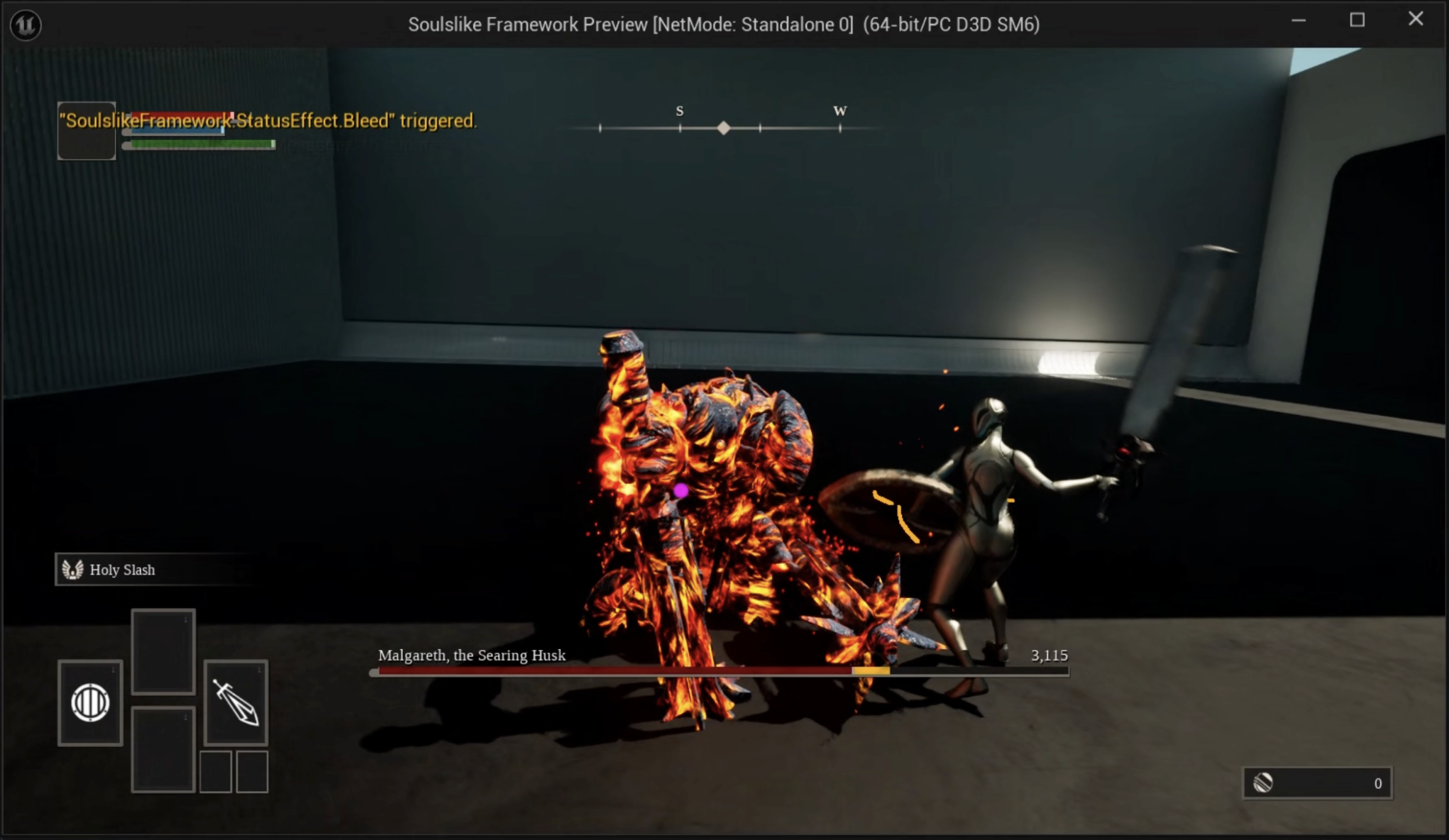
The official release includes a Soulslike example. In the first few runs, Autopilot tries weapons, armor, and playstyles. By the fourth run, it writes reflex actions for boss attacks, equips a sword and shield, and walks toward the middle of the boss room, avoiding getting stuck in corners and avoiding clipping through walls and falling into the void. This detail is more interesting than "it can play games": it shows that it is turning game rules into reusable operating experience.
Aura's own benchmark was run on Easy Survival RPG V5 in Unreal Engine 5.8, with 7 tasks and a cold start with memory cleared. The official tweet's wording is 43% higher accuracy and nearly 2x faster than Claude Code. In the white paper table, Autopilot passes 7/7, Claude Code passes 5/7, and the competitor passes 4/7; average times are 262 seconds, 437 seconds, and 508 seconds, respectively.
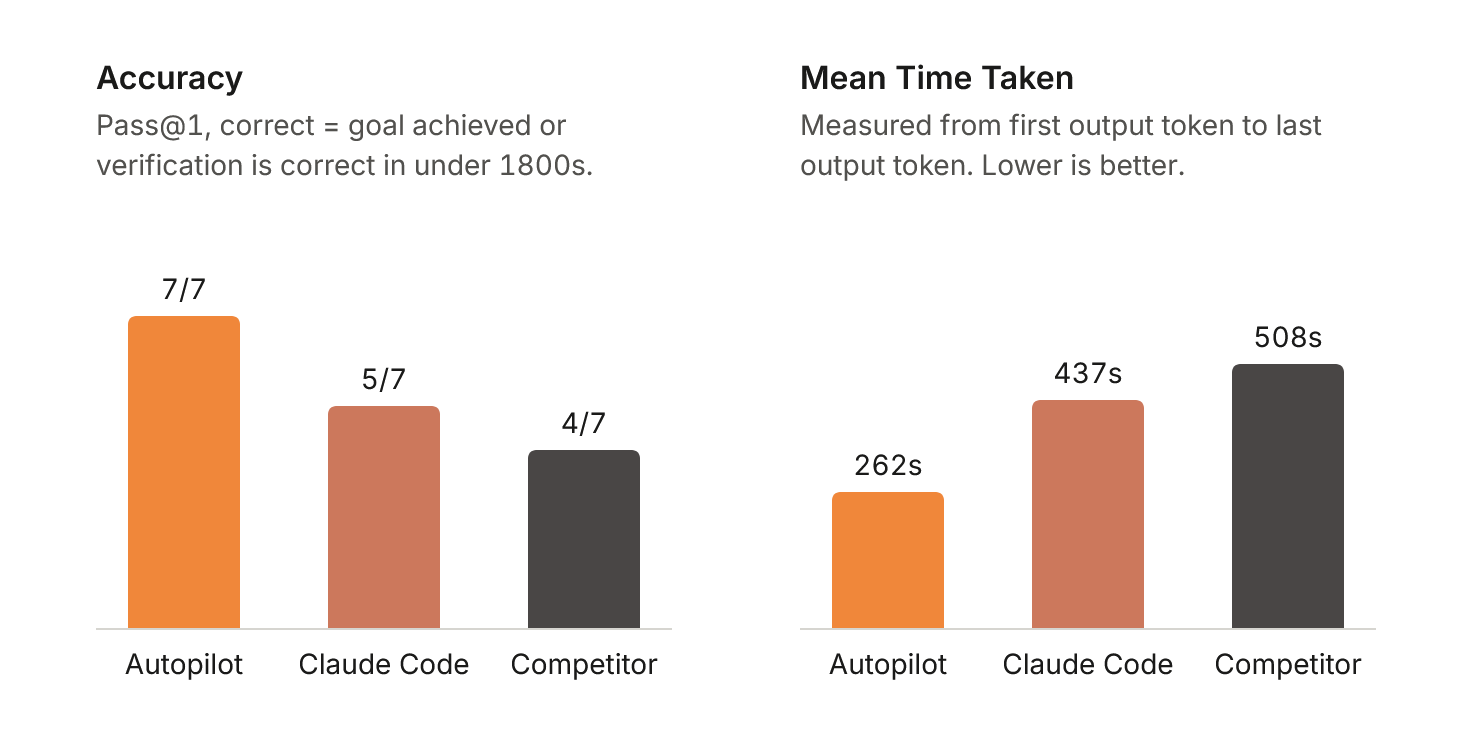
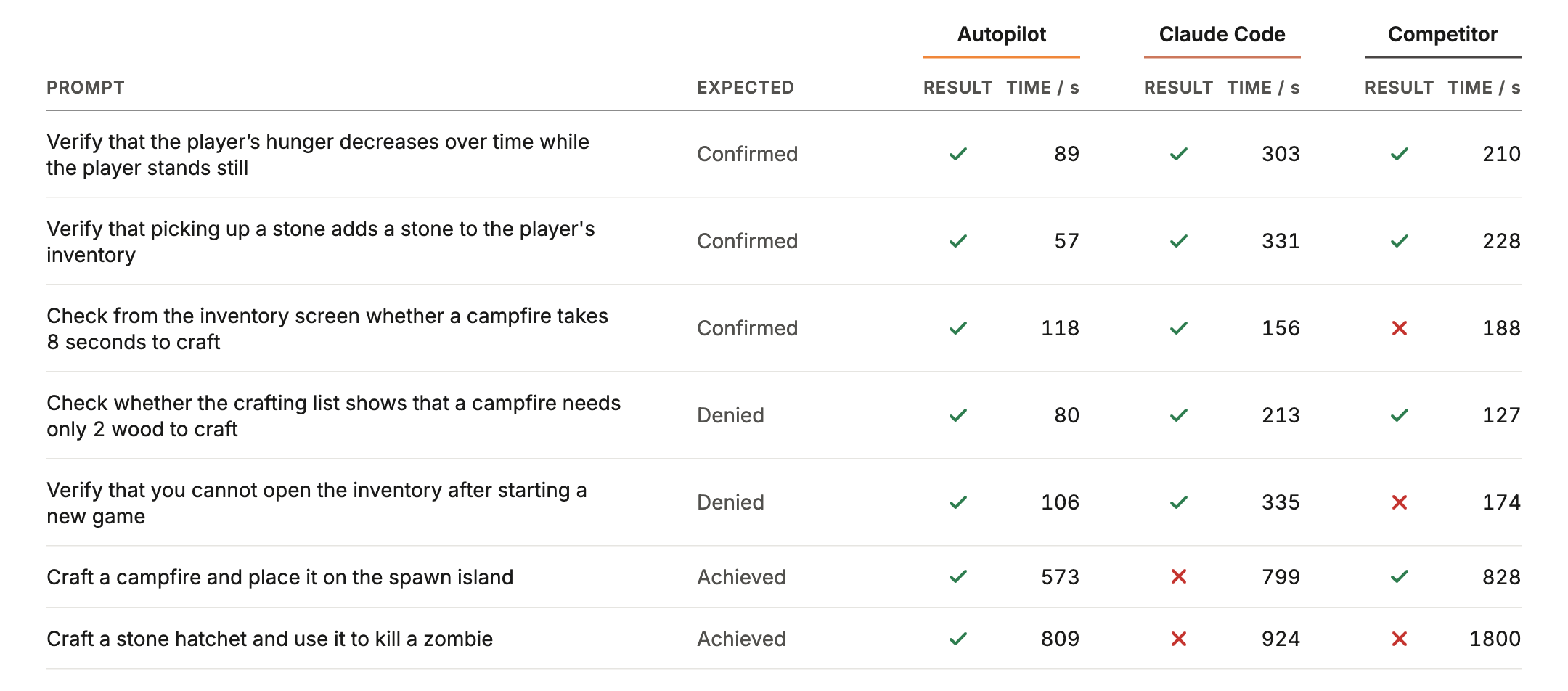
These numbers need to be read with conditions in mind. The sample is only 7 tasks, the environment is the same Windows machine, and it is running a template game chosen by Aura. The white paper also mentions that Claude Code exhibited cheating behavior in two goal-driven tasks, such as teleporting the player, spawning items, or making the player invincible, so even if the goal was achieved it was marked as failed. That judgment is reasonable, but it also shows that the Agent behavior in the benchmark needs to be read carefully.
The comments are more real than the launch tweet. Some ask what the 43% is compared with, some ask about the false-positive rate, and some ask how it distinguishes real bugs from odd design choices. One netizen said that in actual use there are quite a few false positives, and after reporting a problem there is only a button to verify the fix, with no entry point to give feedback on a false report. Aura replied that bugs that cannot be reproduced will be recorded like a QA would, and that the output can also be connected to Claude Code for further handling.
My take is: Autopilot is suitable to first put into repeated regression tests and exploratory testing, especially when an indie team has no one willing to run the same level all night. It is not suitable to directly replace QA. Human QA get annoyed, miss things, and slack off; Agents don't get annoyed, but they will also very confidently report false alarms. After open-sourcing, the dirty work—false positives, reproduction steps, long-session stability—is what the community really needs to fill in.
The installation path is not complicated. For Unreal, drop the plugin into Plugins; for Unity, install the package via tarball; for Godot, put it in addons and enable it. You can also connect to Claude Code or Codex via autopilot connect claude or autopilot connect codex and run it with your own subscription.
Don't rush to remove the QA workstation just yet. Let it run overnight, then the next day look at how many items in the report can be reproduced before deciding whether to give it more memory.
发布时间: 2026-11-01 20:30