Five Bookmarks for UI/UX Designers—and After Watching, Someone Said Carousels Are All Useless
Aman Singh recommends five UI/UX resource sites covering scroll motion, shaders, footers, and CTAs. Some people added HorizonX and Mobbin, while others said outright that carousels are not practical. Videos and links are included.
Aman Singh listed five websites on X that UI/UX designers should bookmark. The list is not complicated; what is worth looking at is the specific problem each site solves.
1. scrolltide.co: Break scroll motion into copyable prompts
The original tweet says 600+ design prompts and 200+ components, with full source code, aimed at 3D and scroll-driven websites. Replies add more detail: shaders, sections, and UI screens are all in one library; copy the prompt and paste it into Claude, Cursor, or Lovable, and ship directly.
The website page shows 143 templates, 85 components, 55 shaders, 23 sections, and 14 UI screens. The pricing page has a $299 one-time early access purchase. It solves the dirty work between a blank page and a page that can move: instead of making you write GSAP and Three.js from scratch, it gives a structured description so AI can first build a runnable foundation.
2. scrollshaders.com: 117 animated shaders in 11 categories
The original tweet says 117 animated shaders in 11 styles. The site's categories include mesh gradients, grain gradients, dither, liquid metal, light and rays, fluted glass, halftone, waves and lines, 3D and depth, retro and ASCII, and patterns and grids. Each shader provides a React component, a vanilla JS snippet, a seamless loop MP4 in 1080p/720p/480p, and 6K stills.
It emphasizes loop closure: the last frame lands on the first frame without jumping. For performance, it handles pausing, with corresponding strategies when scrolled out of the viewport, when the tab goes to the background, and when the system has reduced motion enabled. The pricing page says $29 monthly, $129 yearly, and $239 lifetime. The commercial license covers client websites and your own products, but you cannot resell the shaders themselves as an asset library.



3. footer.design: Dedicated to footers
This is a footer inspiration gallery that can be filtered by type and style, such as typographic, small type, illustrative, grid, flat, animated, cards, bright, dark, large type, and bold. The footer is the part of a website most easily left until the end; this site pulls it out separately, saving the time of going back and forth between Dribbble and real products.
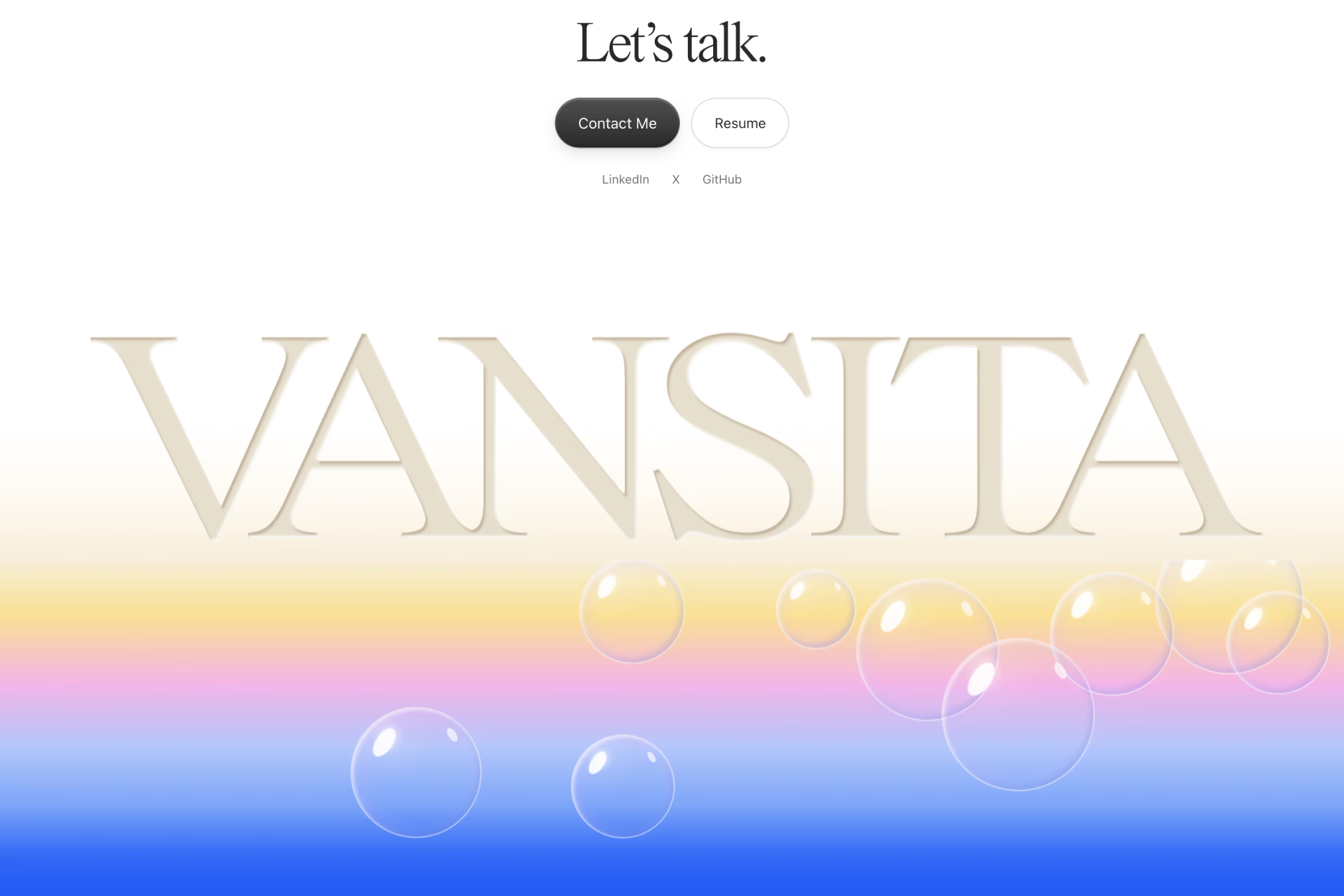
4. cta.gallery: A CTA inspiration library
The original tweet only gave one line: CTA inspiration. It is suitable to browse when a landing page needs to close the loop, to see how others handle the visual hierarchy of buttons, forms, and calls to action. The material does not include more page details, so I will not expand here.
5. styles.refero.design: Real product design styles
The original tweet says Real product design styles. It points to interface styles in real products, not concept work. For people doing design references and front-end recreation, the value of this kind of site is being able to see how actual products handle typography, spacing, and component states. The material does not include more page details, so I will not expand here either.
Replies Added Two Sites—and Poured Cold Water
Marcelo Design X added horizonx.so. Scooby Snackz said this list missed Mobbin. Kura Ken's reply was direct: none of these carousels are useful.
A Japanese commenter had a more detailed view: scroll-linked effects and shaders are better placed where they help users track information; when motion is concentrated in one place, it is easier to preserve the readability of the main text. That judgment is more useful than simply piling on effects. Tool sites give you assets and a starting point; where to use them and how much to use still depends on what problem the page needs to solve.
List-type content easily ends up gathering dust in bookmarks. These sites at least make the output format, price, and license clear. Before starting, look at the free previews first, confirm the output can fit your tech stack, and then decide whether to buy a lifetime license. The original post and more replies are in Aman Singh's tweet.
发布时间: 2026-11-08 17:26