MiniMax H3-Image: 16MP images in 10 seconds—check two conditions before running locally
16 million pixels, up to 16 reference images, open weights—these numbers are real. But the 68.65GB DiT plus the 66.7GB text encoder, and the regional restrictions in the license, are things to confirm before you start.
MiniMax has released H3-Image, with text-to-image and image editing unified in a single checkpoint and open weights. The core numbers from the official release: 16 million pixels, image generation in 10 seconds, and up to 16 reference images.
Let's look at the specs first.
16MP covers 4096x4096 to 6272x2688, and the output is directly at that size, without upsampling. The model is a 33.1B-parameter DiT, distilled to 6-step sampling, with no CFG. The DiT weights on Hugging Face are 68.65GB, and the text encoder requires another 66.7GB pulled from MiniMax-H3.
This size points to one fact: the barrier to local deployment is not on the consumer-GPU side.
Officials provide deployment options for SGLang, vLLM-Omni, diffusers, and ComfyUI, with support for multi-GPU sequence parallelism. Some commenters say they have already run it on a Mac using MLX; such claims usually need to be verified before believing them.

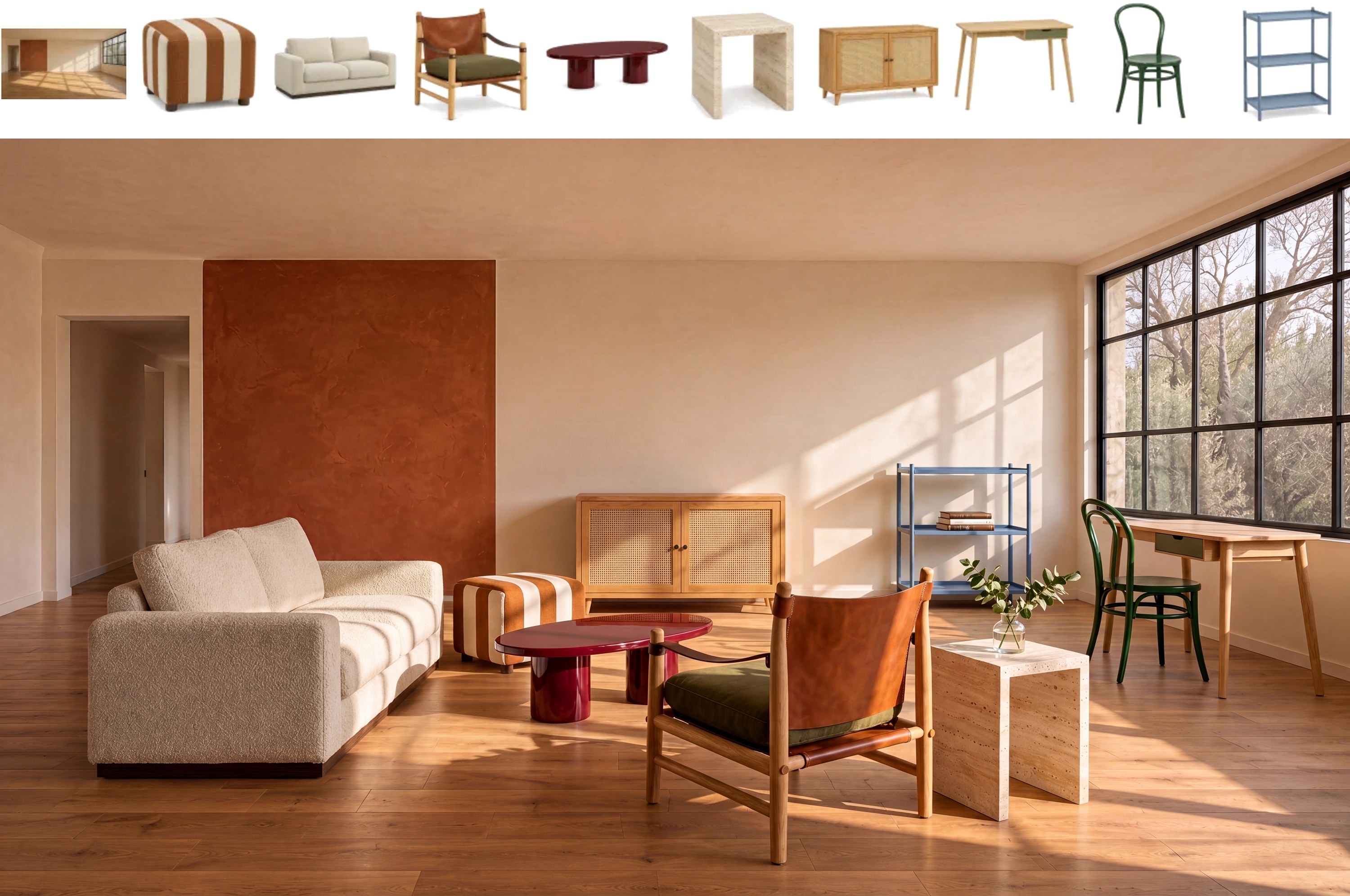
Editing capability is the focus this time. It supports 1 to 16 reference images, and the upload order corresponds to the Picture numbers in the prompt. In the official showcase there is an example: an empty room plus nine pieces of furniture, composited into a complete living room, with furniture positions and lighting matching up.
API limitations are strict. num_inference_steps can only be 6 or omitted, guidance_scale can only be 1 or omitted, and negative_prompt is not supported at all—passing it returns 400. There is no room to adjust these parameters, indicating the model was trained along the few-step, no-CFG route. The output cap is 20 million pixels, streaming return is supported, and in partial failures, as long as one image succeeds, it returns 200.
Then there is a detail worth looking at separately. Some users point out that the MiniMax-H3-Image community license excludes the EU, UK, South Korea, and the US. The license name on the Hugging Face page is minimax-h3-image-community-license-agreement; you need to read the specific terms yourself. If this claim holds, the practical usability of the open weights for developers in these four regions is reduced.
Another reply mentions that content filtering is very strict on copyrighted material. On a model that emphasizes precise prompt following, creative users need to know the boundaries in advance.

At the practical usage level, the official API offers 50% off generations above 16MP in the first week. It can also be used directly in Hailuo AI and MiniMax Code. If you want to run it locally, first calculate two things: VRAM and the license.
The claim of 10 seconds to output 4K holds on the API side. Local latency depends on hardware. Officials provide per-hardware data for vLLM-Omni; check it before deciding whether to download this 135GB.
In the line of open-source image models, H3-Image's specs have indeed moved one step forward. But between specs and usability stand the license, VRAM, and content policy. The model is worth trying; first see the gate clearly.
发布时间: 2026-11-11 16:39