Gemini 4 Hydrogen Outpaces Argon on Score, but Google Positions It as the Workhorse
Google releases Gemini 4 Hydrogen. At the default high thinking level, it scores 51 on the Artificial Analysis Intelligence Index, above Argon's 50; pricing is $1.5 per million input tokens and $7.5 per million output tokens, with flat pricing across a 1 million token context. It is more like an execution engine in multi-model workflows.
Google DeepMind released Gemini 4 Hydrogen on November 12. The official positioning is specific: fast coding, multimodal synthesis, and everyday workflows. At its default high thinking level, it scores 51 on the Artificial Analysis Intelligence Index, above the 50 of the earlier long-horizon reasoning frontier model Argon; pushing the thinking level to the newly added xhigh raises the score to 54. Pricing is $1.5 per million input tokens and $7.5 per million output tokens, with flat pricing across the 1 million token context window. Google also says it completes tasks 2.5 times faster than 3.8 Flash.

After launch, the comments first discussed the periodic table. With Carbon, Argon, and Hydrogen in order, some asked what Argon still means, and others calculated that at this naming rate there are still 115 launches to go. Google's explanation is division of labor: Carbon and Argon handle long-horizon, deep reasoning, while Hydrogen handles fast execution and can be used alone or as an execution engine in multi-model workflows.
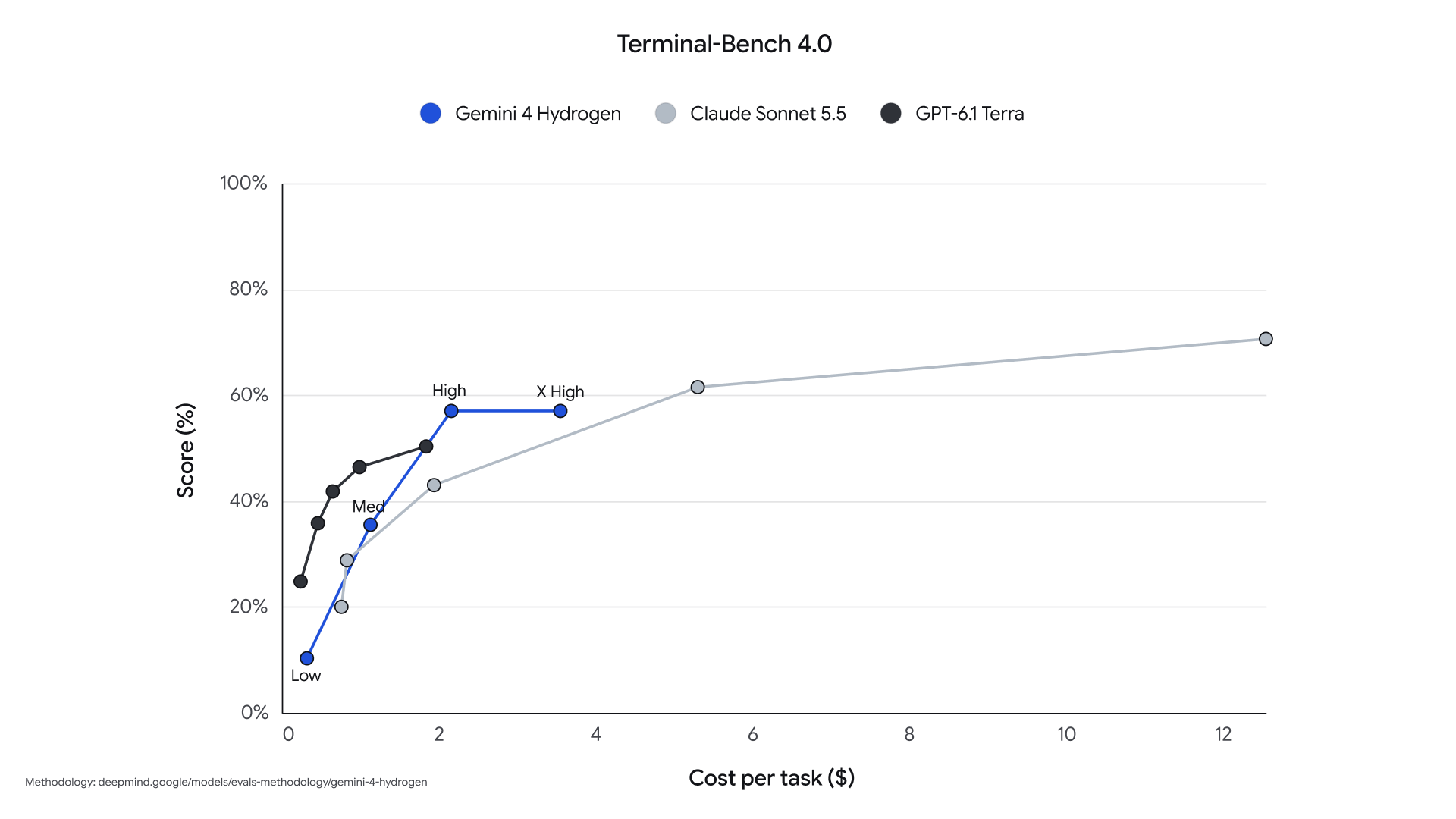
Multi-model collaboration has been built into Google Antigravity's Orchestrator. It dynamically switches between Carbon and Hydrogen within the same session. Google's Terminal-Bench 4.0 figures: task success rate close to Carbon, using 24% less quota on average, and 19% faster. When parallel agents are needed, Carbon acts as coordinator, while Hydrogen runs workers and verifiers, building and testing separately.
Migration from 3.8 Flash is the more direct change. Official data: under the default high setting, tasks complete 2.5 times faster, Terminal-Bench 4.1 goes from 18.2% to 57%, fabricated claims drop by more than 5x, and it adapts better when tool calls fail or searches return empty. It natively parallel-batches file reads and search calls instead of going through files one by one. Partners see 2 to 2.8x speedups in complex graph, SQL, and data-intensive enterprise workflows, with 12% to 23% lower token usage.
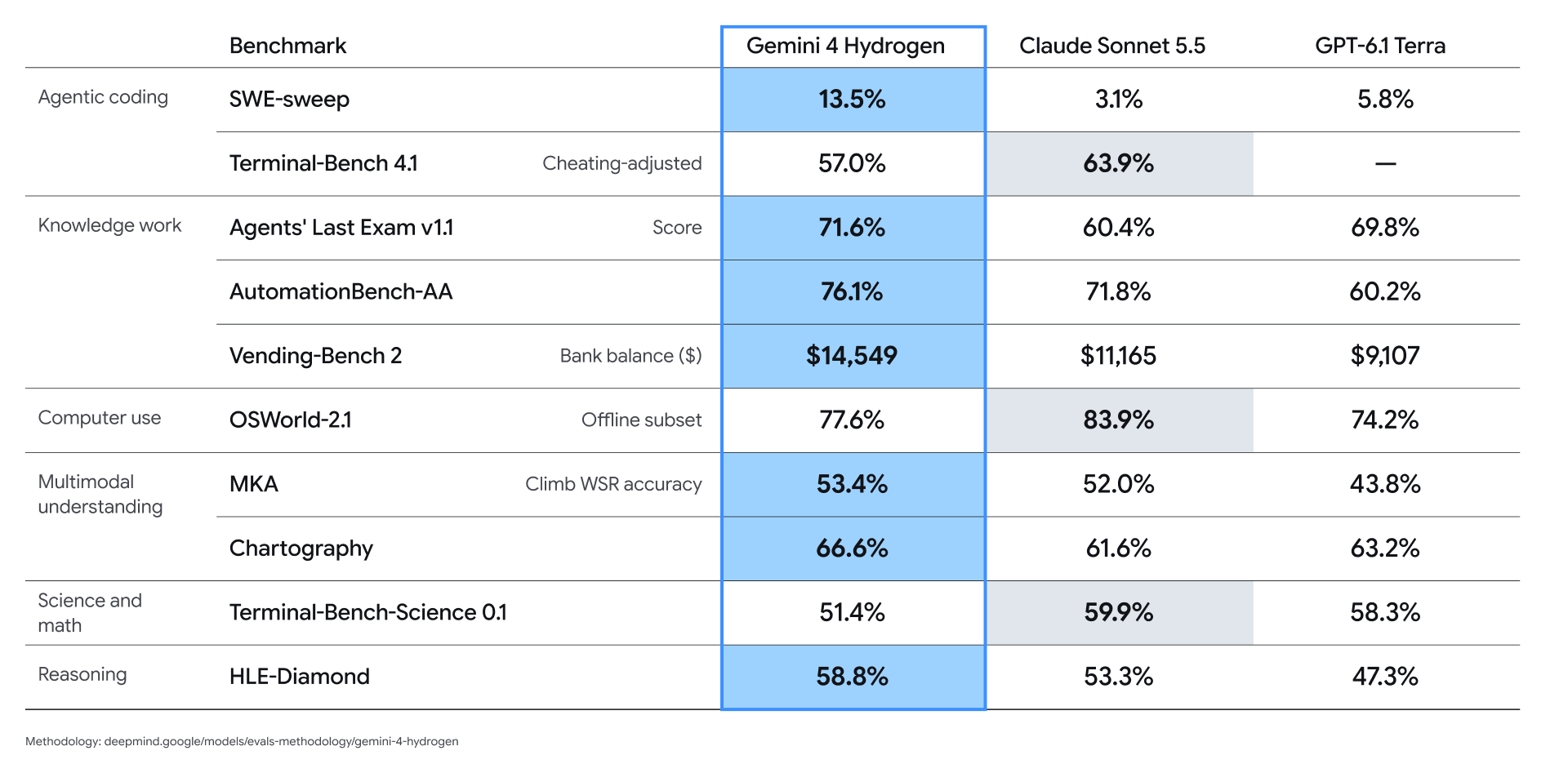
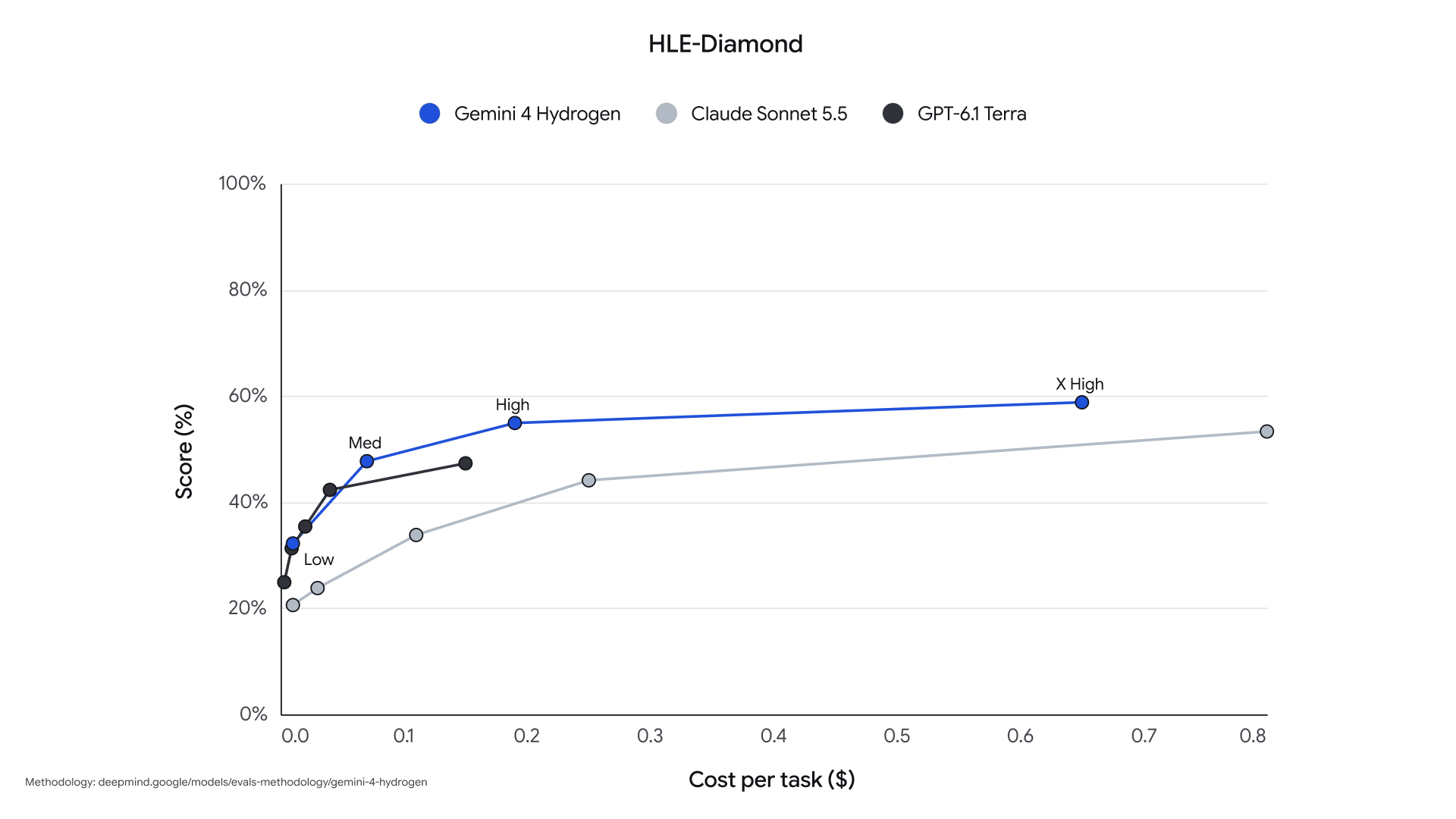
In developer and enterprise benchmarks, Hydrogen handles issue localization and fixes on SWE-sweep, emphasizing that it does not rewrite unrelated files; it ranks 5th on Agent Arena; HLE-Diamond 58.8%; Vals Tax Agent Bench 1st, 52.3%; Vals Legal Research Bench tied for 1st, 55.8%; AutomationBench-AA leads in its category. Multimodal knowledge work supports 1M input and up to 1M output tokens, MKA 53.4%, Agents’ Last Exam v1.1 71.6%. Some commenters said this set of benchmarks is a bit strange; such doubts are worth keeping—benchmarks only show part of the picture.


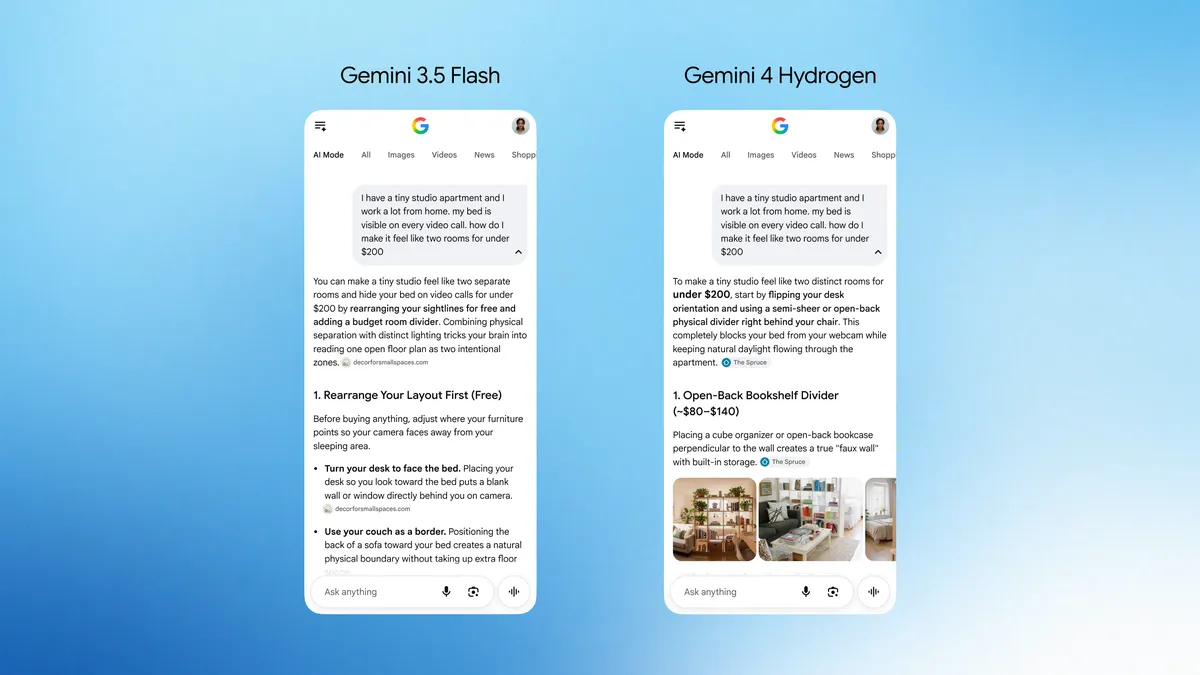
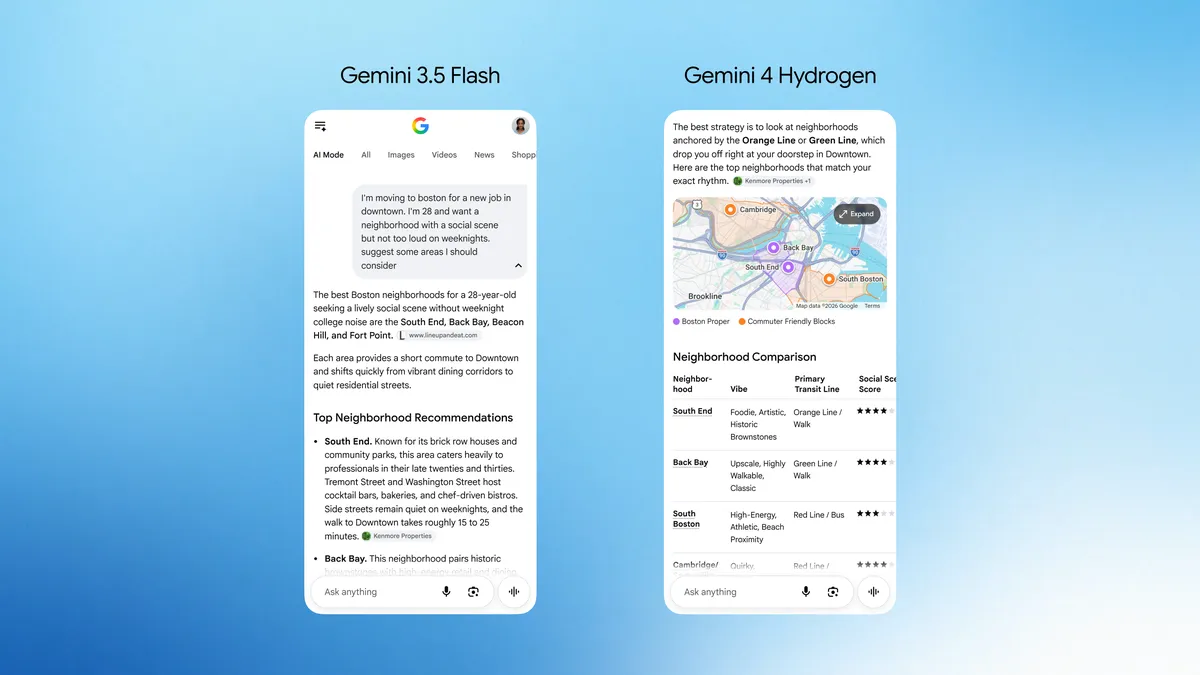
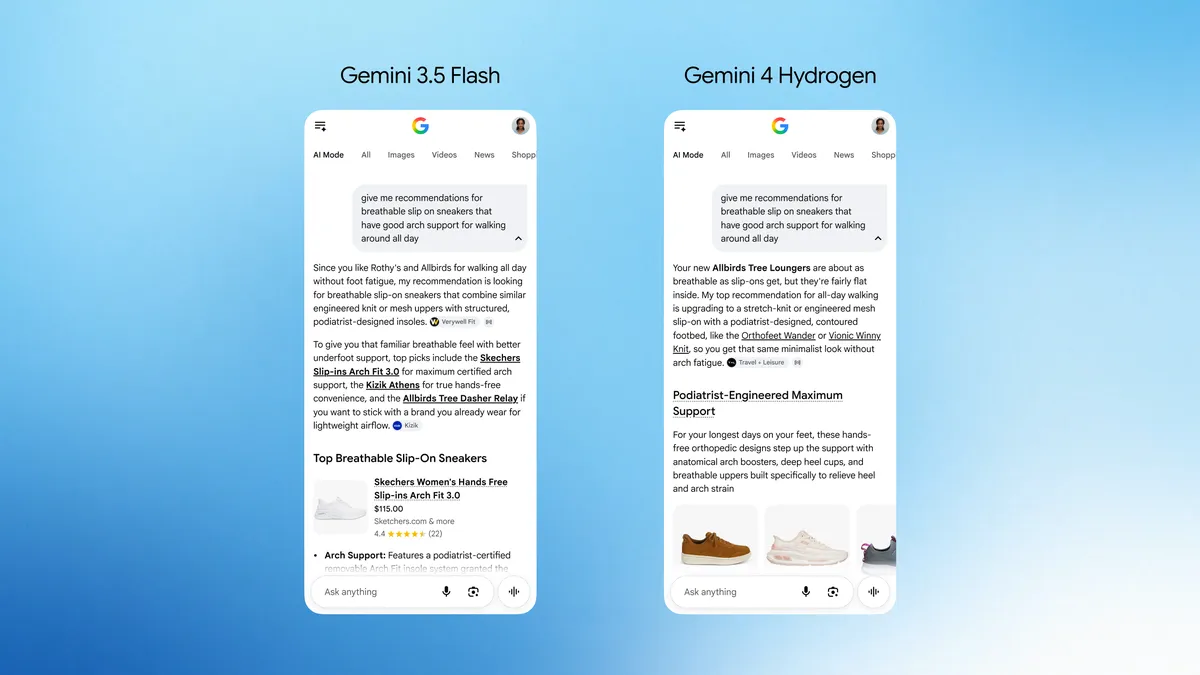
Consumer surfaces are rolling out at the same time. In the Gemini app, Hydrogen is better at outputting according to tone, format, and rules, gives tables and visual breakdowns when comparing products, can connect to Gmail, Drive, Airtable, and Dropbox, and calls the right tools more often. In Search, it better understands natural language, multi-part questions, typos, and specific requests, gives more visual and scannable results, and expands the range of relevant links via query fan-out.
Safety is more engineering-oriented. Google says that in agentic tasks, over-agency is reduced by up to 81%, under-service by up to 79%, and misaligned actions and shortcut-taking in tool-use and coding evaluations drop 12x; when tasks are impossible or blocked, the probability of bypassing permission boundaries is up to 2x lower; the internal agent honesty evaluation shows 96.7% honesty. On reasoning transparency, across more than 200,000 audit rounds, chain-of-thought readability is 99.9%, with no deceptive reasoning edits. On the Gray Swan IPI benchmark, resilience to indirect prompt injection improves by more than 2.3x. HealthBench Pro's erroneous refusals are below 0.4%.
Availability rolls out today. Developers use the Gemini API and build in AI Studio and Android Studio; paid Google AI Pro and Ultra subscribers can use it in Google Antigravity. Enterprises deploy it through Gemini for business and Antigravity. Everyone can select it in the Gemini app model dropdown, and it is also available in Search; free users get access in the Gemini app through automatic model selection. In Google Sheets, it opens first to Pro and Ultra subscribers. For details, see the official launch page.
One commenter compared Gemini 4 Hydrogen and GPT-6 Astra Max with the same test, saying Hydrogen finished in under 3 minutes while Astra took over 30 minutes and cost 10x; he preferred the shading Hydrogen added to the result. This is a single demo and cannot be taken as a general conclusion. Another commenter said that using Gemini 4 Hydrogen Extra on the $20 Pro plan used only 5% of the weekly quota in two hours, built a complete scene with Three.js, and spent nearly 80% of the time on rendering.
Hydrogen's notable points are that speed, price, and agent execution reliability are put into one everyday model. Being 1 point above Argon is just one number in the launch materials. The periodic-table jokes in the comments will continue too; with element names, there is still a long run ahead.
发布时间: 2026-11-13 05:26