Simulationmaxxing: Before Simulating Everything, Think About What It Might Reinforce
AI practitioner Viv calls simulation a measuring device. Scott Belsky sees simulated populations exceeding 90% accuracy in marketing and politics. But if simulation relies on the present, how can it predict the future?
An AI practitioner named Viv coined a term on X: Simulationmaxxing. The gist is treating simulation as a measuring device and also as a training ground where AI can practice superhuman capabilities. If you can model the real world, you can answer counterfactual questions like "What would the future look like if we did X instead of Y?" @simile_ai gave it another name: the what-if machine, from Futurama.
This idea is not just theory. Scott Belsky (founder of Behance and partner at A24) has just written a long essay, "Decision By Simulation," discussing simulation startups. His observation is that a new generation of companies—such as Simile and a company still in stealth mode—are trying to use large-scale population data to build statistically accurate simulated populations. You can test ad slogans, pricing, fashion preferences, and even political decisions on them. Belsky says that in marketing and price testing, simulated results already match real results more than 90% of the time.
Belsky lists several possible use cases.
Investment due diligence: simulate synergies before M&A and test customers' tolerance for price increases. Treatment support: run intervention plans through simulation first, and even turn them into animated shorts so patients can see possible consequences. Marketing and GTM: replace focus groups while avoiding sample bias and groupthink in panel discussions. Dating: use social data and basic demographic information to predict chemistry. Politics: this is the most delicate one. Simulation may make it easier for politicians to find extreme positions that best mobilize their base, especially during primaries. It may also make both parties converge on policies that "the simulation shows are the only effective ones." If Vivek Ramaswamy had simulated that ad in the Ohio governor's race, he probably would not have posted it.
This is no longer fantasy. In a reply to Belsky, Baris recommended Gather, a company building a customer-dynamics marketing engine. Gather combines real interviews with simulation to help GTM teams test messaging, positioning, and campaigns. They also have a Resonance API that lets AI agents call on customer understanding. You could say this is an early form of the "what-if machine" in B2B.
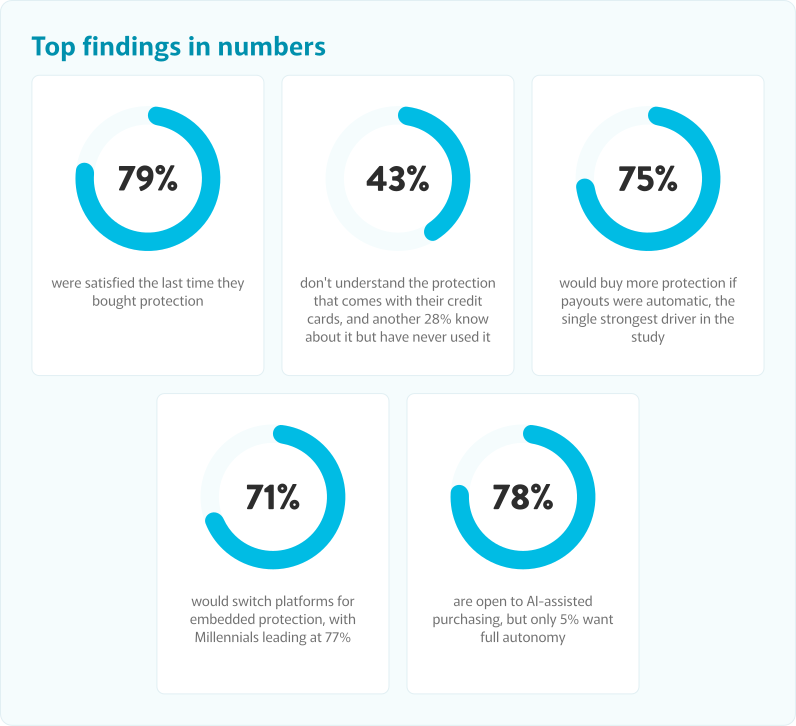
Research report published by Gather in collaboration with Cover Genius: The Protection Gap
However, simulation has a fundamental problem: it relies on "how people think today," while what is truly scarce is "which fringe of the future will become the center." Drew Gillson's reply was blunt: "More likely, we are just reinforcing the existing attractors."
Viv also admits that the more simulation deviates from reality, the less trustworthy the learned behavior is. In his view, exponentially growing compute will be invested in building high-fidelity simulations, asking what-if questions, and designing challenging tasks. But compute and precision do not answer "how the fringe becomes the mainstream."
At the end of the essay, Belsky asks: If simulation can tell you what people want now, what kind of new creativity can help us identify the fringe that will one day become the center?
This question is perhaps something simulation itself cannot answer. It is more like an instrument for measuring the current world, while creating a new world requires another kind of tool. In a reply, TJ mentioned Nathan Fielder: simulating everything in life—that kind of awkward reality show—may be closer to the truth.
发布时间: 2026-11-22 06:38