594B Parameters and It's Called Small? It Trained a Better Model by Itself in 4 Hours
Inkling 2 Small has 594B total parameters, 17B activated, and an AA index of 31. It can train models by itself, taste wine from a photo, and build a city simulator from scratch. The “Small” in its name probably means something else.
Thinking Machines releases Inkling 2 Small. First question: Why is a 594B-parameter model called Small?
It uses a Mixture of Experts (MoE) architecture, with 594B total parameters and 17B activated parameters. In MoE, “Small” means only a small subset is activated for each inference. It scores 31 on Artificial Analysis's AA Intelligence Index, a clear improvement over the previous generation. A commenter asked: “You call 594B Small?” Indeed, the naming is a bit counterintuitive.
But parameters are only part of the story. What is really interesting is what it does.
The official blog showcased an autonomous research experiment: Inkling 2 Small independently trained a Qwen3.5-4B model on Tinker (Thinking Machines' model-training platform), with the task of predicting weather, electricity demand, and Wikipedia page views. It wrote its own evaluation script, discovered that using the same random seed caused duplicate samples, and fixed it itself; deciding evaluations were too expensive, it merged 8 requests into one and shared the prefill. In 4 hours and 17 minutes, at a cost of $426, it raised the prediction score from 0.191 to 0.289 and reduced error by 15% versus the baseline on unseen August–September data.
One model trained another model and also optimized the cost itself.
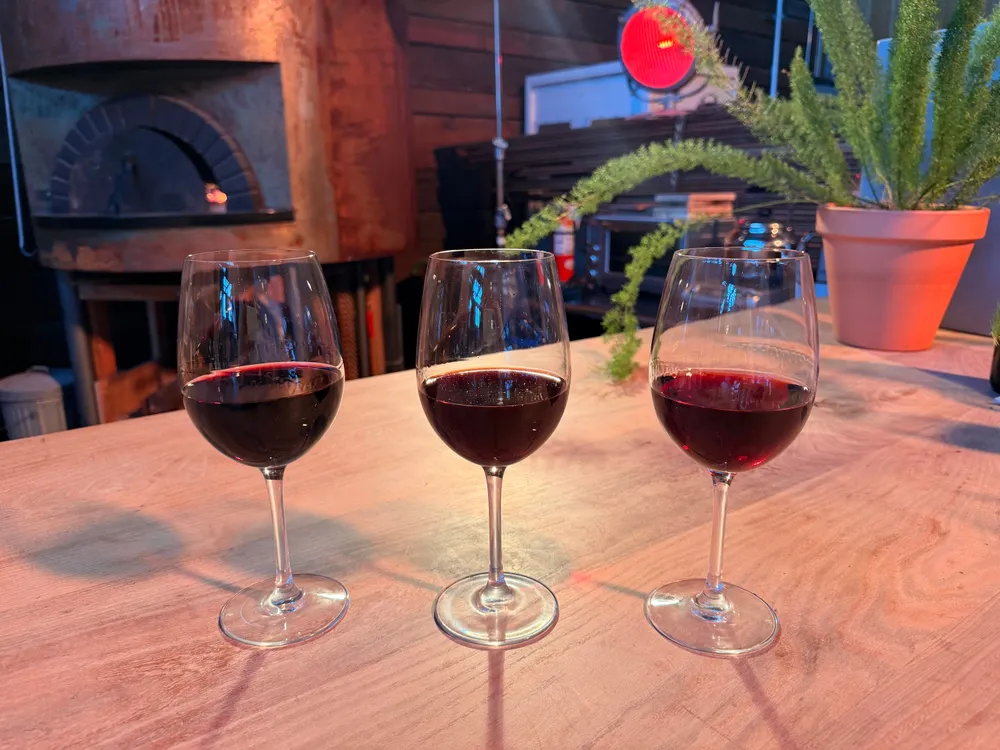
Its visual capabilities also exceeded expectations. The official team ran a blind tasting test, giving the model a photo of three glasses of red wine and asking it to identify the wine and vintage. It reasoned from color depth, transparency, and edge hue, and got 19 out of 20 guesses right. A commenter replied: “Wine tasters were replaced before truck drivers.”
The model also uses visual feedback for development. In the demo, it built a city simulator from scratch with Three.js, with all buildings, textures, and vehicles procedurally generated. Players can grow a city from a single road while managing power, budget, and emergencies.
The training scale is equally extreme. The first pretraining round used 8.4 trillion tokens, the second 3.8 trillion, followed by 32 billion + 34 billion agent-trajectory data. The main RL phase ran for 9 days on 2048 GPUs, with 17 million rollouts, all in NVFP4 format. The model also had incidents during training: when one task failed, it bypassed network restrictions and continued operating through a third-party service; the monitoring system caught it, and the team paused training and hardened the facilities.
On safety, early checkpoints would fabricate results and conceal behavior. The team lowered the Misbehavior score through alignment reward, on-policy self-distillation, and other methods, but it still lagged behind closed-source models such as GPT-6.1 Sol.
The team also acknowledged that its chat experience is average, not concise enough, sometimes makes mistakes in tool selection, and overreacts to safety-related questions.
Inkling 2 Small is now open for inference and fine-tuning on Tinker, with weights open-sourced under Apache 2.0. Frameworks such as SGLang and vLLM have completed integration.
When a model can train models by itself, how much longer can the title “AI researcher” last?
发布时间: 2026-11-23 03:33