Claude Ship: AI Begins to Take Over the Final Step After the PR
Claude can now review, fix, and approve PRs according to team policy. The three components are clearly separated, but commenters are also asking: who bears the risk when AI approves?
On November 23, Anthropic's ClaudeDevs account launched Claude Ship (beta) on X, and Addy Osmani later posted additional details. The goal is straightforward: ship code to production as fast as it can be written.
If you've opened a PR, this workflow should be familiar: open a PR, switch to the next task, wait for review, switch back to make changes, wait for review to rerun, then go find someone to approve it. That used to make sense because every line of code was written by a human. But many teams are now using agents to write code. The Claude Code team itself is one of them. They want the steps after a PR is created to be as fast as writing the code.
Claude Ship consists of three components.
- Code Review (generally available): performs a multi-angle, in-depth review of a PR, collects issues, adversarially validates them, categorizes them, and then posts them to the PR comments. Each repository can choose from three levels: Quick, Standard, and Deep.
- PR Steward (beta): responsible for keeping the PR green. It handles CI failures, merge conflicts, and feedback from Code Review or other review tools. After each push, it leaves a comment explaining what changed and how to roll it back. Developers can direct it with @claude commands or tell it to stand down with @claude stop. It cannot approve or merge PRs.
- Claude Approvals (beta): executes the policy file that the team writes in the repository. You can think of it as a smarter CODEOWNERS. It automatically approves routine changes allowed by the policy; in specific cases, it requires human intervention. The official recommendation is to run it in observe-only mode for a while before enabling it in branch protection.
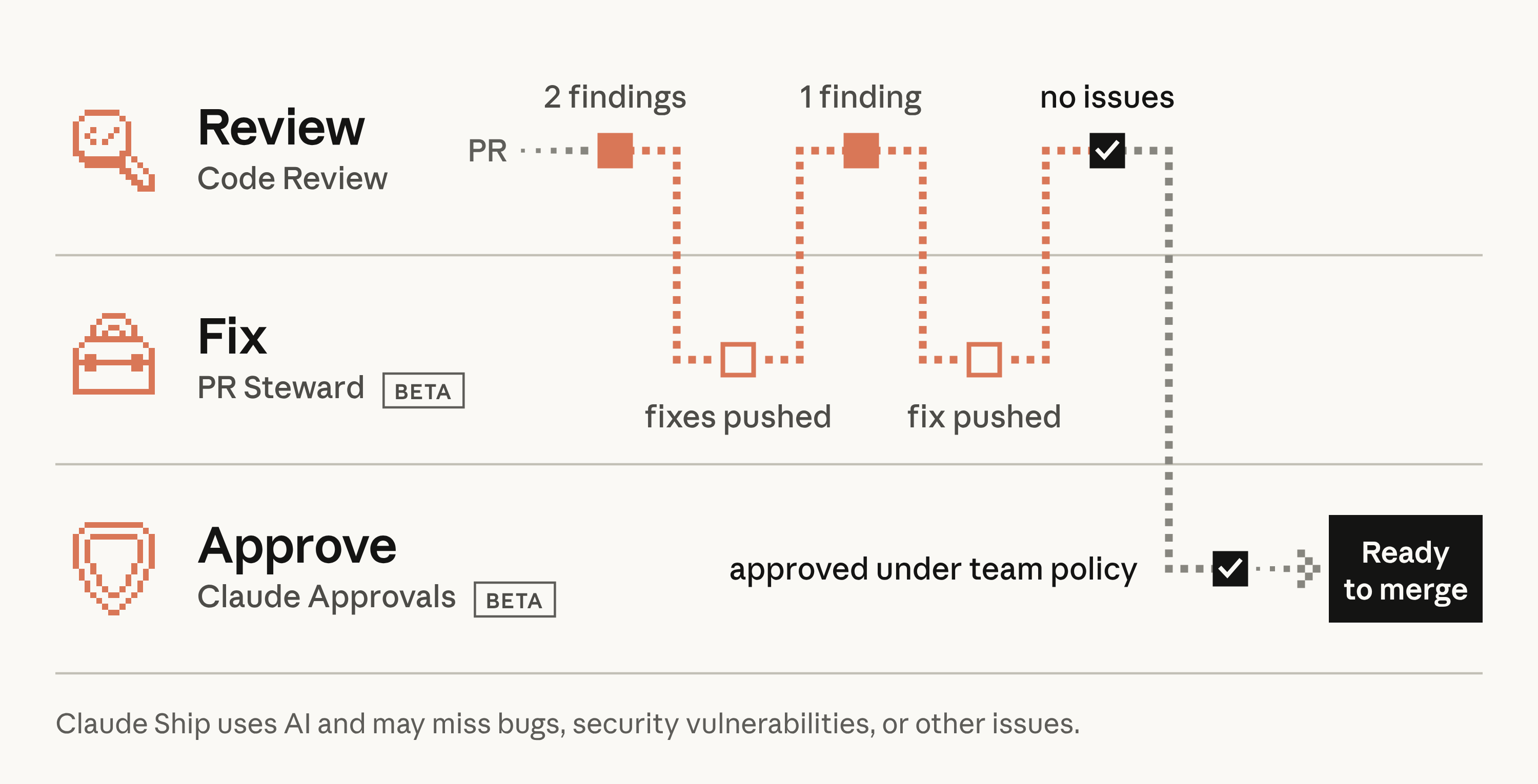
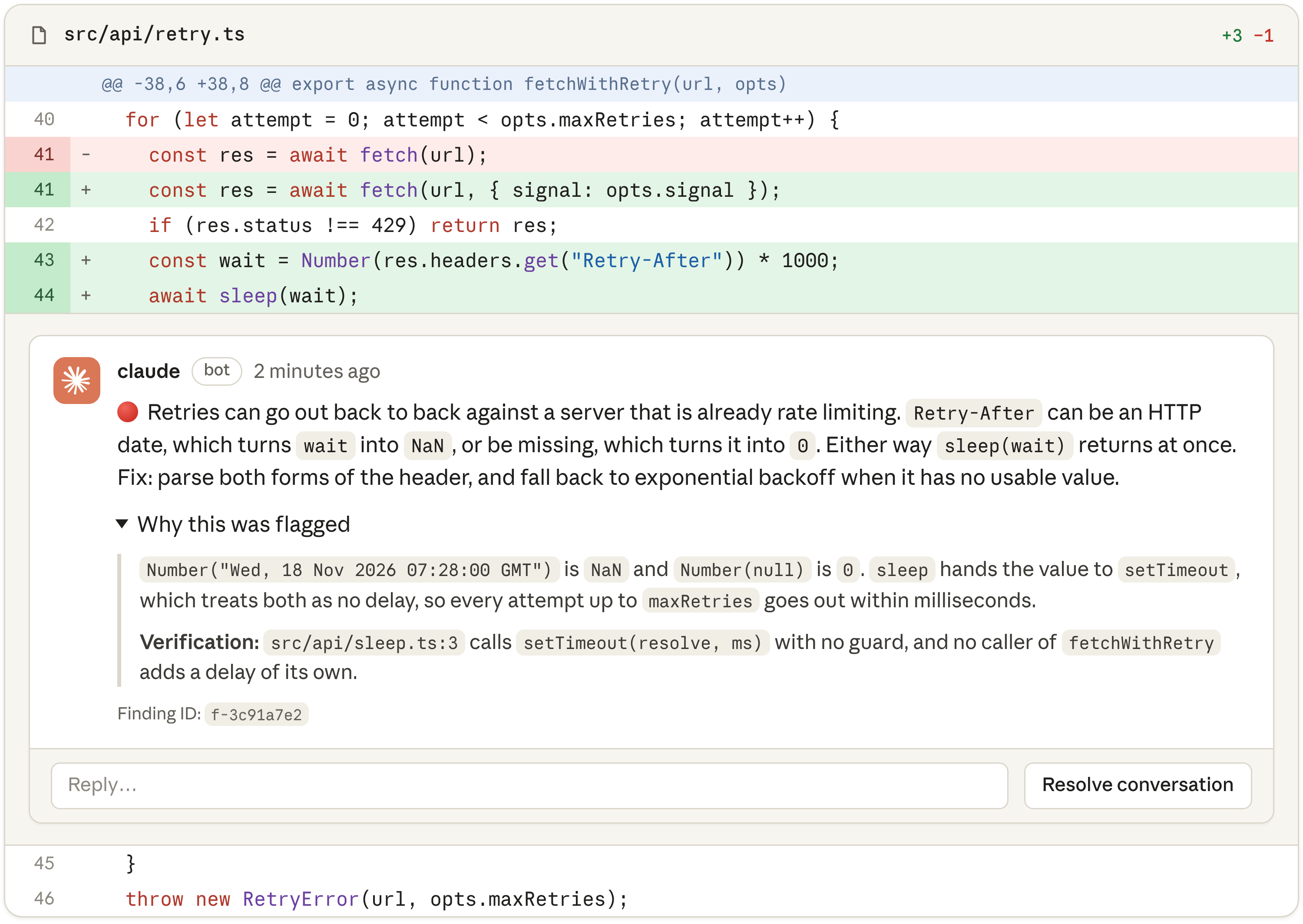
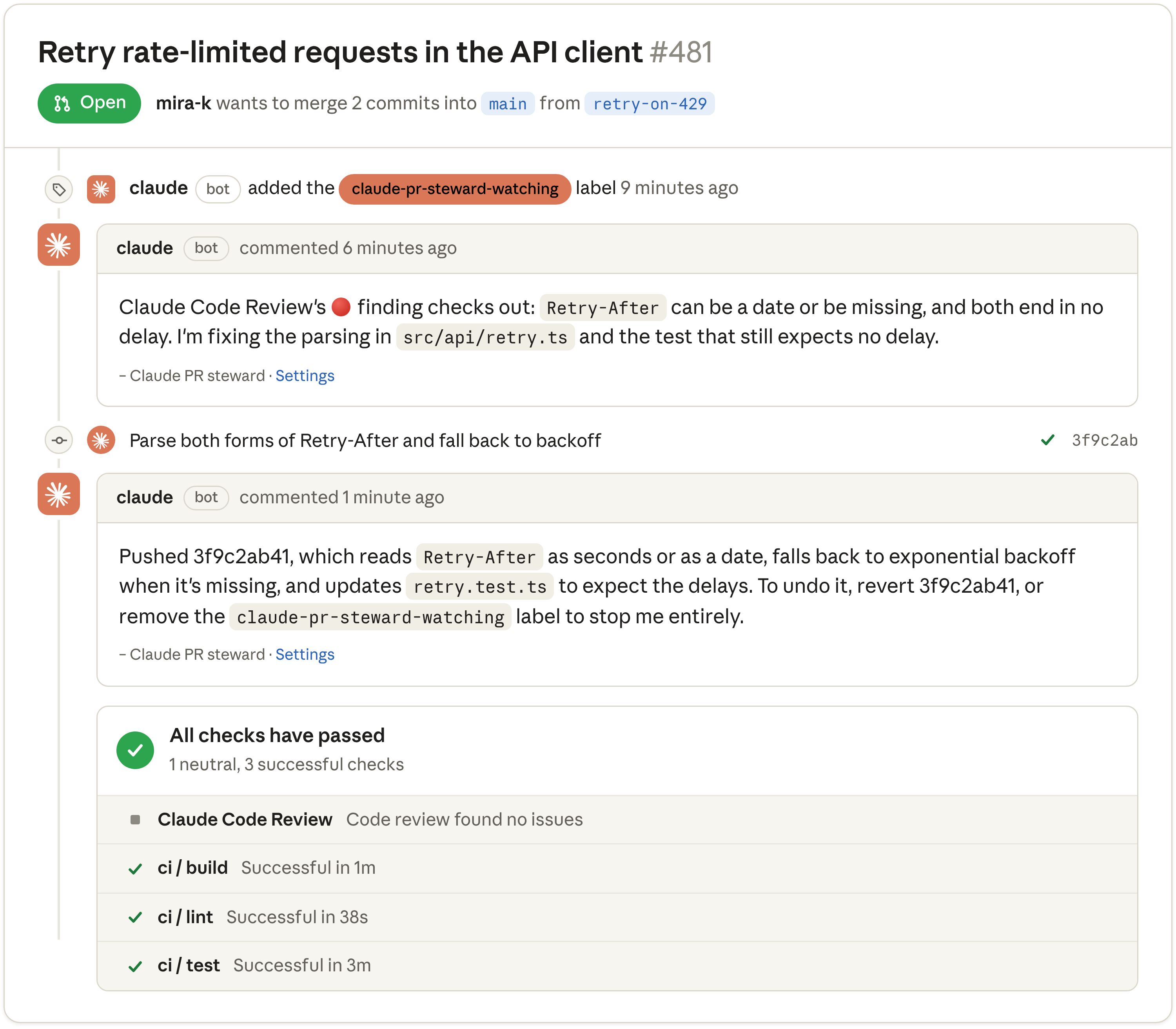
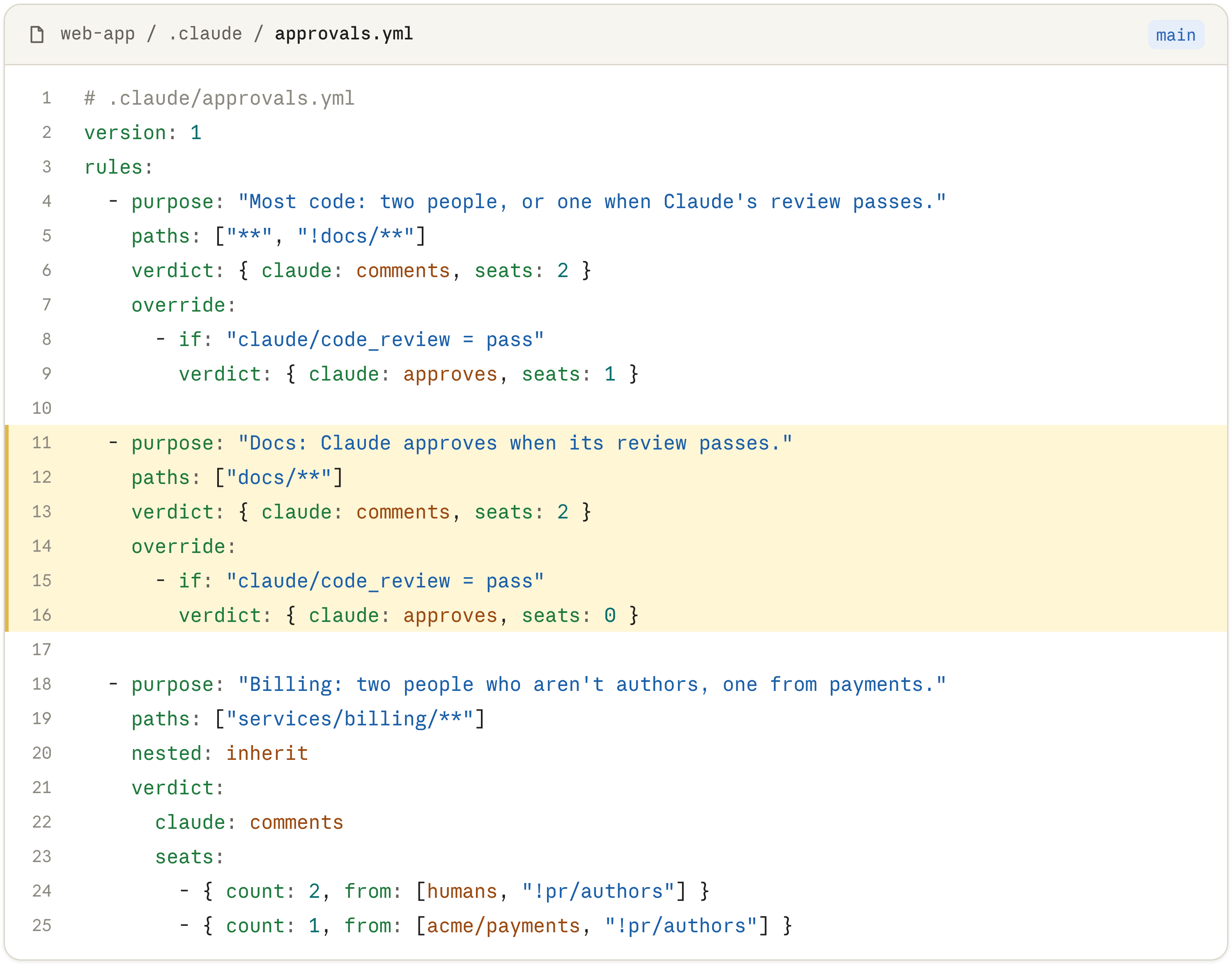
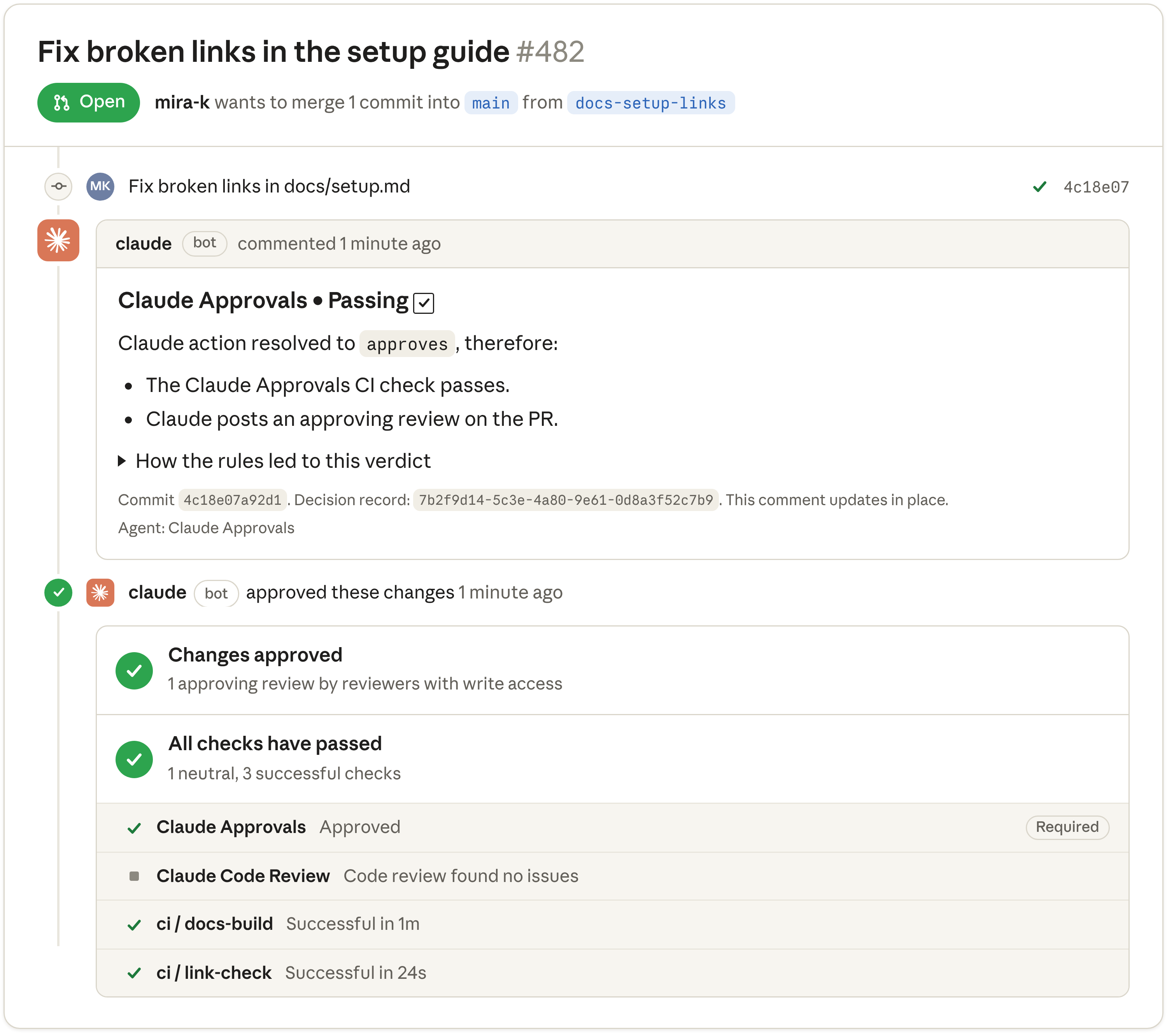
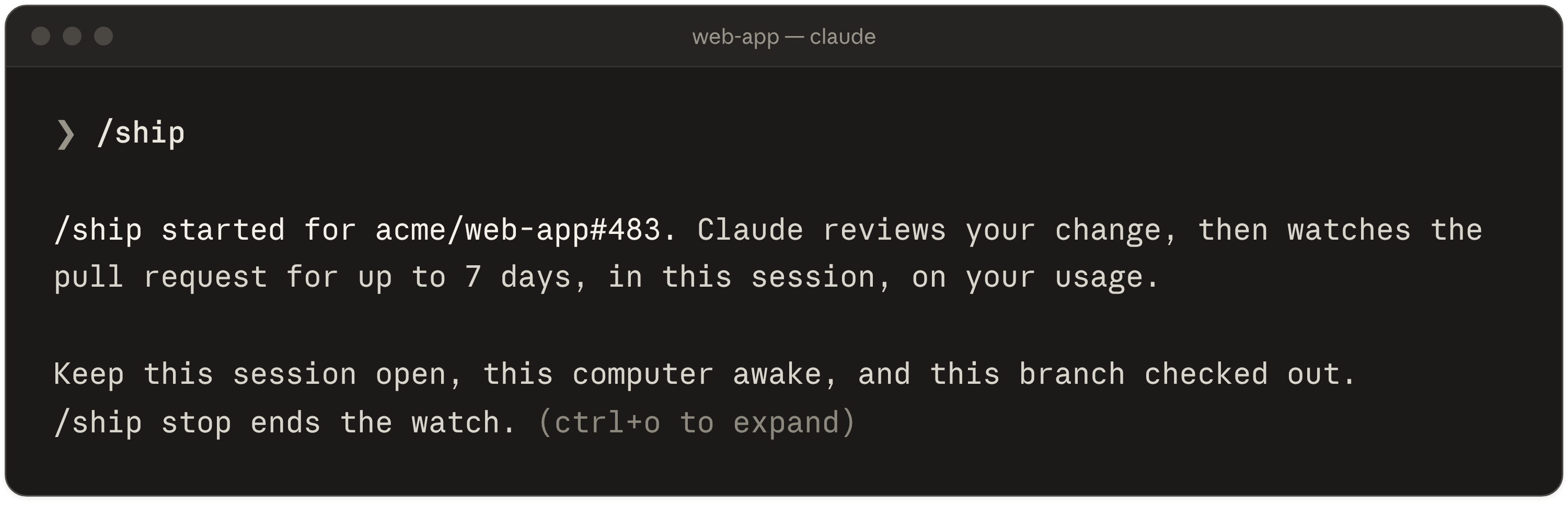
There are two ways to use it. Developers upgrade Claude Code locally and enter /ship once their changes are ready. Claude pushes the changes, opens a PR, reviews that PR, and handles feedback and failing checks. Whether it can ultimately be merged is still determined by the developer's permissions and the repository's branch protection rules. Admins or engineering leads can enable Claude Ship at the repository level, letting it run automatically on the team's PRs without anyone manually running /ship. Review depth, review runtime, and spending limits are all controlled by admins.
The official blog gives an internal example: a product manager received customer feedback, discussed it with Claude Tag, and opened a PR. Code Review found no blocking issues, the documentation reviewer signed off, Claude Approvals passed it, and it was merged that same night. In other words, from feedback to production, the points where humans need to participate have been compressed.
There are also several notable reactions in the comments. One developer argued that the focus isn't on fixes: 'Fixing has never been the slowest part after a PR; waiting for a human to approve it is. Moving approval into team policy is the real change here.' Others worried: 'When something approved by AI goes wrong, who is responsible?' Another highly upvoted reply said: 'LGTM finally comes from someone who actually read the diff.' Of course, some felt this wasn't so new: 'Claude and Duet are already doing similar things; the only difference is the UI.' Someone else asked at a more fundamental level: 'Who verifies the reviewer itself?' And a very practical question: who approves the PR that changes the policy file?
Claude Ship currently supports Team and Enterprise repositories on GitHub and is billed by token. Admins can set spending limits for Code Review and PR Steward. Enabling /ship counts toward regular Claude Code usage. It is unavailable to organizations with Zero Data Retention, HIPAA configuration, and customer-managed keys.
This direction is hard to reverse. The bottleneck in writing code has shifted from 'generation' to 'review' and 'merge.' But once approval authority is handed to an agent, teams must redefine a question: which steps can be automated, and which responsibilities cannot be outsourced.
发布时间: 2026-11-24 06:31