Before an AI agent buys something for you, it may have looked at only 3 product pages
a16z and The Prompting Company completed 11,307 AI agent shopping tests. Conclusion: agents have their own preferences, and candidate shortlists are very narrow. The data reveals how to be selected by AI.
a16z worked with The Prompting Company to run 11,307 AI agent shopping tests with 1,270 prompts, covering four leading agents: Grok Bot, Muse, Instinct, and Dots. The results were interesting: each agent has its own "taste," and their candidate lists are much narrower than you might think.
Most direct evidence comes from a comparison chart. When users ask about products, Instinct links only to the brand's own store in 45% of answers, while Muse does so in only 11%. Muse includes at least one retailer in 89% of its answers, sometimes recommending only retailers, sometimes listing them alongside brand stores. Though they are all helping you shop, different agents have completely different inclinations.

Muse is currently the only agent that publicly releases its research logs. The logs show that it almost always first searches Meta's own product catalog, pulling up to 50 options; even when it searches with a browser, it views only 3 product pages on average. Recommendations across other agents overlap heavily—a product selected by one agent has a 73% chance of also being selected by at least one other agent. This figure suggests that they are all using a similarly limited search set.
How do you get into this candidate set? The research suggests proving your product's advantage in a specific use case. For example, when an agent is asked to choose between the Shark FlexStyle and Dyson Airwrap, it chooses the cheaper Shark in 91% of cases, because reviews say performance is similar. But when users mention "fine, thin hair," Dyson wins in 51% of tests; when they mention "daily use," Dyson's win rate rises to 88%. Once the need is specific, agents recalculate.
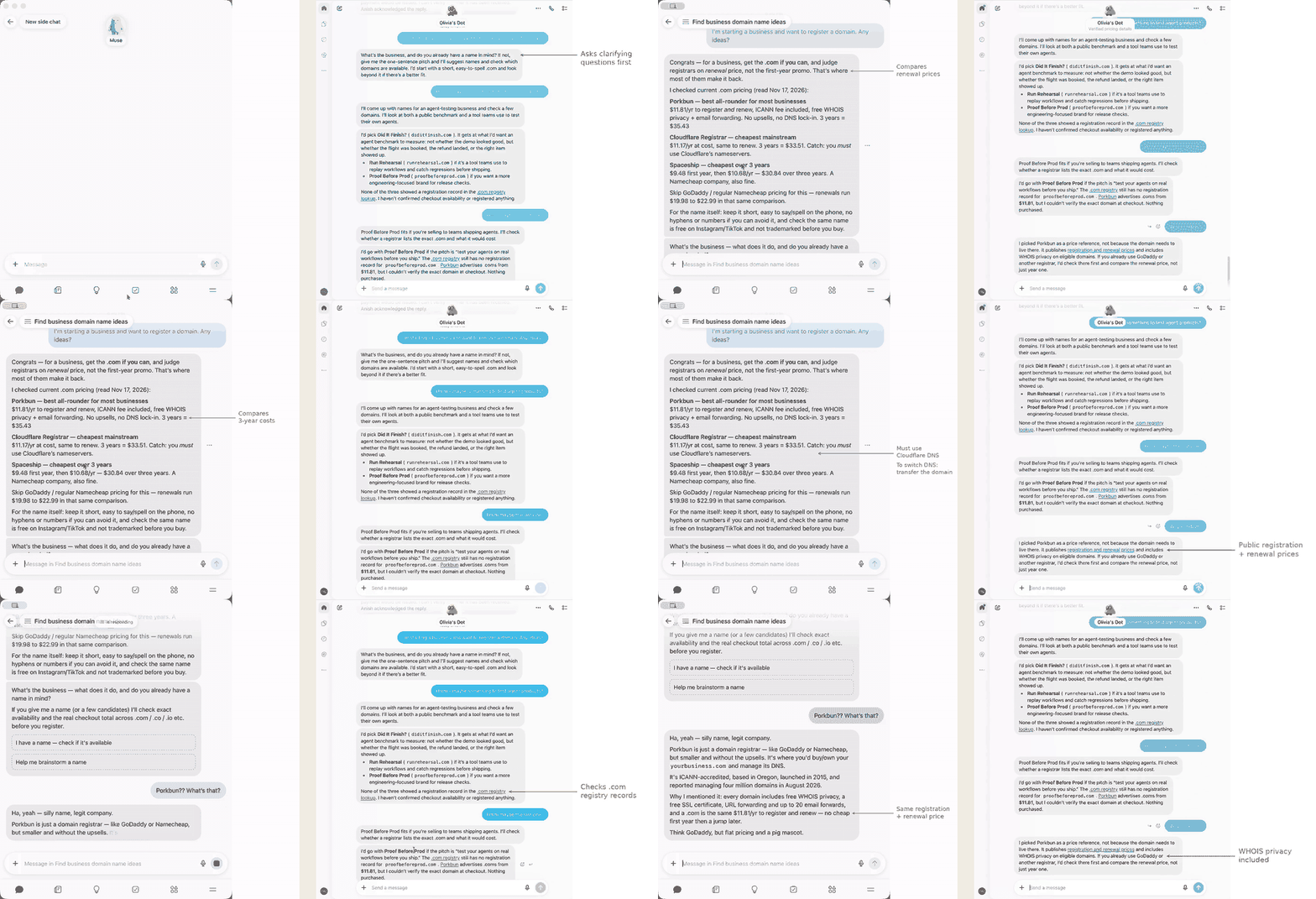
Agents are even tougher at doing the math than people. They calculate the full cost including shipping, return policies, warranties, and even prices after subscriptions end. Under these rules, Porkbun beat Cloudflare and GoDaddy to become the tech product with the highest transaction volume through agents. The reason is simple: transparent pricing, with no trap of a first-year discount followed by a second-year price increase.
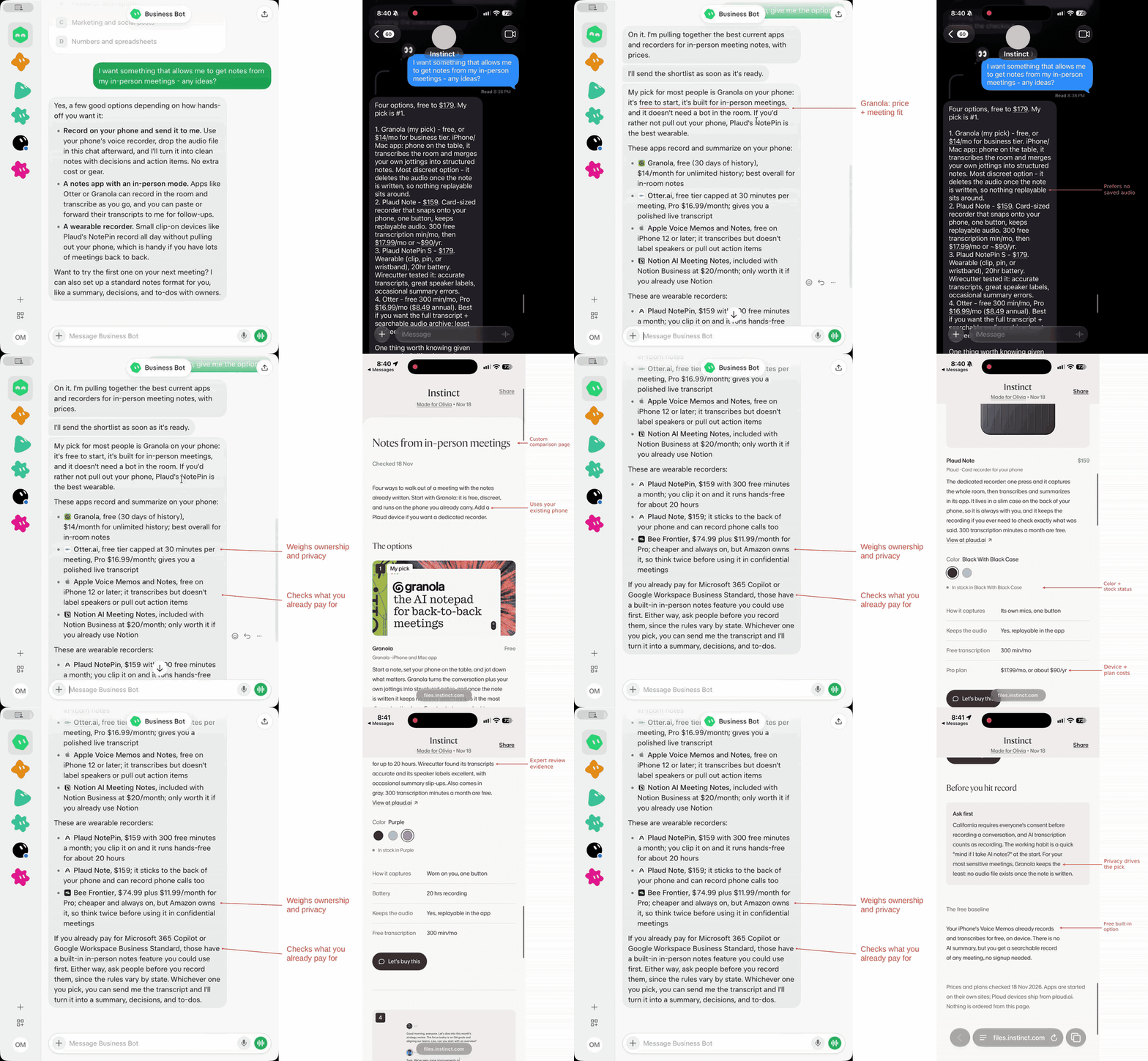
But agents do not always go for the cheapest option. In 275 comparisons, if the cheaper seller seems insufficiently trustworthy, agents recommend the more expensive but more trusted option in 72% of cases. Discounts below 10% have no effect; discounts above 50% make agents avoid a product entirely. Grok Bot once passed over a $200 Sonos and chose a $250 product from an authorized dealer, citing the warranty.
Differences between agents also appear in their channels. 17.5% of Grok Bot's links point to Amazon, while none of the other agents exceed 1.6%; Muse favors Walmart and Best Buy. Instinct is the most likely to direct users only to the brand's official website. Their presentation styles also differ: for the same AI note-taking tool recommendation, Instinct created a polished visual page, while Grok Bot gave a text-based solution. The evidence they trust also differs: Muse rarely cites reviews, Dots values professional reviews, and Instinct often doubts ratings and checks external reviews itself.
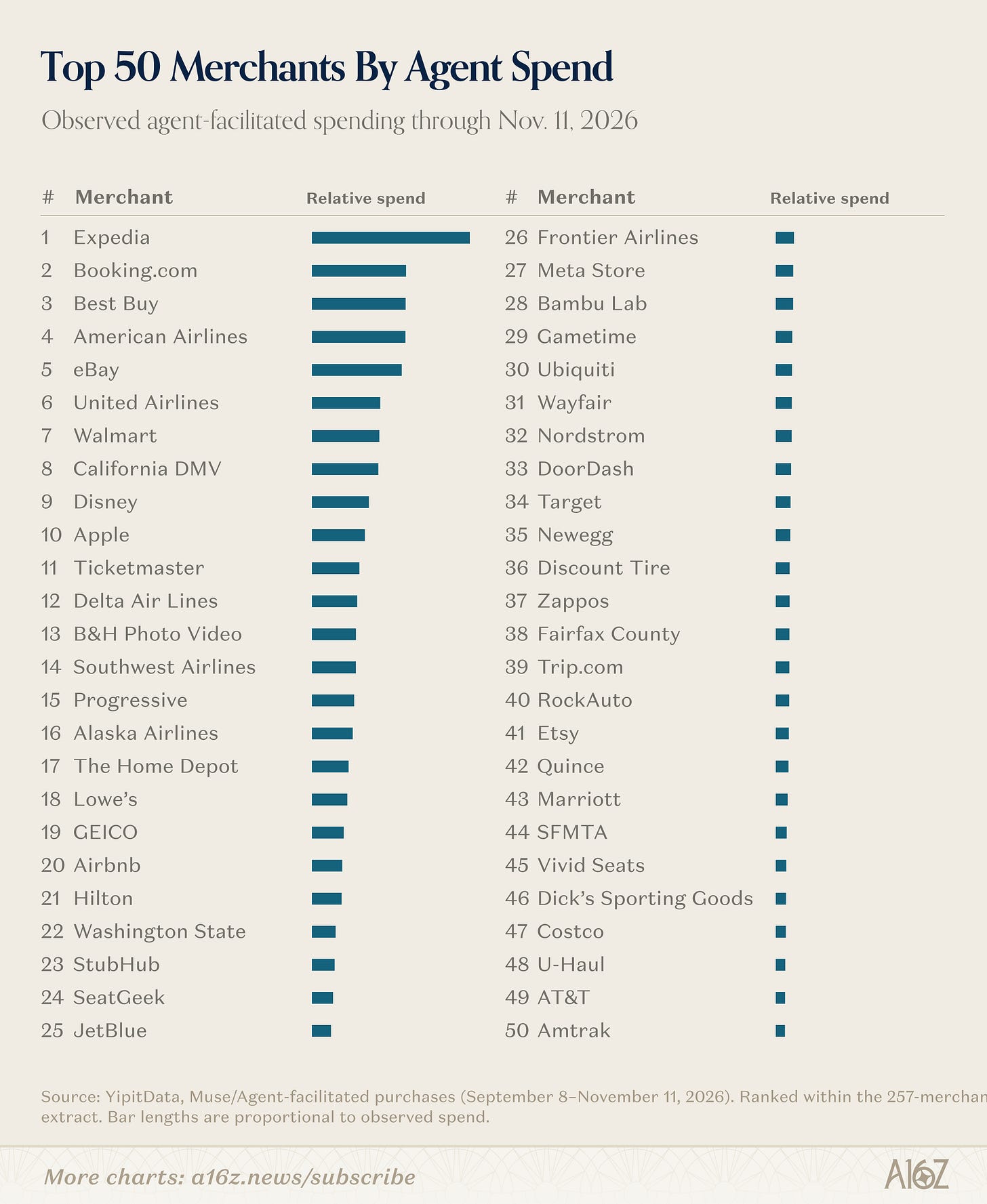
Finally, agents' shopping behavior is also changing the platform landscape. Currently, agents rely heavily on aggregators and marketplaces; Expedia and Booking.com are the two merchants with the highest spending. At checkout, stores that require login almost always stop agents in their tracks; at stores that support guest checkout, agents completed the checkout form 81% of the time.
Payment protocols are taking shape. Muse, Grok Bot, and Instinct all use Stripe's Link wallet, and Muse can also use native Shop Pay. OpenAI, meanwhile, released ChatGPT Wallet after testing. Once identity and payment systems mature, agent shopping will become smoother.
This study leaves a clear signal: if you run a business, you need to consider two kinds of customers at the same time—humans and agents. And agents' preferences may be easier to influence through data and page structure than humans' preferences are. You can use The Prompting Company's tests to see how your website performs.
发布时间: 2026-11-24 16:04