9B model beats 27B on GAIA: middle 24 layers run twice, 4-bit weights about 4.9GB
SenseTime open-sources SenseNova-Loop-9B: GAIA 69.90 vs. 66.99, 256K multimodal about 15GB VRAM, at the cost of about 1.75× compute per token.
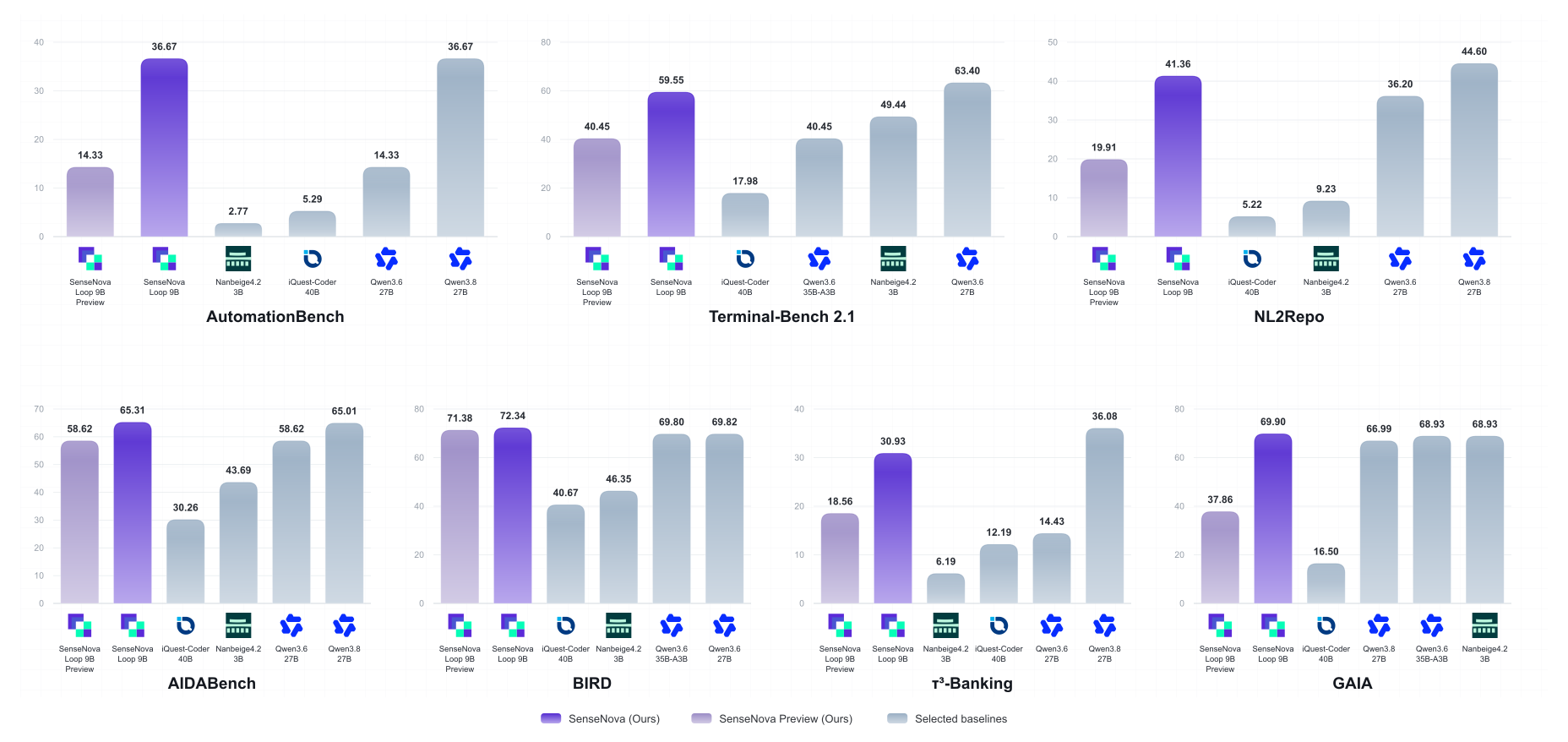
SenseTime has open-sourced SenseNova-Loop-9B. The model has about 9B parameters and scores 69.90 on GAIA, compared with 66.99 for Qwen3.8-27B. On AutomationBench both are 36.67; on AIDABench it is 65.31 vs. 65.01; on NL2Repo it scores 41.36, lower than Qwen3.8-27B's 44.60. This is not across-the-board dominance, but a 9B-scale model reaching this position on some agent tasks is worth a look.


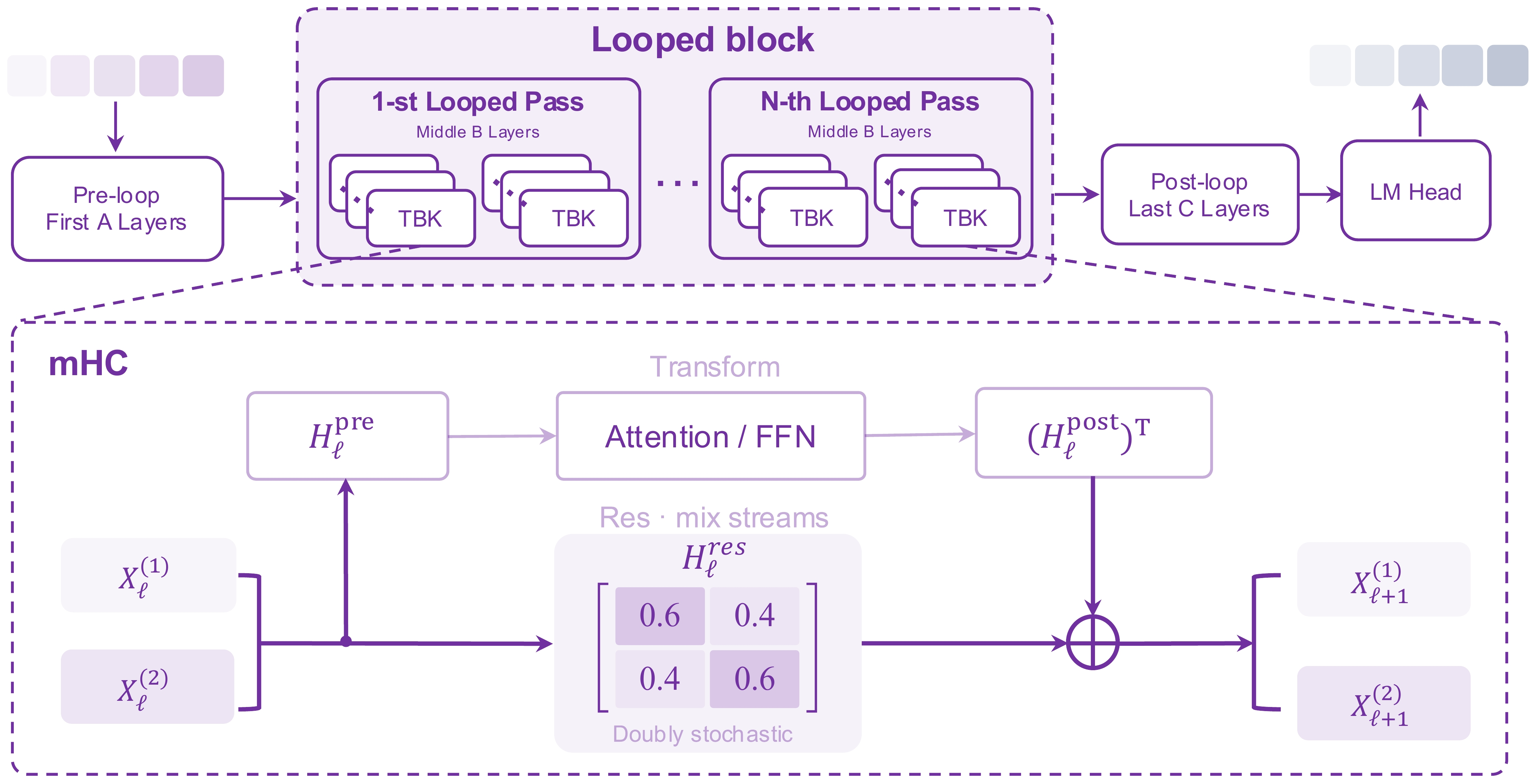
Its approach is not complicated: the model has 32 distinct decoder layers, and during the forward pass it runs the middle layers 4 through 27—these 24 layers—twice in sequence, with both passes sharing the same set of weights. Thus each token actually undergoes 56 layers of computation, while only 32 layers of weights are stored in VRAM. The official release also pairs this with dual-stream mHC and a hybrid attention scheme interleaving linear attention and full attention; the details are clearly written in the model card.
The memory numbers are the most practical part this time. The official 4-bit weights are about 4.9GB; for 256K-context multimodal inference, the 8-bit KV cache is estimated at about 15GiB and the 4-bit KV cache at about 12GiB. A single 16GB GPU can handle long-context agent tasks, which is crucial for local deployment and edge devices. The same day, the team released AWQ 4-bit and GGUF weights under Apache 2.0.
The trade-offs are also clear. A user Johan mentioned that 56 layers of computation is VRAM-friendly, but tokens/s may not look good. Grygorii estimates that compute per token is about 1.75× that of a normal 9B, so it is likely faster than a dense 27B, but far from the speed of a normal 9B. Denis Cherniavsky also reminds us that running the middle 24 layers twice makes decoding performance closer to a 15B model, not a 9B one.
The leaderboard also needs to be viewed in context. Synra points out that in the same GAIA chart, nanbeige 3B scores 68.93, also surpassing Qwen3.8-27B. The GAIA headline is catchy, but a single benchmark cannot tell the whole story. SenseTime's own data also shows it lags on NL2Repo, and complex instruction following, coding, and general agent tasks still fluctuate; complex 3D webpages may require two or three rounds of adjustment.
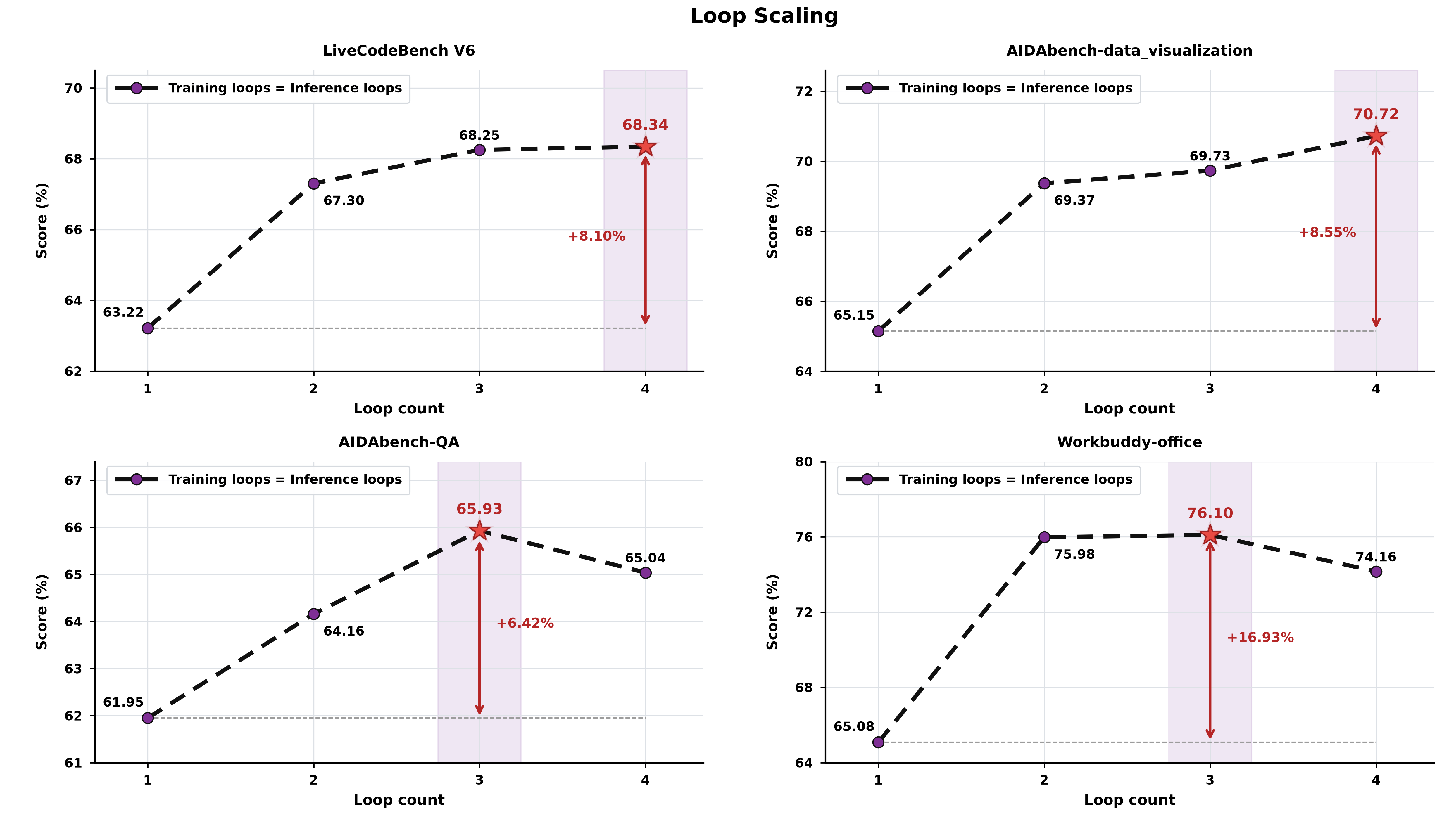
More loop layers are not always better. In official tests, the default of two is an efficiency compromise; some tasks perform better at three or four loops. LiveCodeBench V6 and AIDABench data visualization improve by 8.10% and 8.55%, respectively, at four loops, but inference cost also rises.
Ecosystem support also deserves attention. Model Test Lab mentions that running the official GGUF on Mac requires SenseNova's own llama.cpp fork, and mainline support is still in PR #32588. Developers who want to use it directly should check the deployment instructions first and not assume mainline has already merged it.
Code and weights are on GitHub and Hugging Face:
发布时间: 2026-11-25 10:03